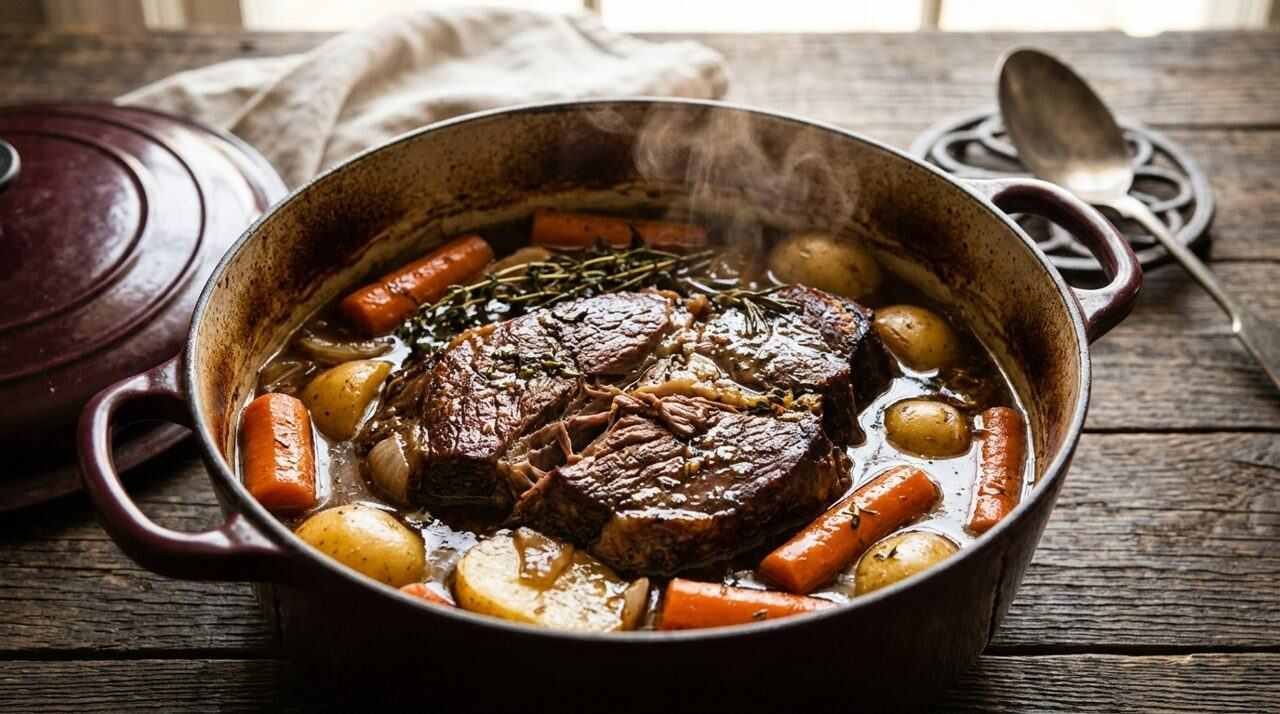
Pot roast is a cheap cut, a heavy pot and an afternoon. Nothing about it is hurried, and the payoff is a roast that gives way under a fork and a pan sauce with real body. The cut that does it best is chuck, which America’s Test Kitchen describes as a well-marbled chuck-eye roast, “full of collagen and well suited for braising.”
That sentence explains most of the method. Collagen is the reason the meat starts out tough and the reason it finishes tender, provided the heat is low, the pot is covered and nobody rushes it.
The cut and how to buy it
Chuck comes from the shoulder, a hardworking part of the animal, which means plenty of connective tissue and plenty of flavor. Packages at the counter usually run between two and five pounds. A boneless chuck-eye roast of about 3½ to 4 pounds is the size both of the America’s Test Kitchen recipes cited here call for, and it feeds six to eight people.
Split it, trim it, tie it
One of those recipes has a few preparation steps that reward the extra five minutes. The roast is pulled into two pieces along its natural seam and stripped of large knobs of interior fat, the “pesky globs” that otherwise never render. Two smaller pieces cook faster and take salt deeper. Each piece is then tied with three lengths of kitchen twine into a loaf shape so it cooks evenly.
Salt goes on early. The same recipe sprinkles 1 tablespoon of kosher salt over the two pieces and leaves them on a wire rack at room temperature for an hour before cooking.
Ingredients
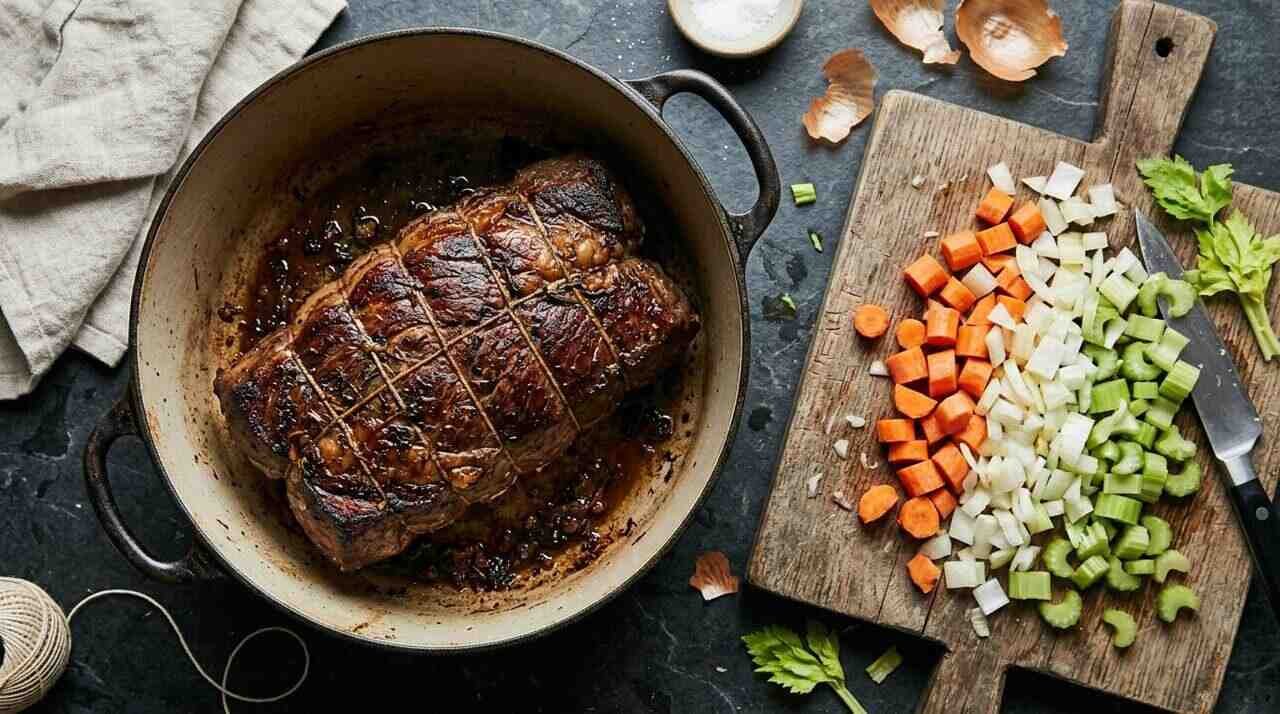
The proportions below follow the structure shared by the cited recipes from America’s Test Kitchen and Michael Ruhlman: a browned roast, a modest amount of liquid, tomato paste and wine for depth, and vegetables added late. It serves six to eight.
- 1 boneless beef chuck-eye roast, 3½ to 4 pounds, split at the seam, trimmed and tied
- 1 tablespoon kosher salt, plus more to taste
- Freshly ground black pepper
- 2 tablespoons vegetable oil
- 2 medium onions, chopped
- 1 large carrot and 1 celery rib, chopped
- 2 garlic cloves, minced
- 1 tablespoon tomato paste
- ½ cup dry red wine, plus a splash at the end
- 1 cup beef broth
- Water, as needed to come about halfway up the sides of the meat
- 1 thyme sprig and 1 bay leaf
- 1 pound carrots and 1½ pounds russet potatoes, cut into large pieces, for the last stretch of cooking
Method
- Salt the tied pieces and rest them on a rack for an hour. Heat the oven to 300°F with a rack in the lower-middle position.
- Pat the meat dry and season with pepper. Warm the oil in a heavy Dutch oven over medium-high heat and brown the roast well on all sides, about 8 to 10 minutes in the simple pot roast from America’s Test Kitchen. Set the meat on a plate.
- Lower the heat to medium. Cook the onions, chopped carrot and celery in the fat left in the pot, scraping up the browned bits, until soft, then add the garlic. Stir in the tomato paste and cook for two to three minutes, the stage Ruhlman uses before deglazing.
- Pour in the wine and let it bubble, then add the broth, the thyme and the bay leaf. Return the meat to the pot and add water until the liquid reaches about halfway up the roast.
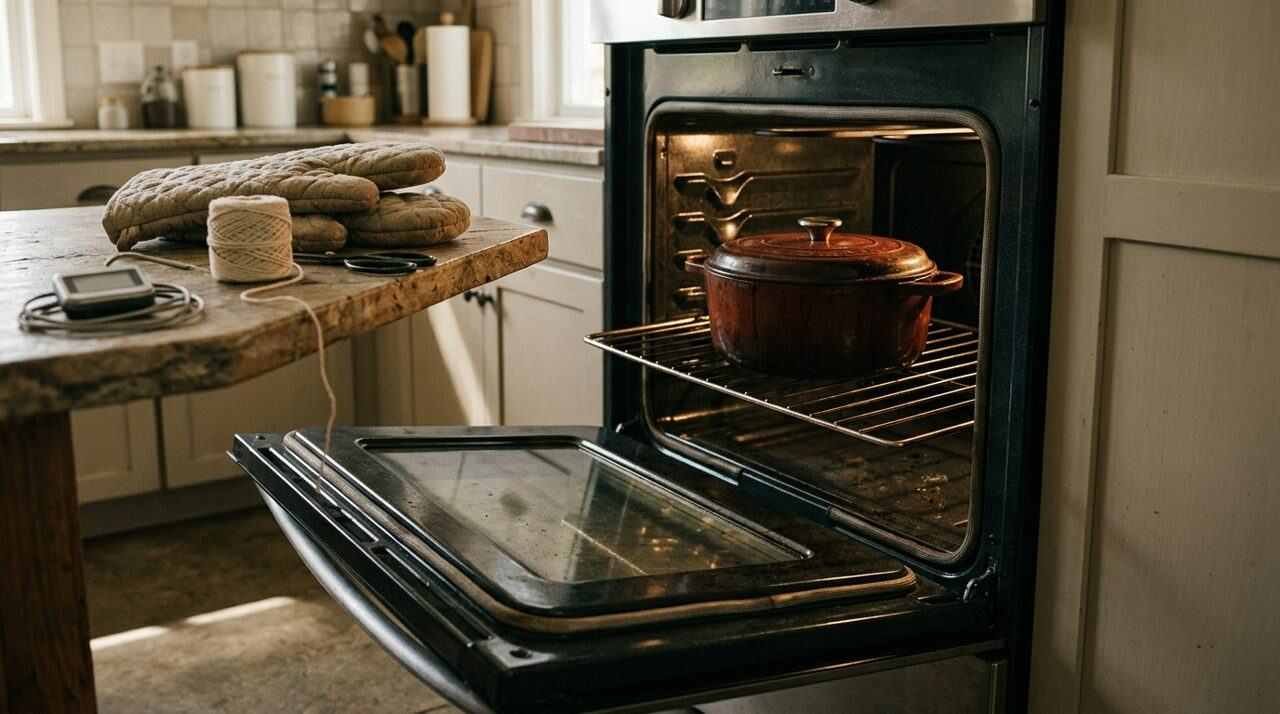
- Cover tightly. The cited America’s Test Kitchen recipe lays foil over the pot and then fits the lid on top. Slide the pot into the oven.
- Braise for about 3 hours, turning the meat every so often. Add the whole carrots and potatoes around it, cover again and cook 30 minutes to an hour longer, until a knife slips easily in and out of the meat.
- Lift the roast to a board and leave the pot undisturbed for about five minutes so the fat rises. Skim it, strain or blend the vegetables into the liquid, and reduce it on the stove until it coats a spoon. Finish with a splash of wine.
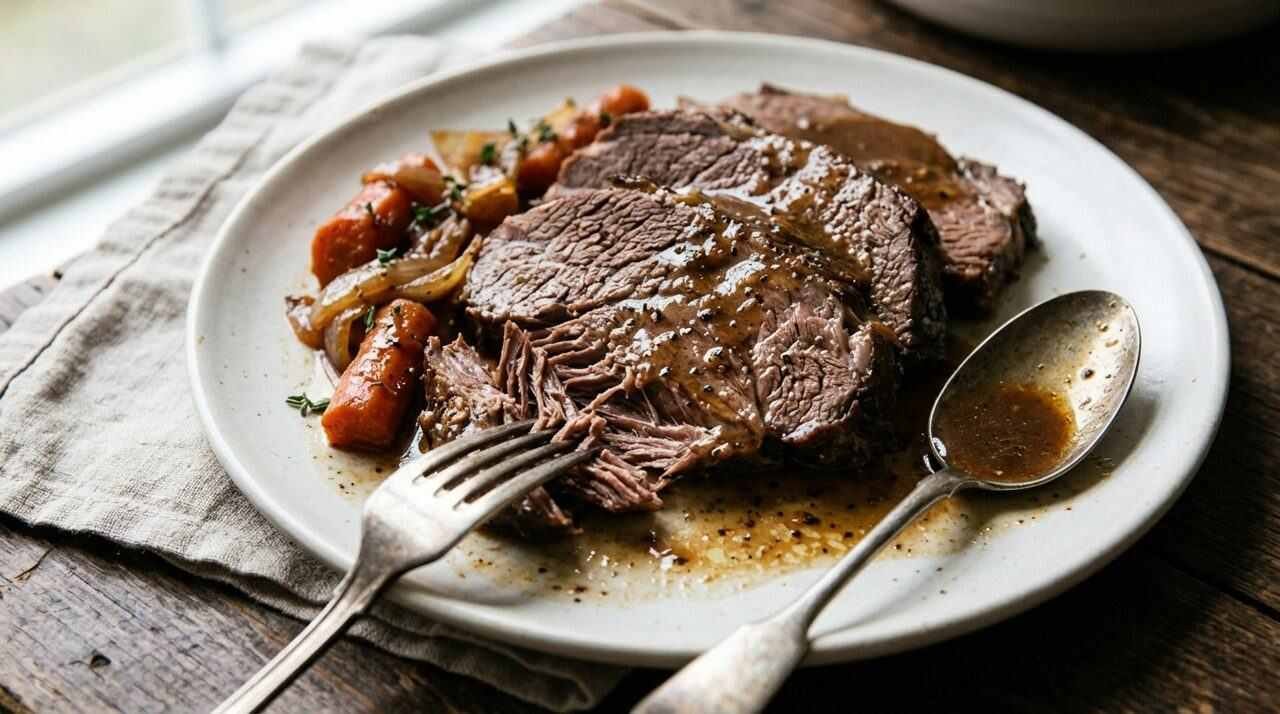
- Slice against the grain, about ½ inch thick, and spoon sauce over.
Time, temperature and when it is done
The oven stays at 300°F the whole way. Both America’s Test Kitchen versions use that number, Ruhlman’s recipe uses it for a five-pound roast, and Tasting Table’s rule of thumb is about an hour per pound. Ruhlman’s five-pound roast takes around four hours. The tied two-piece roast above runs from roughly 4¾ to 5¼ hours counting the browning, the vegetables and the sauce, according to the recipe on which it is modeled.
Clock times are guides. Tenderness is the verdict.
A thermometer is still useful, if only to confirm what the fork already says. The USDA’s minimum safe temperature for beef roasts is 145°F with a three-minute rest, a line a braise passes hours before it is edible. The reasoning in the America’s Test Kitchen simple pot roast aims much higher: it says the roast should reach about 210°F internally and then hold there for a full hour, and credits that stretch for the tenderness. Pulled from the oven at 145°F, the same chuck would be tough and pink.
Reading the fork
Push a fork or a thin knife into the thickest part. If it meets resistance or lifts the whole roast, the pot goes back in the oven with the lid on. When the blade glides in and out, the roast is finished.
Why the vegetables wait
Potatoes and carrots dropped in at the start would be mush by the time the beef relents. Ruhlman’s Yankee variation makes the point plainly: the vegetables join the pot only about an hour before the braise finishes, and the pot returns to the oven, covered, for 45 minutes to an hour until the potatoes are tender. The America’s Test Kitchen recipe adds its root vegetables after three hours, for a final half hour to an hour. Two sources, two recipes, the same instinct.
Larger pieces help. Carrots and parsnips cut into two-inch lengths and russets quartered hold their shape through that last stretch and soak up the braising liquid on the way.
Gravy straight from the pot
Nothing needs to be added to the liquid for it to become sauce. The vegetables break down into the liquid, and reducing it concentrates what they and the meat have given up. The America’s Test Kitchen method blends the cooked vegetables back into the strained liquid, tops it up with broth to 3 cups, then brightens it at the end with a little more wine and a spoonful of balsamic vinegar. The vegetables’ contribution to thickness, the recipe notes, is part of the design.
Ruhlman takes the other road: strain, skim the fat, and thicken with beurre manié, a paste of butter and flour whisked in near the end. Either works. The first yields a rustic, velvety sauce, the second a smoother and glossier one. A separate guide to turkey gravy from scratch covers the roux route in more detail.
The second day
Braised beef is often better the next day. Ruhlman says most braises improve when made one to five days before serving, and the America’s Test Kitchen recipe recommends chilling the cooked roast overnight for flavor and for cleaner slicing. Cold meat holds a slice better than hot meat does.
The make-ahead method is simple. Refrigerate the meat and the strained sauce in separate covered containers, lift off the solid fat from the sauce, leave as much of it behind as flavor demands, and reheat the sliced roast in the sauce in a low oven.
Leftovers carry a clock. The USDA says to refrigerate them within two hours of cooking, to eat them within three to four days, and to reheat them until a thermometer reads 165°F. Sliced cold roast turns into a hot beef sandwich almost without effort; the open-faced hot roast beef and French dip both start from exactly that. Meatloaf, covered in its own guide, is a different animal: ground beef, a binder and a loaf pan, with nothing of the pot roast’s slow collagen work.
What goes wrong
A roast still tough after hours in the oven usually needs more time and a closer look at the lid. America’s Test Kitchen’s brisket experiments found that a 250°F oven alone was too slow: after six hours the meat never passed 165°F internally. A loose lid or a pot that is too wide lets steam escape, and escaping steam cools the meat.
Thin sauce calls for harder reduction, though browning is where much of the flavor starts. Browning reactions require intense heat, about 250°F, which is above the boiling point of water, so they happen in the skillet stage and not in the wet braise. One America’s Test Kitchen version leaves out the sear and builds flavor with tomato paste, onions and wine instead, so the step is a matter of taste.
Useful gear
- Lodge Essential Enamel Cast Iron Dutch Oven, 6 Quart: a practical item related to this topic. See it on Amazon (affiliate link)
As an Amazon Associate I earn from qualifying purchases. A commission may be earned if you buy through this link, at no extra cost to you.
Any broth that does not go into the gravy can be frozen. Ruhlman suggests keeping leftover braising liquid as the base for the next beef braise.
Sources
- America’s Test Kitchen: Classic Pot Roast with Root Vegetables
- America’s Test Kitchen: Simple Pot Roast
- Cook’s Illustrated: Classic Pot Roast
- WNYC: Michael Ruhlman’s Pot Roast
- Tasting Table: The Ideal Oven Temperature for Ultra-Tender Chuck Roast
- USDA FSIS: Safe minimum internal temperatures and leftovers
- America’s Test Kitchen: How to Braise Brisket
- University of Richmond Chemistry of Cooking: Browning