 275 Route 25A, Mt Sinai, NY 11766


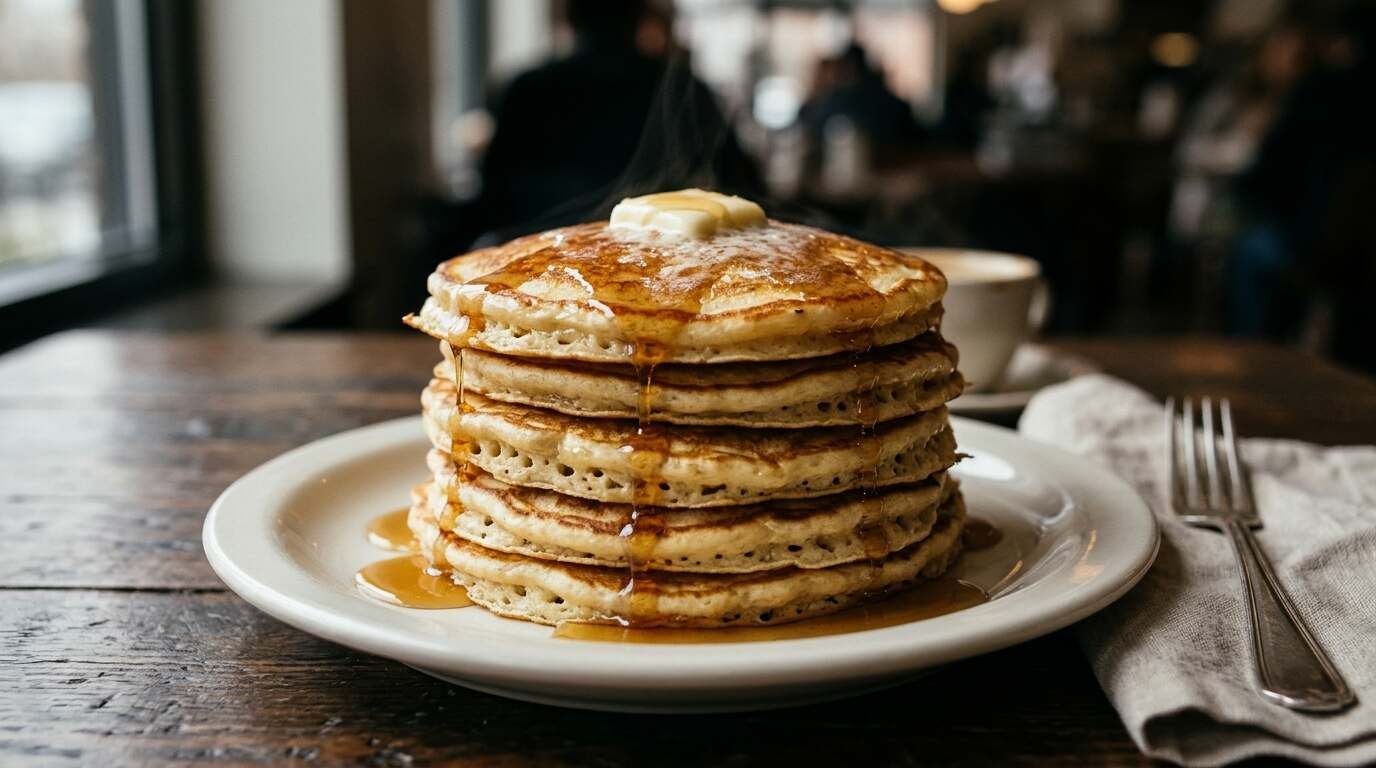
Four words name one stack of round, griddled batter, and the dictionaries disagree about which arrived first only in the sense that all four turn up in print within a few centuries of one another. Merriam-Webster gives the 14th century for pancake, circa 1600 for flapjack, 1683 for hotcake and 1783 for griddle cake. The order of arrival is the easy part. What each word first meant, and why one of them now describes an oat bar on the other side of the Atlantic, takes longer to sort out.
Pancake: the oldest name, and the plainest
The Online Etymology Dictionary attests panne-cake around 1400, defined as a thin cake of batter fried or baked in a pan. The word is exactly what it looks like: a cake made in a pan. Merriam-Webster’s definition is just as literal, “a flat cake made of thin batter and cooked (as on a griddle) on both sides.”
Shakespeare used the word, and the line survives in the Massachusetts Institute of Technology’s online text of As You Like It. Touchstone, in Act 1, Scene 2, tells of “a certain knight that swore by his honour they are good pancakes” and then swore the mustard was bad, which he says proves the knight no liar if the pancakes were in fact bad and the mustard good (MIT Shakespeare, As You Like It, 1.2). The joke only works if pancakes were a thing everyone could picture, which says something about how settled the name already was.
Etymonline also records a figurative life: pancake as a symbol of flatness from about 1600, and “Pancake Tuesday” for Shrove Tuesday by 1777. The aviation verb, to pancake onto a runway, is from 1911.
Flapjack: a verb and a nickname
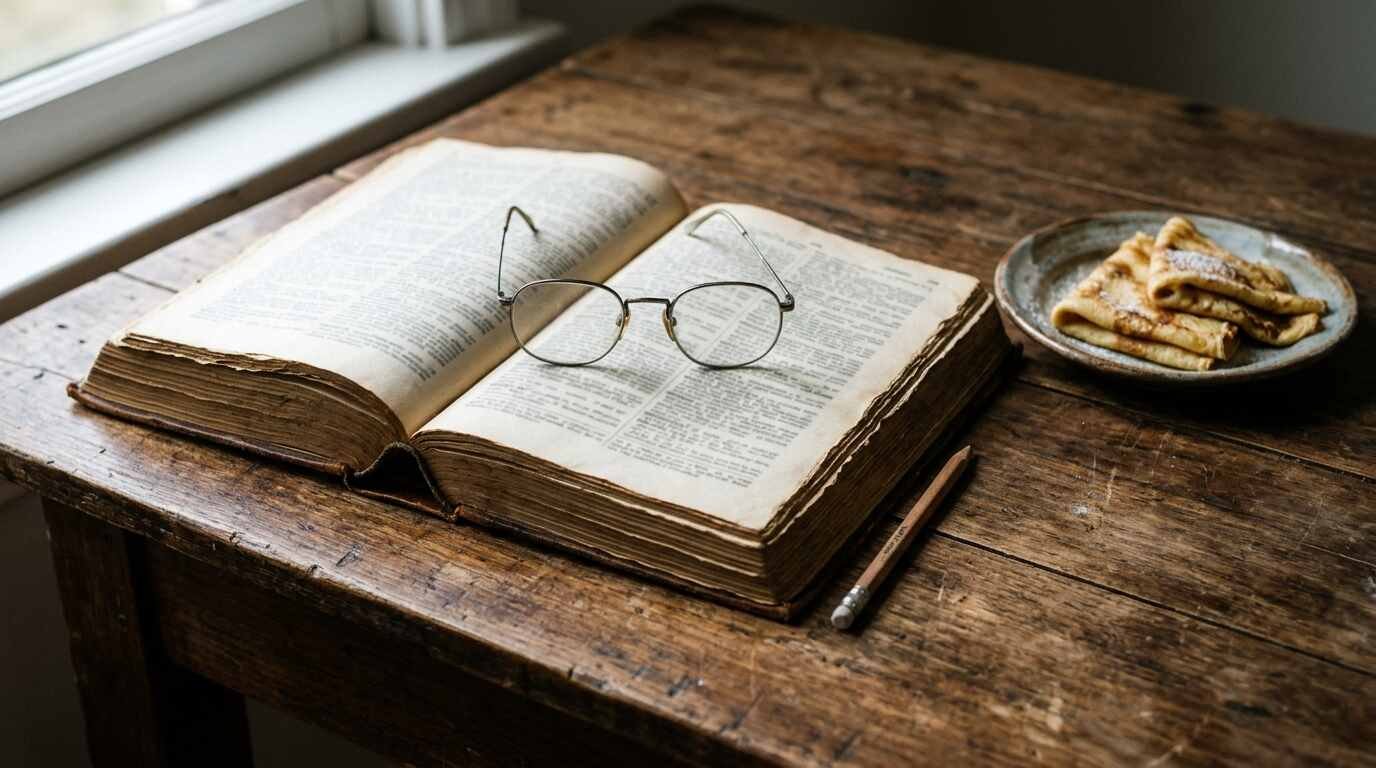
Flapjack is built from two ordinary pieces. Merriam-Webster’s etymology joins flap, “to toss sharply,” to the name Jack, which the dictionary notes is used for a range of roles and objects. Etymonline reads it the same way, dates the word to before 1600, and ties the name to the cooking method: the cake is flipped in the pan and caught when one side is done. Jack here works like the one in lumberjack or steeplejack, a generic fellow standing in for a tool or a task.
The earliest sense may not have been a pancake at all. A Wikipedia entry on the oat bar, relaying the Oxford English Dictionary, says the word appears from the beginning of the 16th century and seems to have meant a flat tart). That is secondhand, and the Oxford entry itself was not available to read for this article, so the claim stays with its source.
Shakespeare appears here too, with a caveat. In Pericles, Prince of Tyre, the First Fisherman offers the shipwrecked hero food and shelter, with lodging for so many days “and, moreo’er, puddings and flapjacks” (Folger Shakespeare Library, Pericles 2.1). Whether those flapjacks were griddle cakes, tarts or something else is not settled by the line. A fisherman’s table could hold any of them.
Hotcake and griddle cake: names that describe the heat and the iron
Hotcake has the shortest explanation of the four. Merriam-Webster dates it to 1683, offers no etymology, and defines it as a pancake. The name states the obvious, a cake eaten hot. The idiom “selling like hotcakes” is a separate entry in the same dictionary.
Griddle cake, first recorded in 1783, is a cake named for its cooking surface. A related word makes the point from the other direction. The National Park Service says of hoecakes that the term “hoe” is an old term for a griddle, so a hoecake is a griddle cake by another route, with the cornmeal batter and the farm tool for a skillet. Merriam-Webster dates johnnycake to 1739 and says it is probably from the name Johnny. The Park Service lists rival theories for that name, including a slurred “journey cake” and “Shawnee cake,” and says it has as many origins as spellings. The origin is contested, and none of the claimants can be confirmed from those sources.
Griddle cake is also a flexible word. The Free Dictionary’s entry lists a pancake sense and a second sense, a scone made by dropping batter onto a griddle, and applies the label to the North East England singing hinny and to the Latin American arepa. The word describes a method more than a recipe.
Where the words split
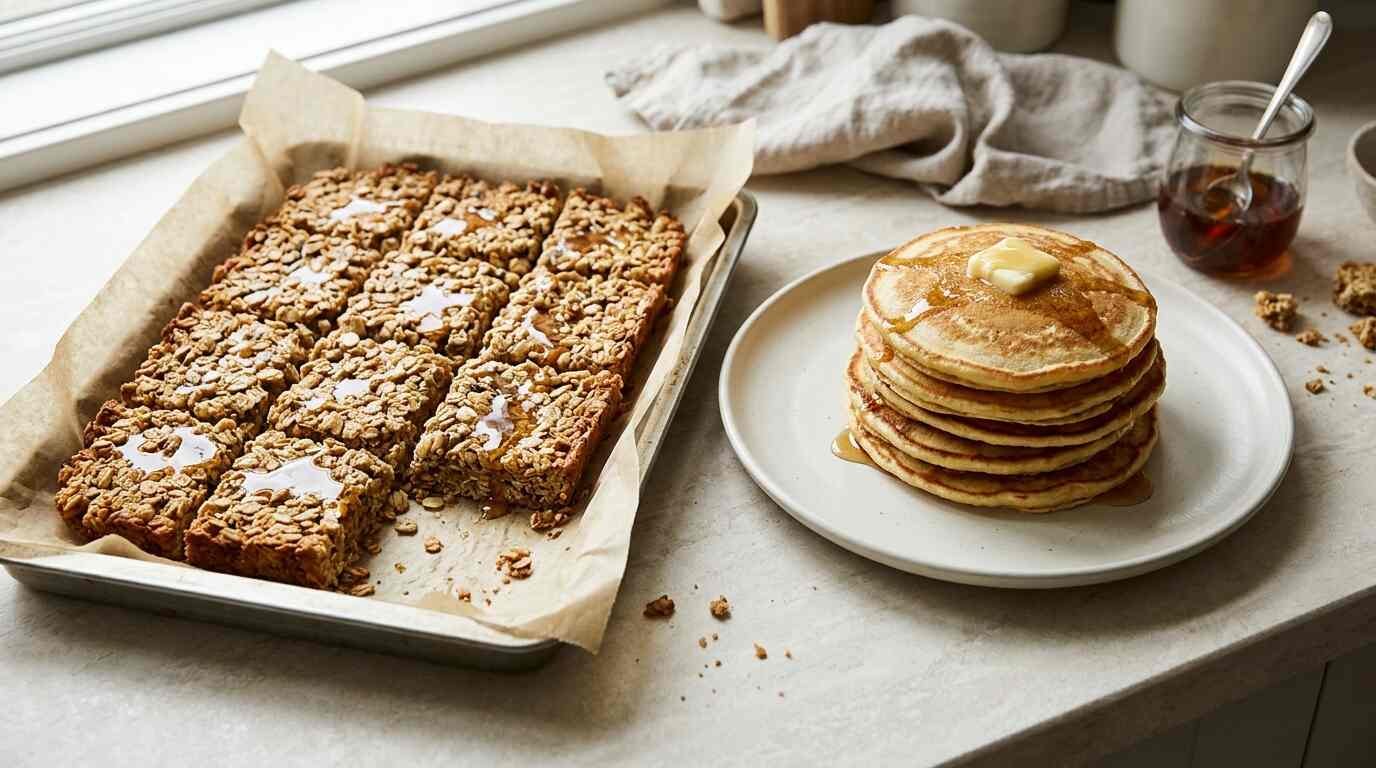
The sharpest split is across the Atlantic. Dictionary.com says that in the US and Canada, flapjacks are a synonym for pancakes, while in the UK flapjack refers to “something entirely different,” an oat-based baked bar. Wikipedia places the same oat meaning in the UK, the Isle of Man, Ireland and Newfoundland) and, citing a 2007 reference book, records the oat sense from 1935. Pancake itself holds steady on both sides of the ocean, though Tasting Table, summarizing MasterClass, says British pancakes run thinner, closer to a crepe.
Inside the United States, the evidence is thinner than the confident internet maps suggest. The Dictionary of American Regional English, the Wisconsin-based project that has documented regional difference in everyday language since the 1960s, ran a survey question asking for other names for pancakes. Of 36 responses recorded, flapjacks drew 18 and hotcakes 7, with johnnycakes and pancakes at 2 each and a scatter of singles including griddle cakes, panny-cakes and silver dollars. That page gives no geographic breakdown, and 36 answers is a small sample, so it shows the vocabulary in circulation and not who says what where.
Tasting Table, citing Collins Dictionary, adds two local terms for flour pancakes: flannel cake in the Mid-North and battercake in the South. Those are secondhand reports that could not be checked against Collins directly.
What the menu board says
On a menu the choice is mostly branding. McDonald’s answers the question on its own site: “There is no difference. We just prefer to call them ‘hotcakes’ instead of ‘pancakes’” (McDonald’s FAQ). A company that sells millions of the things chose a word, and the word stuck as a product name.
Recipes elsewhere on the site use the plain word, in fluffy diner-style pancakes at home and buttermilk pancakes with crispy butter edges. The cooking surface behind the names is covered in the Heritage Diner’s piece on the flat-top and the Maillard reaction, and the breakfast context in its history of how brunch got its name.
A related cornmeal cousin gets the same flat-top treatment in griddled corn muffins, a recipe from the kitchen at The Heritage Diner in Mount Sinai, New York.
Sources
- Merriam-Webster, pancake: https://www.merriam-webster.com/dictionary/pancake
- Merriam-Webster, flapjack: https://www.merriam-webster.com/dictionary/flapjack
- Merriam-Webster, hotcake: https://www.merriam-webster.com/dictionary/hotcake
- Merriam-Webster, griddlecake: https://www.merriam-webster.com/dictionary/griddlecake
- Merriam-Webster, johnnycake: https://www.merriam-webster.com/dictionary/johnnycake
- Online Etymology Dictionary, pancake: https://www.etymonline.com/word/pancake
- Online Etymology Dictionary, flapjack: https://www.etymonline.com/word/flapjack
- Wikipedia, Flapjack (oat bar): https://en.wikipedia.org/wiki/Flapjack_(oat_bar)
- Shakespeare, As You Like It 1.2 (MIT): https://shakespeare.mit.edu/asyoulikeit/asyoulikeit.1.2.html
- Shakespeare, Pericles 2.1 (Folger): https://www.folger.edu/explore/shakespeares-works/pericles/read/2/1/
- National Park Service, Johnny Cakes or Hoe Cakes: https://www.nps.gov/articles/000/johnny-cakes-or-hoe-cakes.htm
- The Free Dictionary, griddlecake: https://www.thefreedictionary.com/griddlecake
- Dictionary.com, Pancakes vs. Flapjacks vs. Hotcakes: https://www.dictionary.com/e/pancakes-vs-flapjacks-vs-hotcakes
- Tasting Table, Is There a Difference Between Flapjacks and Pancakes: https://www.tastingtable.com/1044281/is-there-a-difference-between-flapjacks-and-pancakes
- National Endowment for the Humanities, Flap jacks, pancakes, or batterbread?: https://neh.gov/news/flap-jacks-pancakes-or-batterbread
- Dictionary of American Regional English, question H20b: https://dare.wisc.edu/surveys/survey-results/2013-2014/foods/h20b/
- McDonald’s FAQ: https://mcdonalds.com/us/en-us/faq/what-s-the-difference-between-hotcakes-and-pancakes.html
Leave a Reply