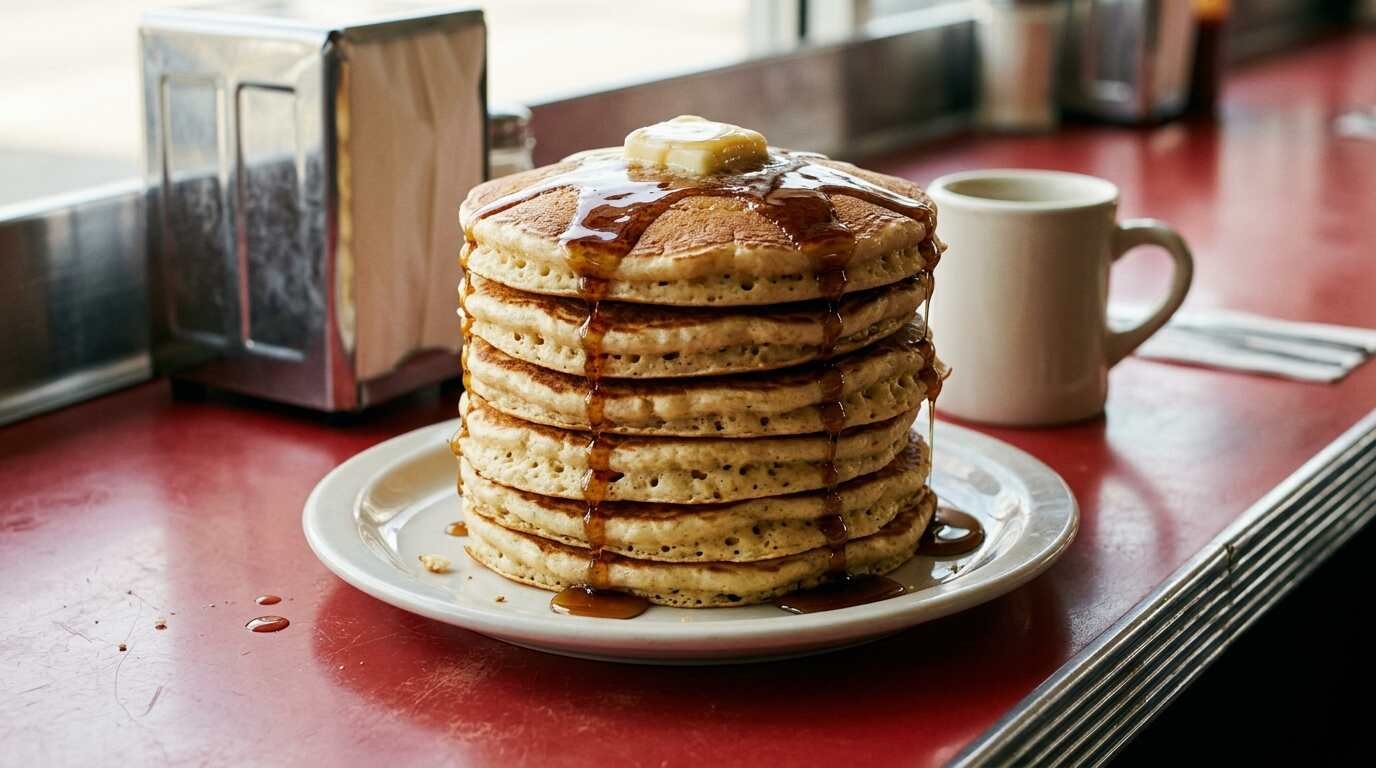
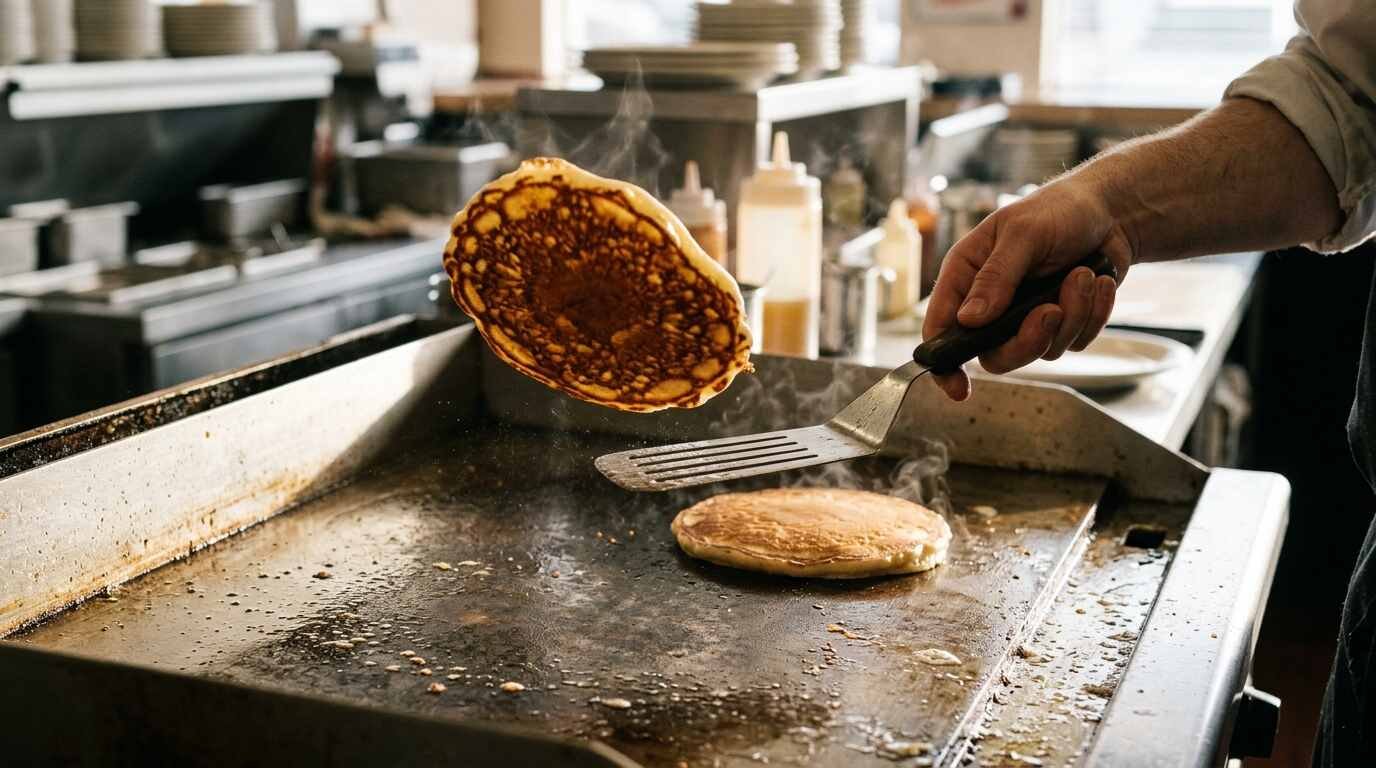
A fifteen-dollar tip is a strange origin story for an art career, but that is how Daniel Drake tells it. Working the graveyard shift as a fry cook at the Courtesy Diner in south St. Louis, he spotted a customer having a rough night and answered with batter. “I make him the biggest most ridiculous pancake I can,” Drake told St. Louis Public Radio in 2018, and the man’s mood turned around on the spot. The tip followed.
Word travelled. A photo of one of his creations reached the front page of Reddit, and a video of him drawing all 151 original Pokémon in pancake batter went viral on YouTube, filmed in his kitchen by his friend Hank Gustafson. Dancakes, the company the two founded in 2015, has since worked with Netflix, Hulu, Amazon, Crunchyroll and the NFL, per the same report.
Art like that depends on a batter that cooperates. GamesRadar reported that Drake works with a buttermilk batter, the same family of recipes any home cook pours on a Sunday morning, and the rules that keep his lines clean are the rules that keep a breakfast stack tall. What follows is how to get them right on your own stove.
Why Lumps Are a Good Sign
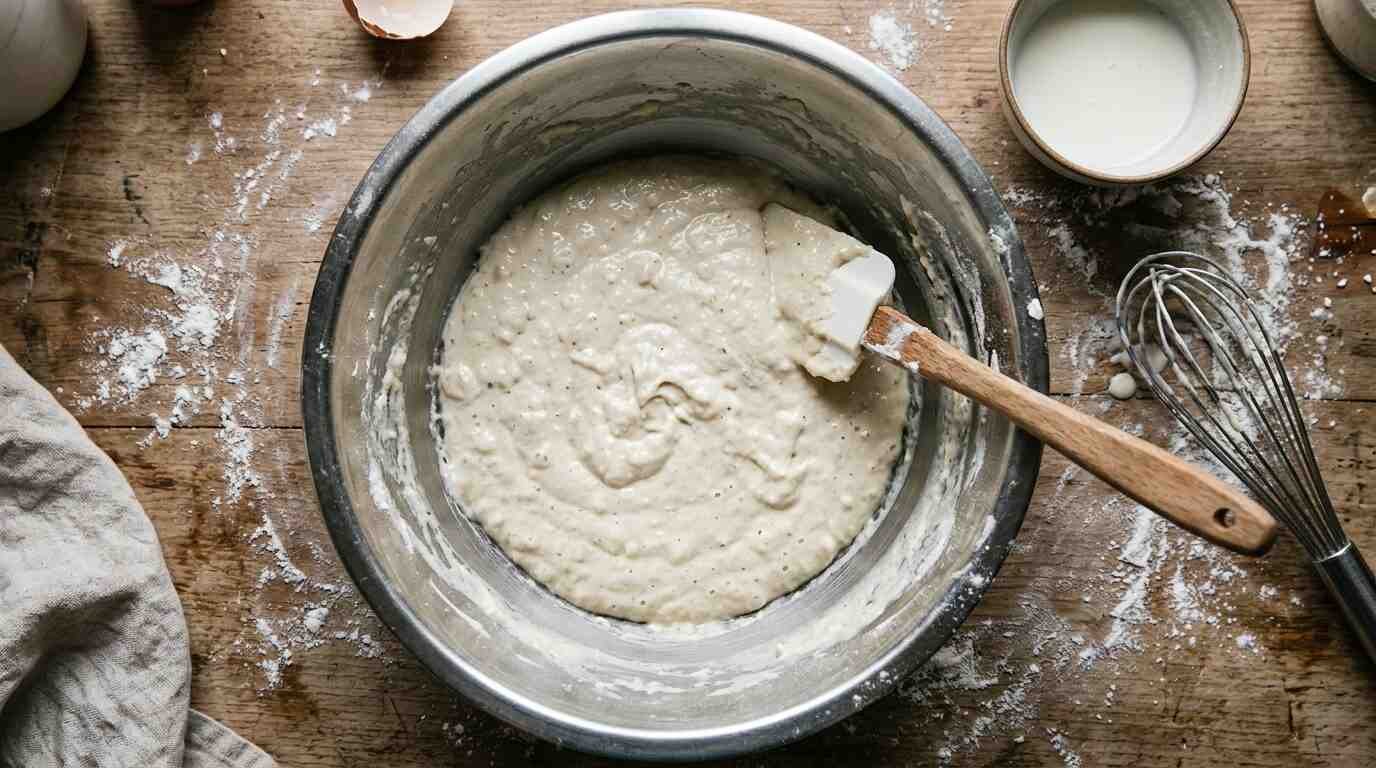
Flour carries a protein that turns into gluten once liquid arrives. According to Scientific American, the molecules loosen, stretch and link into a web. Stir gently and the web stays slack, with plenty of room to trap the gas that baking powder and baking soda release. Stir hard and it tightens into a net with fewer, smaller air pockets, which produces a tough pancake that spreads wide and flat.
Think of it as a hammock. Slack, it cradles a load. Drawn tight, it can only lie flat.
That is why America’s Test Kitchen writer Matthew Fairman gives the instruction in four words: “Leave the batter lumpy.” Smooth batter is overmixed batter. A rest of at least ten minutes does the work that a whisk would otherwise do, because the flour finishes absorbing liquid and the lumps dissolve on their own.
Buttermilk adds a second lever. Its acid reacts with baking soda to make extra carbon dioxide, and its thicker body holds bubbles in place while the cake sets, both according to the same ATK piece. If you want the full ratios, the Heritage buttermilk pancake recipe lays them out with a butter-crisped edge.
Ten Minutes or Thirty? The Rest Debate
Everyone agrees the batter should sit. Almost no one agrees for how long, and the gap is wider than you might expect.
| Source | Suggested rest | Stated reason |
|---|---|---|
| America’s Test Kitchen (2022) | At least 10 minutes | Flour hydrates, lumps dissolve, leavener spreads air evenly |
| Food Republic (2023) | About 10 to 15 minutes | Baking powder needs time to activate |
| Bob’s Red Mill (2019) | 20 to 30 minutes | Fluffier results |
Fifteen minutes sits inside the first two ranges and fits the time it takes to heat a pan and pour coffee. That is planning advice drawn from the three sources, not a quotation from any of them, and the long rest is worth a try on a slow weekend.
Gear That Earns Its Counter Space
Nobody needs a drawer full of equipment to make a good pancake. A few pieces do make the process steadier, and each one below matches a step in the run sheet that follows.
- Lodge 10.5-inch Pre-Seasoned Cast Iron Round Griddle: A compact pre-seasoned cast iron griddle for cooking a pancake or two at a time over a burner, and the cast iron versus carbon steel skillet guide helps if you are choosing between pans. See it on Amazon (affiliate link)
- Presto 22-Inch Ceramic Electric Griddle: Its 22-by-12-inch nonstick surface and removable temperature control give you room for a full batch at once. See it on Amazon (affiliate link)
- OXO Good Grips Large Silicone Flexible Turner: A flexible-headed turner built for flipping and for nonstick cookware, and it is dishwasher-safe. See it on Amazon (affiliate link)
- Butternut Mountain Farm Pure Vermont Maple Syrup, Grade A Dark, Robust Taste, 32 fl oz: A quart of dark Vermont syrup, which is the right size for a household that pours freely. See it on Amazon (affiliate link)
Listings change, so check the size, price and variation on each product page before you buy.
A Run Sheet From Cold Pan to Plate
The timings below combine the ATK batter guidance with the griddle advice from Lee Clayton Roper at A Well-Seasoned Kitchen.
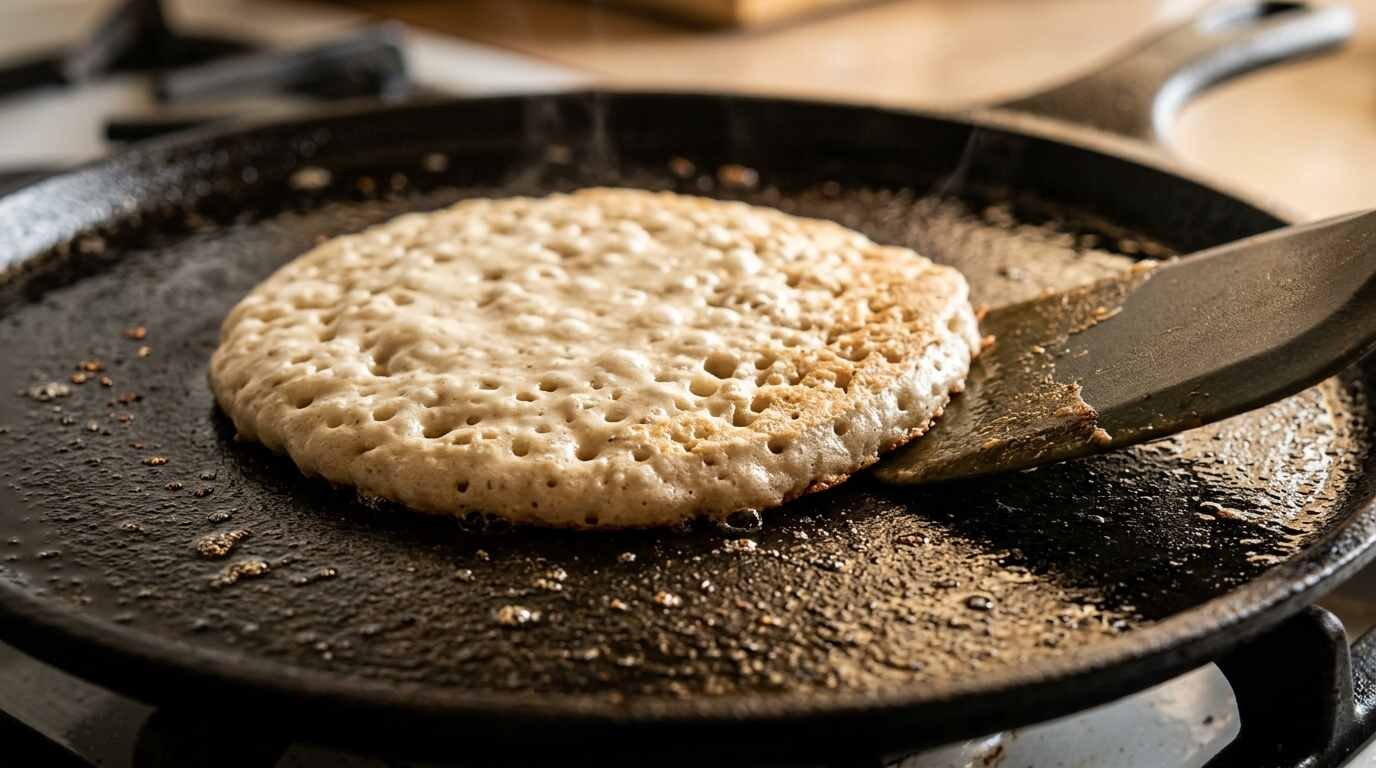
- Fifteen minutes out: Whisk the dry ingredients in one bowl and the wet in another. Combine with as few strokes as it takes to wet the flour, and stop while lumps remain.
- Cold pan, light oil: Roper recommends greasing the pan with a neutral oil before heating and skipping butter at this stage, since butter can burn. The Heritage recipe does use butter on the griddle for lacy, browned edges, so choose by the result you want: tidy and even, or crisp at the rim.
- Heat in two stages: Preheat to medium-high, about 375°F, then drop to medium, about 350°F, once the surface is hot. Re-grease at that point and again between batches.
- Pour and wait: Leave space between cakes. Do not flip when bubbles first show. Roper’s cue is to wait until they have popped and left holes, with the edges looking set, roughly four minutes. The cake should slide off the pan when a spatula goes under it, and if it sticks, it needs longer.
- Flip once: Cook the second side about two to three minutes, until golden and the center springs back under a light press.
- Keep warm, keep moving: The Heritage buttermilk recipe holds finished cakes on a wire rack in a 200°F oven so the edges stay crisp.
Eggs come last, since they take minutes and cool fast. The diner fried egg science guide covers the flat-top logic, the step-by-step breakfast platter guide covers assembly, and the chemistry of the bottomless cup is worth reading while the second batch cooks. For a celebration version, there is the funfetti pancake stack.
When a Stack Goes Wrong
| What you see | Likely cause | Fix |
|---|---|---|
| Tough, rubbery, flat | Overmixed batter builds a tight gluten net (Scientific American) | Fewer strokes; leave the lumps |
| Thin batter, little rise | Batter went to the pan without resting (Food Republic) | Rest 10 to 15 minutes before pouring |
| Weak lift even after resting | Baking powder past its prime; Food Republic puts the limit near three months after opening | Replace the can |
| Tears or sticks when flipped | Flipped too soon, or pan not greased (A Well-Seasoned Kitchen) | Wait for popped bubbles and set edges; re-grease between batches |
Questions People Ask
Why should pancake batter stay lumpy? Stirring until smooth tightens the gluten and knocks out air, per Scientific American and America’s Test Kitchen. The lumps disappear during the rest.
How long should the batter rest? Published advice runs from at least ten minutes to thirty. Fifteen is a reasonable middle.
Can I use regular milk instead of buttermilk? Yes, though ATK notes buttermilk gives more lift because of its acid and thickness. The Heritage recipe includes a vinegar-and-milk substitute for a pinch.
Do I need an electric griddle? No. Roper’s guide calls for a nonstick or well-seasoned pan, and cast iron works.
Who is Dan the Pancake Man? Daniel Drake, a St. Louis fry cook turned pancake artist and co-founder of Dancakes, per St. Louis Public Radio.
Sources
- St. Louis Public Radio: How one St. Louisan flipped a fry cook job into pancake art fame (Oct. 10, 2018)
- GamesRadar+: Pokemon pancake artist flips ’em all
- ComicBook.com: All 151 original Pokémon as pancakes
- YouTube: 151 Pokemon Pancakes (Dancakes)
- America’s Test Kitchen: What’s the Secret to Fluffy Pancakes? (Matthew Fairman, Sept. 9, 2022)
- Scientific American: The Scientific Secret of Fluffy Pancakes
- A Well-Seasoned Kitchen: When to Flip a Pancake & Other Expert Pancake Tips
- Bob’s Red Mill: The Secret to Fluffier Pancakes (Nov. 30, 2019)
- Food Republic: The Batter Mistake That Kills Fluffy Pancakes (Nov. 23, 2023)
- Tools and Toys: Presto 22-inch Ceramic Electric Griddle
As an Amazon Associate I earn from qualifying purchases. A commission may be earned if you buy through this link, at no extra cost to you.