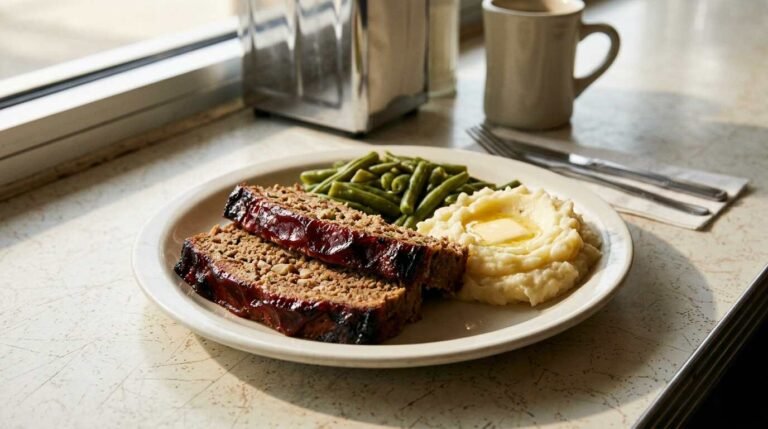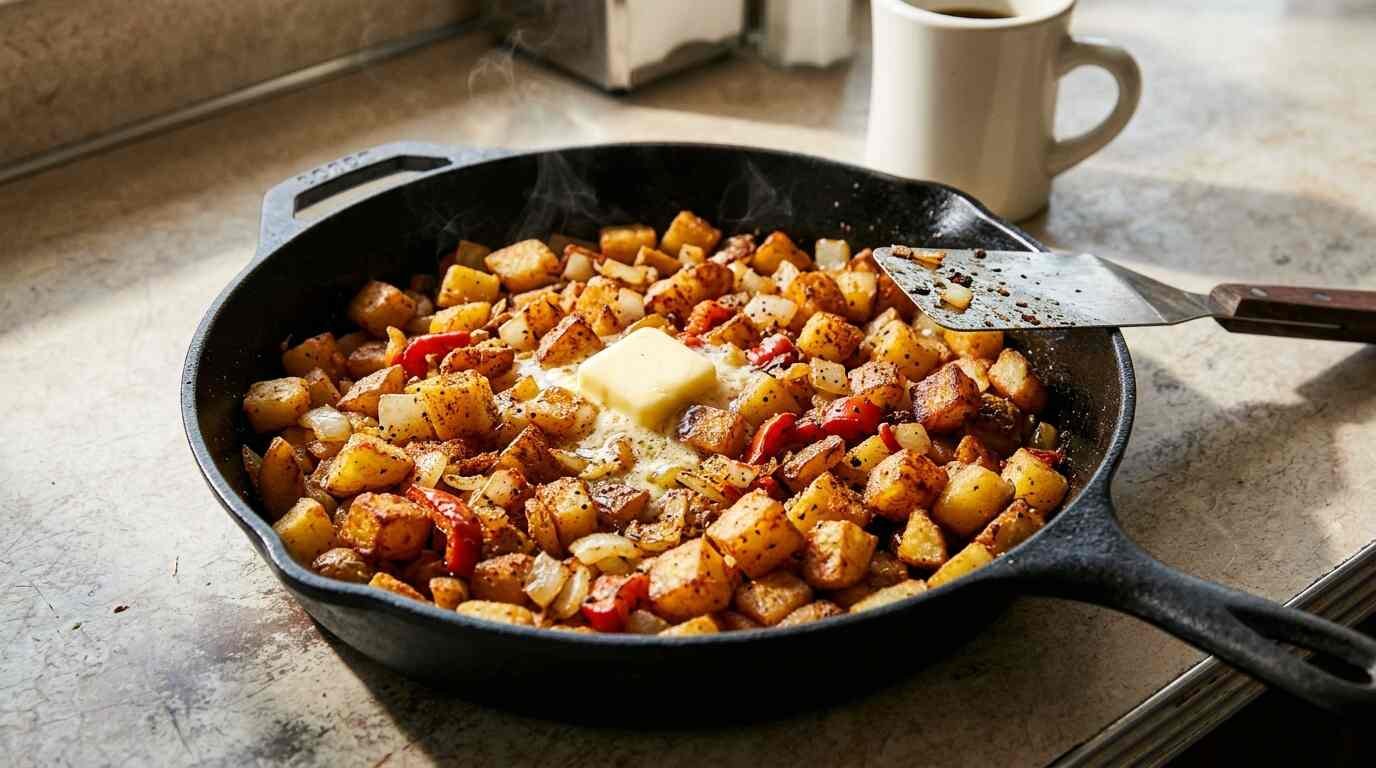
Steam is the villain in nearly every sad plate of home fries. A cube of potato carries a surprising amount of water, a crowded pan traps whatever escapes, and the golden, crackling edge you wanted turns into something pale and damp. The cure is less a recipe than a set of repairs, and each repair answers a symptom you can see in the pan.
This guide is organized like a diagnostic chart for that reason. Find the failure that matches your skillet, apply the fix, and the working recipe near the end puts every repair in order. The method here is the stovetop version of the diner classic. For the oven-roasted approach, the guide to a full diner breakfast at home covers the America’s Test Kitchen technique step by step.
What a Home Fry Actually Is
Home fries are potatoes cut into cubes or chunks, cooked part of the way through, then browned in a skillet or on a griddle, usually alongside onion and often bell pepper. Hash browns start from shredded potato instead. MasterClass draws the line at shape and mix-ins: cubes and peppers on one side, shreds and little more than salt on the other.
The hash brown name has a paper trail. The Original Pancake House credits food author Maria Parloa with the first known mention of “hashed browned potatoes,” in 1888, and says the phrase was later shortened to the form on today’s menus. The same restaurant says it prefers home fries for their texture and for the flavor that onions and seasonings add.
Every serious recipe agrees on one move. The Food52 writer calls the parboil the secret to crisp potatoes, since boiling releases starch that forms a crisping layer once the pieces meet hot fat. Everything below builds on that single step.
The Gear That Does Half the Work
Technique matters more than equipment, but four inexpensive tools remove most of the guesswork. Each link below goes to the product page on Amazon.
- Lodge 12-inch pre-seasoned cast iron skillet: A heavy pan holds its heat when cold potatoes land in it, and twelve inches leaves room for a single layer. See it on Amazon (affiliate link)
- OXO Good Grips flexible turner (medium): A thin, bendy metal blade slides under the crust without tearing it off the potato. See it on Amazon (affiliate link)
- OXO Good Grips 5-quart stainless steel colander: Fast draining matters, because parboiled cubes need to shed water before they hit the pan. See it on Amazon (affiliate link)
- Diamond Crystal kosher salt, 3-pound box: The flaky crystals pinch easily, which makes it simple to season both the boiling water and the finished plate. See it on Amazon (affiliate link)
Choosing between cast iron and other skillets is its own debate, covered in the carbon steel versus cast iron versus stainless comparison.
Six Failures and Their Fixes
1. Burnt outside, raw inside
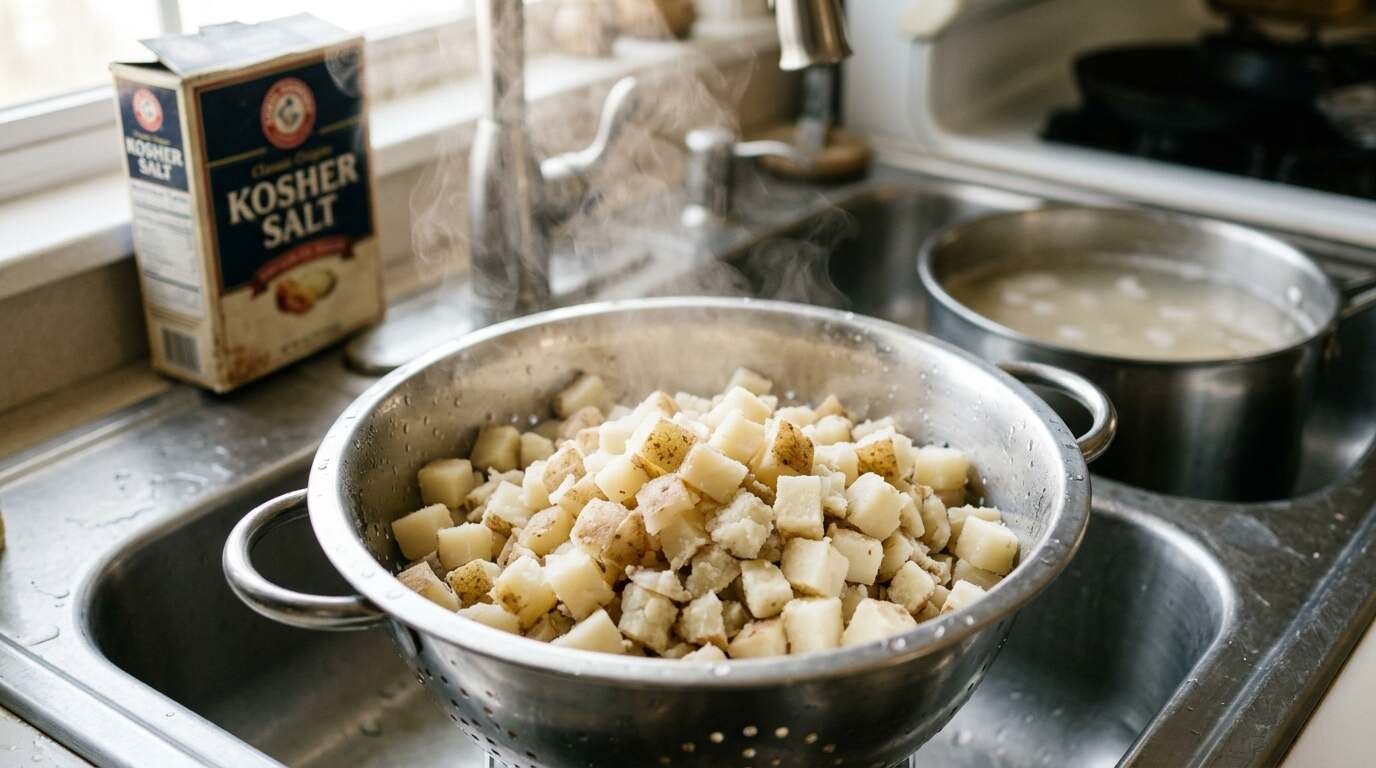
The cause is skipping the parboil. Raw cubes need far longer to cook through than their surfaces can survive in a hot pan. Published stovetop recipes solve it by boiling the cubes for a minute or two, just until a fork pierces them, then draining. Jessica Gavin’s version adds a small amount of baking soda and salt to the water to start the softening process. Aim for tender-but-intact. A cube that has gone mushy in the pot will crumble once it hits the skillet.
2. Pale and soft instead of golden
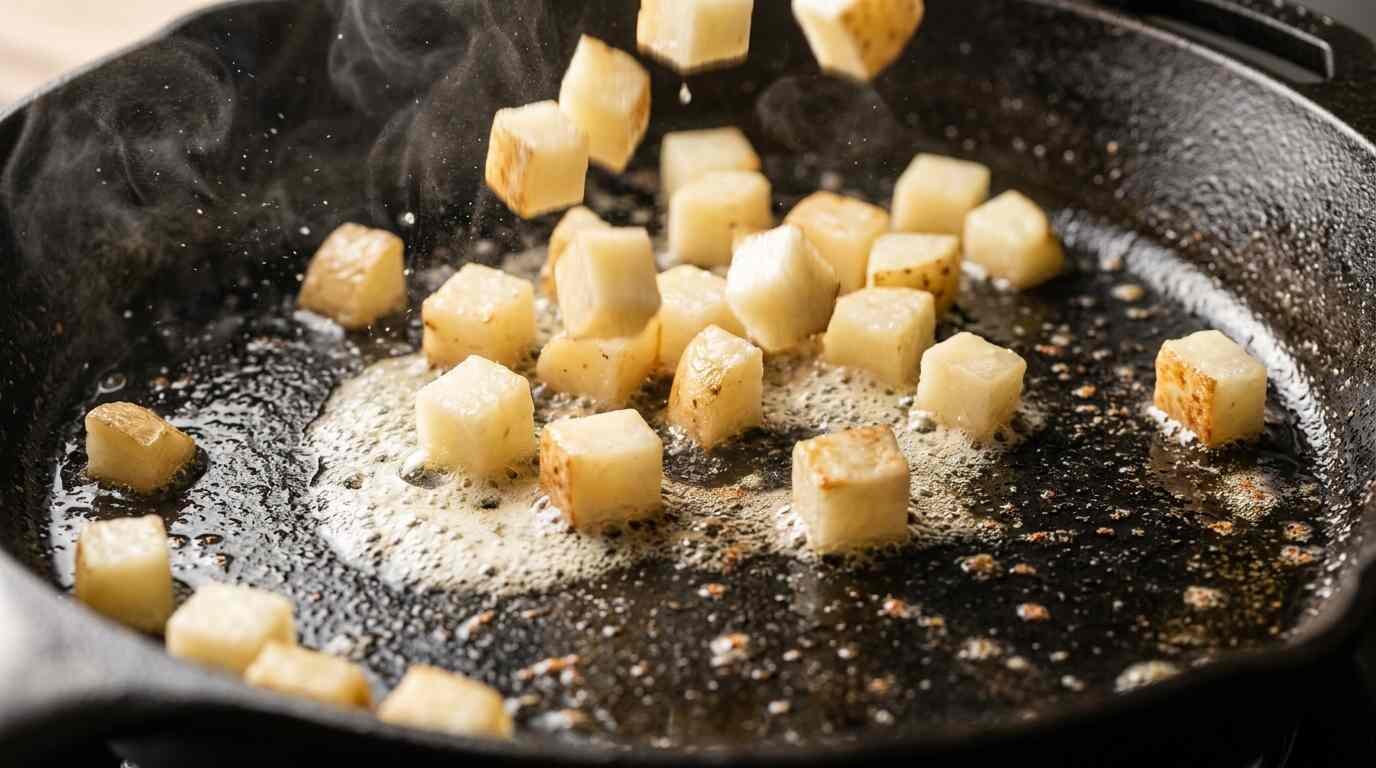
Two things cause this: water clinging to the potato, and a pan that has not heated enough. Drain the cubes thoroughly and let the steam rise off them. Then heat the fat until it shimmers before a single potato goes in. The Kitchen Whisperer’s stovetop method waits for the butter to foam, then lays the potatoes down in one layer with each piece touching the skillet.
3. Stuck to the pan and torn apart
Stirring too early is the usual culprit. Potatoes release from the metal on their own once a crust forms, and prying them loose before that point rips the crust away. Leave them alone for several minutes, nudge a cube with the turner to check, and turn only when it moves freely. Sitting still is how browning happens.
4. Crisp in patches, never all over
Baking soda is the repair. It raises the alkalinity of the water and roughs up the potato surface during the boil, and the Savory Experiments recipe says that texture helps the edges crisp. Amounts in published recipes vary widely, from a quarter teaspoon to a full teaspoon in a pot of water, and one recipe site notes the exact amount hardly matters as long as it stays small. Start low.
5. Onions burned, potatoes still pale
Onions and peppers contain sugar, and sugar burns before a starchy cube is ready. Several recipes cook the onions and peppers first in a little butter and oil, move them to a plate, and fold them back in at the end. The Food52 writer sears the onion and pepper first in a screaming-hot pan, then adds the potatoes. Either way, the sugary vegetables should not sit in direct heat for the whole cook time.
6. A big batch that steams instead of fries
This is the failure that overrides every other fix. Too many potatoes in one pan trap moisture and lower the temperature, so the whole layer simmers. Leite’s Culinaria’s home fries page carries the same warning about crowding. Cook in two batches if the skillet is anything short of roomy.
The Working Recipe
This template follows the shared pattern of the stovetop recipes cited below rather than copying any single one. Timing is approximate, and total time lands near thirty minutes in published versions.
Serves: 2 to 3 | Skill level: Easy
Ingredients
- 2 large russet potatoes, scrubbed, cut into ½-inch cubes
- ¼ to 1 teaspoon baking soda, to taste
- Kosher salt
- 3 tablespoons neutral oil, divided
- 1 tablespoon butter
- ½ cup diced yellow onion
- ½ cup diced red or green bell pepper (optional)
- Black pepper and smoked paprika, to finish
Instructions
- Put the cubes in a pot, cover with cold water, and add a good pinch of salt and the baking soda.
- Bring to a boil and cook until a fork just pierces a cube, about one to two minutes after boiling begins.
- Drain in a colander and let the steam rise off for a few minutes. Pat dry if the surface still looks wet.
- Meanwhile, cook the onion and pepper in 1 tablespoon of oil over medium heat until soft. Transfer to a plate.
- Wipe the pan, set it over medium-high heat, and add the remaining oil and the butter. When the butter foams, add the potatoes in a single layer.
- Leave them alone until the underside is deep golden, then turn and repeat on the other sides. Work in batches if needed.
- Return the onion and pepper, season with salt, pepper and paprika, toss for a minute, and serve hot.
Why Crispy Potatoes Keep Going Viral
The internet has a long-running appetite for fried potato crunch. Food Network reported that chef and cookbook author Poppy O’Toole’s layered, 15-hour potato recipe passed 18.4 million views on TikTok after she posted it in August. Before her first bite on camera, she asks, “Can we all just take a moment of silence for this?” The same Food Network piece quotes an expert who attributes the attention to the near-universal appeal of crispy, fried potatoes, and who recommends starchy varieties over waxy red or purple ones.
Home fries ask for no 15-hour wait. They run on the same physics, with a starchy potato, a dry surface, and plenty of hot fat doing the work.
Leftovers, Freezing and Reheating
Let the potatoes cool completely, then store them in an airtight container in the fridge. Food Faith Fitness says leftover home fries freeze for up to three months. For reheating, Savory Experiments suggests a skillet with a little oil, noting that a microwave works but will not bring the crisp back.
Pair a plate with eggs and the pan stays busy. The diner fried egg science guide covers flat-top timing, and the crispy griddled corned beef hash puts leftover cubes to work.
Questions People Ask
Do I have to parboil the potatoes? It is the step nearly every published recipe shares. One recipe says skipping it works if you start with leftover baked potatoes, but raw cubes usually fail to cook through before they scorch.

What is the best potato for home fries? Russets are the most commonly named, though recipes also use Yukon Golds and red potatoes. Starchy varieties brown and crisp more readily than waxy ones.
What is the difference between home fries and hash browns? Cubes versus shreds. Home fries are usually cooked with onion and often pepper, and hash browns are typically seasoned with salt and little else.
Why are my home fries soggy? Excess moisture or a crowded pan. Drain and steam-dry the cubes, preheat the fat, and cook in batches.
Can I freeze home fries? According to Food Faith Fitness, yes, for up to three months. Reheat them in a skillet.
Sources
- Food Network: Can You Cut Corners on TikTok’s Viral 15-Hour Potatoes?
- MasterClass: Home Fries vs. Hash Browns Explained
- The Original Pancake House: Hash Browns vs. Home Fries
- Food52: Home Fries
- Jessica Gavin: Home Fries
- The Kitchen Whisperer: Ultimate Crispy Home Fries
- Savory Experiments: Crispy Home Fries
- 101 Cooking for Two: Crispy Home Fries
- Food Faith Fitness: Home Fries Recipe
- Leite’s Culinaria: Home Fries
As an Amazon Associate I earn from qualifying purchases. A commission may be earned if you buy through this link, at no extra cost to you.