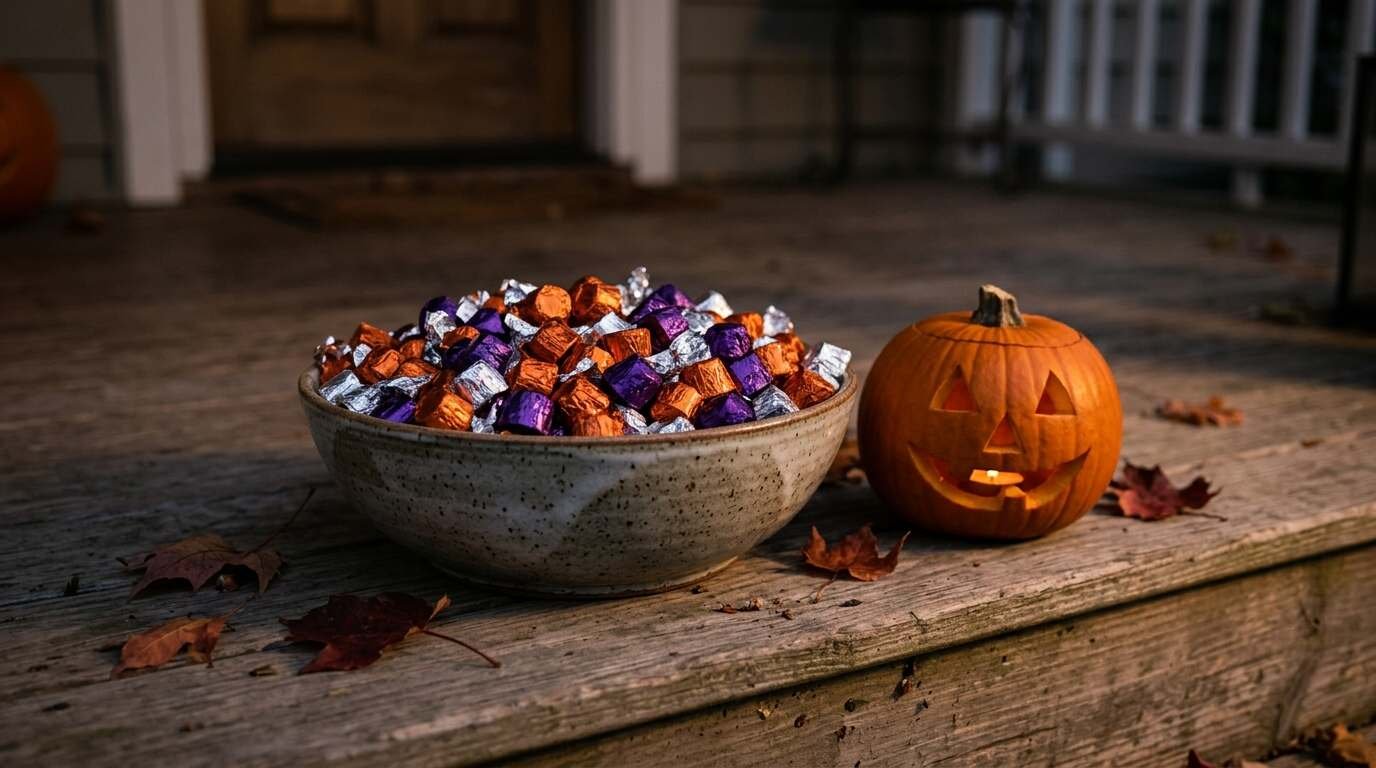
Candy and chewing gum cost 7.7% more in September than a year earlier, according to the Bureau of Labor Statistics’ consumer price index as reported by Yahoo Finance, and that is landing just as Halloween shoppers fill their carts. The National Retail Federation expects the holiday to bring in $13.5 billion in spending this year, close to last year’s record of $13.1 billion. Prices are up, and the forecast says people are still buying anyway.
The wider picture is a hotter inflation reading overall. Consumer prices rose 3.7% in September from a year earlier, up from 3.4% in August, the Associated Press reported (AP via PBS NewsHour). Candy is running at roughly twice that pace. We tracked the same squeeze on the restaurant side in our look at menus rising nearly twice as fast as grocery bills.
Why chocolate is the sticking point
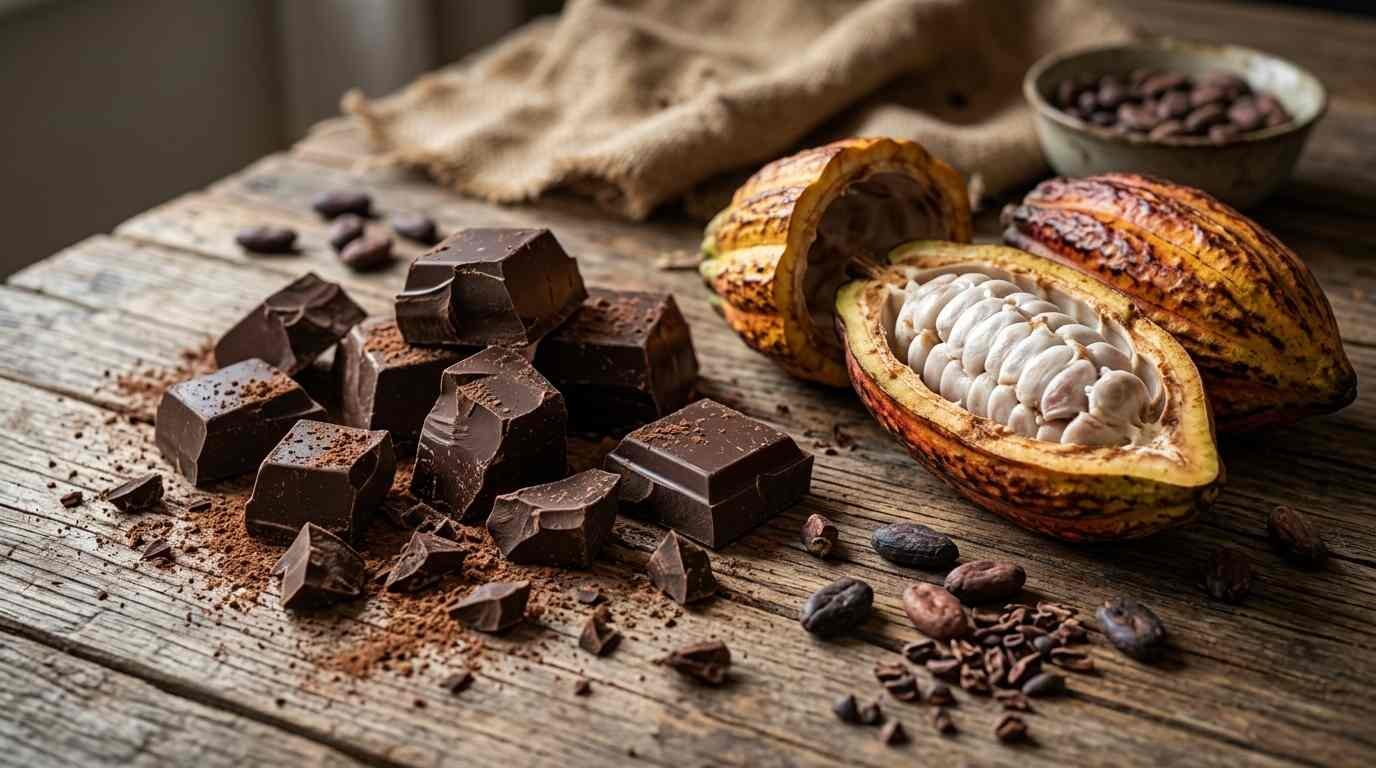
Most of the pressure traces back to cocoa. Extreme weather in Ivory Coast and Ghana roughly quadrupled cocoa prices between January 2023 and January 2025, according to IMF data cited in both Yahoo Finance and NBC News (via NBC Boston). Cocoa has since fallen by about half, according to consulting firm PwC, but the relief has not reached the shelf. The reason is timing: chocolate makers often buy cocoa months or even up to two years ahead, so shoppers are still paying for the earlier spike.
Cocoa is only part of the bill. Wells Fargo’s David Branch told Yahoo Finance that cocoa beans, sugar and corn syrup make up about 65% of what goes into chocolate, and sugar and sugar substitutes are up 5.5% from a year ago. Tariffs of 10% and 12.5% on 60 trading partners, which took effect in July, are adding to manufacturers’ costs as well, and analysts expect some of that to be passed along.
Two price measures that do not agree
The figures for chocolate itself look different depending on who is counting. PwC reported that Halloween chocolate rose 15.5% to an average of $5.67 per package, while non-chocolate candy averaged $3.31, up 1.8%. NIQ, a market research firm, found chocolate overall up 9.4% from a year ago but Halloween-specific chocolate up only 1.7%. Those are different products, packaging and time windows, so the numbers are not contradictory. Read together they say that the sharpest increases are in the chocolate people grab for treat bags, and that ordinary candy has moved far less.
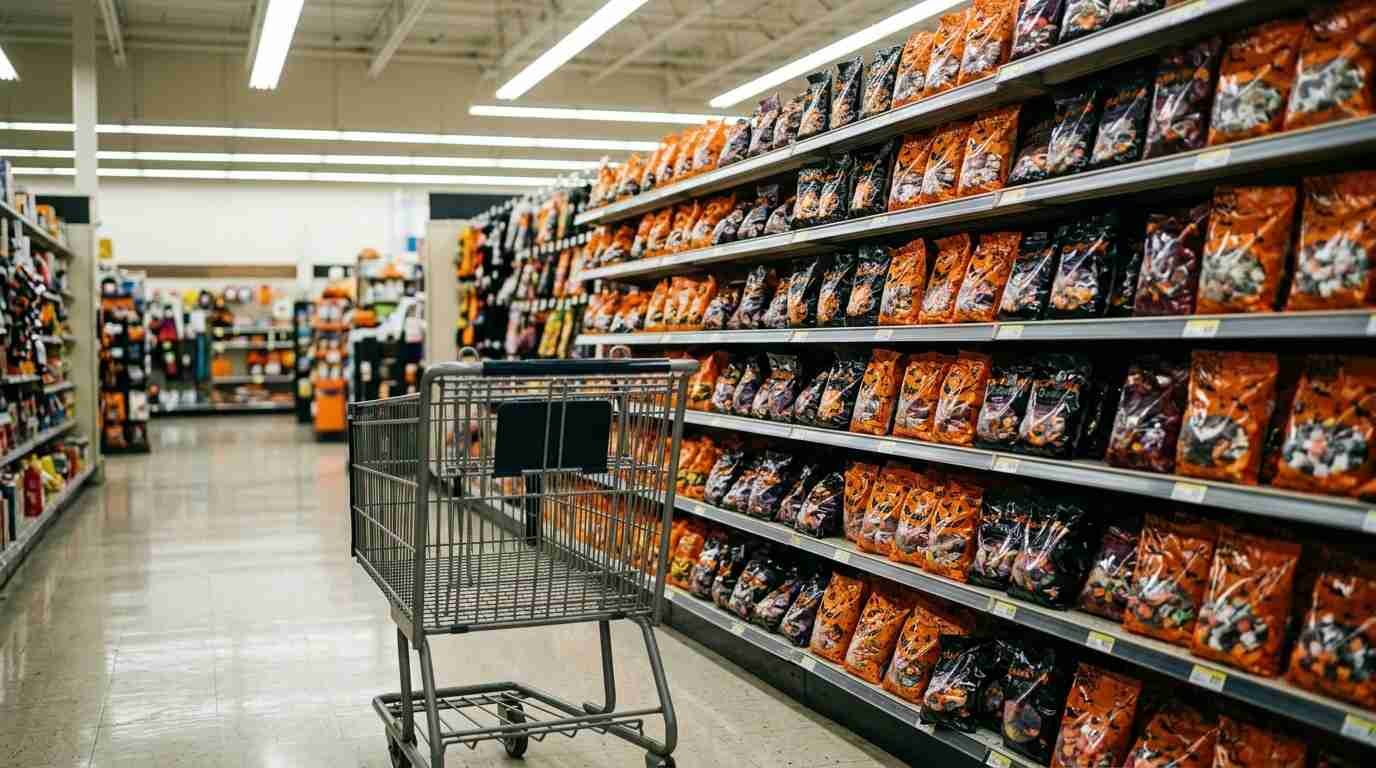
Behavior is shifting more than the spending total suggests. The NRF told Yahoo Finance that shoppers are spending “a little bit more savvily,” with lower-income households buying smaller, lower-priced packs and higher-income households buying bulk and value bags. NRF’s survey of 7,889 consumers, conducted September 1 through 9, found 96% plan to buy sweets, a category worth about $4.1 billion. Another 78% plan to buy decorations and 71% costumes, and 74% of consumers say they will celebrate, up from 73% last year and 68% in 2019.
What it means at the diner counter and the kitchen table
For a place like ours, chocolate is more than trick-or-treat. It is the cream pie, the brownie, the hot fudge on the sundae and the chocolate egg cream. Operators who buy cocoa-heavy ingredients likely face the same lag the candy makers do, which may be one reason dessert cases can look pricier even when other menu items hold steady. Our piece on the dessert case explains the economics of why a pie rotates in and out. And if you want a sweeter way to spend an afternoon, our history of candy corn and our visit to Saturday Candy Co. in Stony Brook are good local reading.

A few practical ways households are handling the price jump, drawn from what the retail and consumer reporting describes:
- Compare unit prices rather than bag prices. A bigger bag is not always the better deal when the count per bag changes.
- Mix chocolate with non-chocolate candy. Non-chocolate candy has risen far less than Halloween chocolate in the PwC figures.
- Buy only what you will hand out. Some shoppers told NBC News they plan to buy discounted candy after Halloween instead.
- Consider smaller packs if you expect few trick-or-treaters. The lower-income shoppers in the NRF description are doing exactly that.
Nobody can say whether this holiday will beat last year’s record, and the forecast is a survey, not a sales count. What the numbers do show is that a basic seasonal purchase now costs noticeably more than it did a year ago, and that shoppers are adapting by trimming rather than skipping. Our read that this will be a widely shared topic this week is a judgment based on how many outlets are covering it, not a guarantee.
Sources
- Yahoo Finance, Brooke DiPalma, “Candy prices jump nearly 8%, but consumers are still willing to splurge this Halloween” (Oct. 14, 2026), using BLS September CPI data: finance.yahoo.com
- NBC News via NBC Boston, Kayla Steinberg, “America prepares to spend on Halloween candy as prices rise” (Oct. 11, 2026): nbcboston.com
- National Retail Federation, Halloween survey press release (Sept. 22, 2026), company statement: nrf.com
- AP via PBS NewsHour, “How much longer will consumers be willing to muscle through higher prices?” (Oct. 15, 2026), for the 3.7% September inflation figure: pbs.org