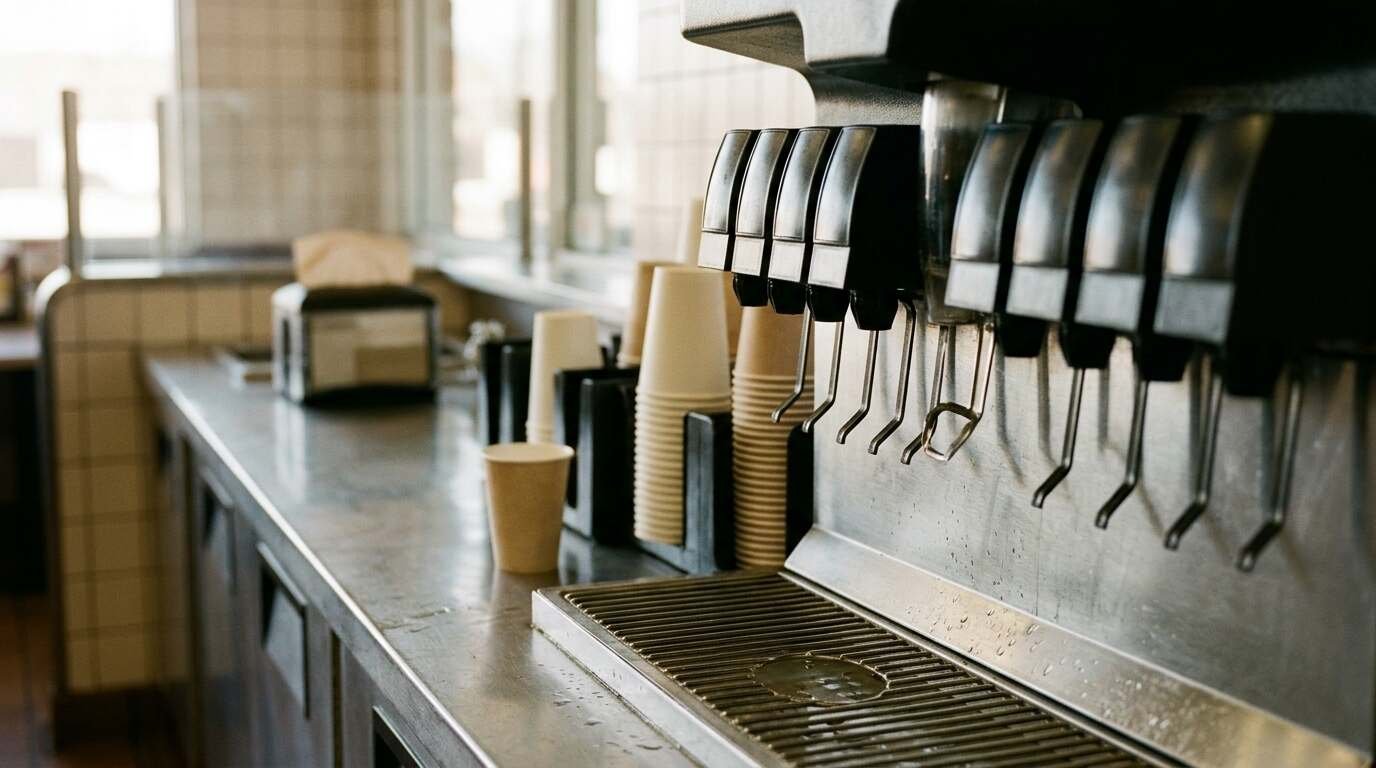
The soda fountain is one of the least glamorous parts of a restaurant and one of the most contested. Within a single week, two of the biggest beverage companies in the country traded blows over exactly that. On October 15, KFC said it had signed Coca-Cola as its U.S. drink supplier, ending a relationship with PepsiCo that goes back about four decades, according to Reuters reporting carried by WHBL. A week later, on Thursday, October 22, PepsiCo and Taco Bell announced they had renewed their partnership through 2036, CNBC reported.
Both restaurants belong to Yum Brands, so one parent company has just handed one chain to Coke while locking in another for Pepsi. For anyone who eats out, works in a kitchen or follows the restaurant business, it is a rare window into how a drink on the menu gets there.
What changed at KFC
KFC operates 3,718 U.S. restaurants, per the Reuters report, and Coca-Cola products are expected to be available in them by spring 2027, the company said. Financial terms were not disclosed. The Wall Street Journal reported the news first, citing people familiar with the matter.
The history explains why it stings for Pepsi. PepsiCo once owned the restaurant chains, and when it spun them off into Yum Brands in 1997, it stayed on as the beverage partner. Coca-Cola already pours at McDonald’s and Wendy’s, so KFC is another big name joining its side. Reuters quoted an analyst who called the loss a bad look for PepsiCo, which has been working to improve U.S. soda sales while its snack business contends with high prices and a shift toward healthier options.
What stayed the same at Taco Bell
The Taco Bell renewal runs through 2036, CNBC reported, and a PepsiCo spokesperson described it to Reuters as a 10-year agreement. It also means Taco Bell restaurants in international markets such as Canada, the United Kingdom, Ireland and Thailand will keep serving Pepsi products. PepsiCo and Yum recently renewed agreements covering KFC’s international stores as well, per Reuters.
Taco Bell’s menu is tied tightly to the Pepsi portfolio. CNBC points to exclusive items that use Pepsi products, including Mountain Dew Baja Blast and the Doritos Locos Tacos. A chain with signature items built around a supplier’s brands has a stronger reason to stay put than one that mostly pours a cola and a lemon-lime soda.
KFC’s U.S. president, Catherine Tan-Gillespie, wrote in an October 15 memo obtained by CNBC that Pepsi remains an important partner for Yum and for the chain’s international markets, even as the U.S. business changes suppliers.
Why restaurants switch, and why they rarely do
CNBC described a change like KFC’s as unusual for a large chain but not unprecedented. Beverage contracts are rarely about the drink alone. Coke and Pepsi compete for restaurant accounts with perks and other inducements, and a national deal affects equipment, signage, promotions and the syrup that arrives in the back room. Reuters noted that PepsiCo lost Dunkin’ to Coca-Cola in 2012 after a five-year run, and that Pizza Hut, now outside the Yum umbrella, moved from Coca-Cola to PepsiCo in 2011. PepsiCo also has beverage agreements with Subway and Jersey Mike’s.
Changing suppliers across thousands of restaurants is a big undertaking, which is one reason national chains do it so seldom. The spring 2027 timeline gives KFC months to prepare.
The pressure on PepsiCo
The KFC decision lands while PepsiCo is under scrutiny. Reuters reported that CEO Ramon Laguarta said earlier in October that growth and margin recovery were taking longer than planned, and that activist investor Elliott Investment Management, which disclosed a stake last year, has urged the company to sell underperforming assets and improve its North American performance. The Taco Bell renewal gives Pepsi a long runway with one of Yum’s chains after the KFC loss.
What it means for diners
If you eat at KFC in the U.S., the drink in your cup is likely to change sometime in 2027. If you eat at Taco Bell, nothing changes. For a classic counter-service diner on Long Island, the headline is more distant but still useful: the big chains negotiate national supply deals, while an independent diner is generally free to choose its own fountain supplier, so the choice between a cola and its rival is made one kitchen at a time.
- Ask your server what brand the fountain pours if you have a strong preference; many independent places will tell you.
- Expect KFC’s U.S. menu board and cups to change by spring 2027, per the company.
- Watch for more contract moves as chains look for value in suppliers; both Coke and Pepsi have shown they will fight for accounts.