Salt is sodium chloride, full stop, yet a single teaspoon of it can weigh 2.8 grams or 6, depending on whose crystals fill the spoon. America’s Test Kitchen put those numbers on the page in a 2019 taste test, and they explain why a recipe that tastes perfect in one kitchen turns harsh in another.
Same Compound, Different Shapes
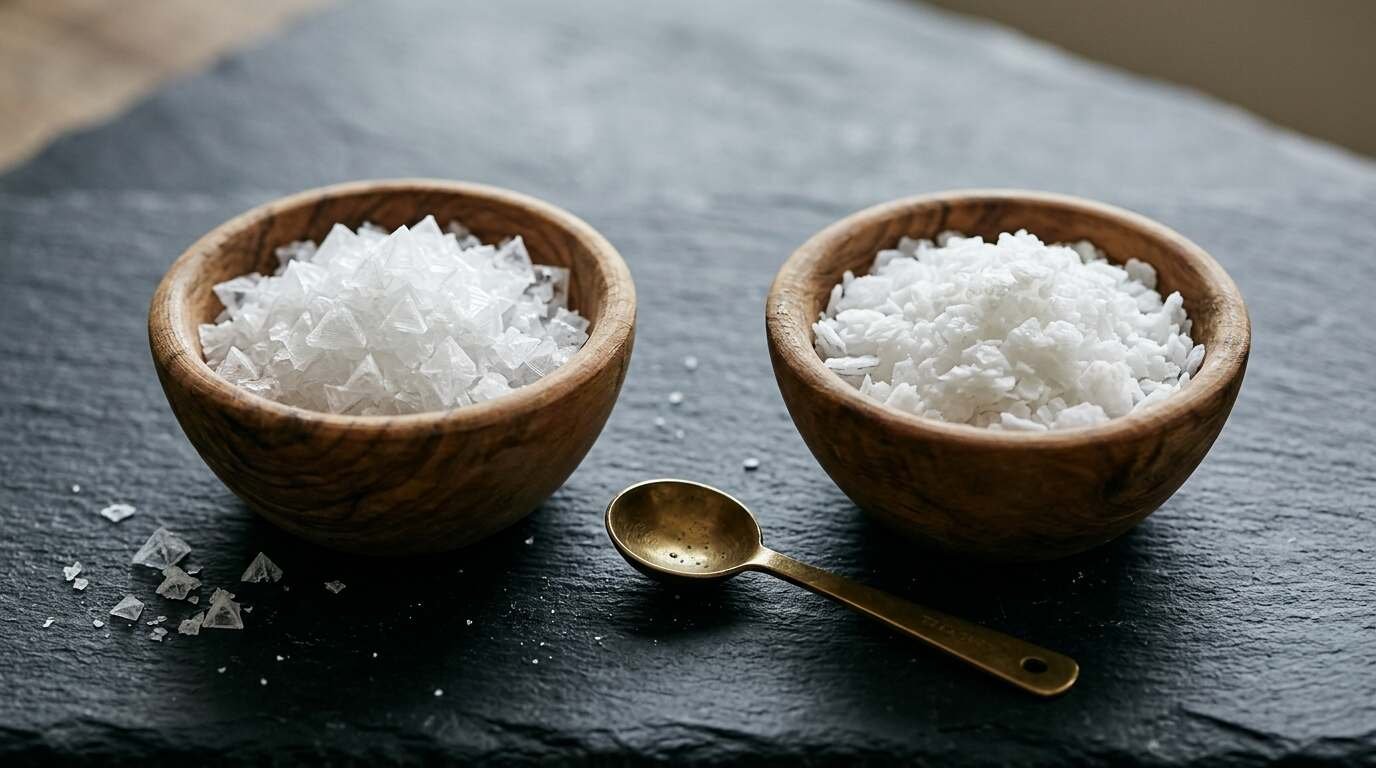
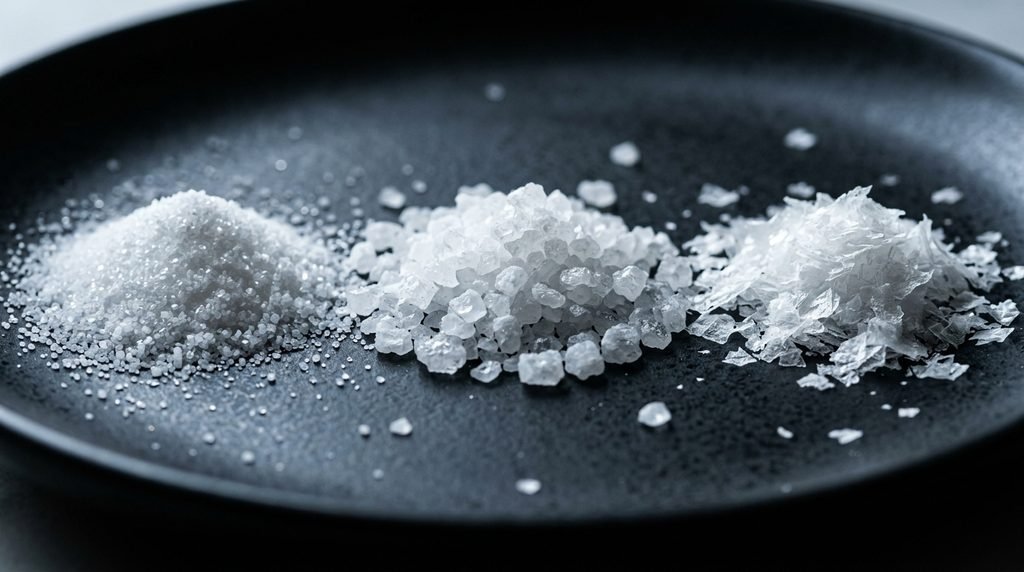
The difference lives in the crystal. In a 2022 column for America’s Test Kitchen, Paul Adams describes table salt as tiny, evenly cube-shaped grains, usually iodized at about one thousandth of one percent by weight, an amount he says he cannot taste. Kosher salt carries larger, more irregular crystals and lacks that trace of iodine.
Inside the kosher category, the two big American brands split again. Adams calls Morton’s flakes dense and flat, while Diamond Crystal’s grains are fragile and concave, and they stick to food more readily. Picture a handful of roof shingles next to a handful of cornflakes. Both fill a spoon, but one packs far more material into the same space.
Why the Teaspoon Lies
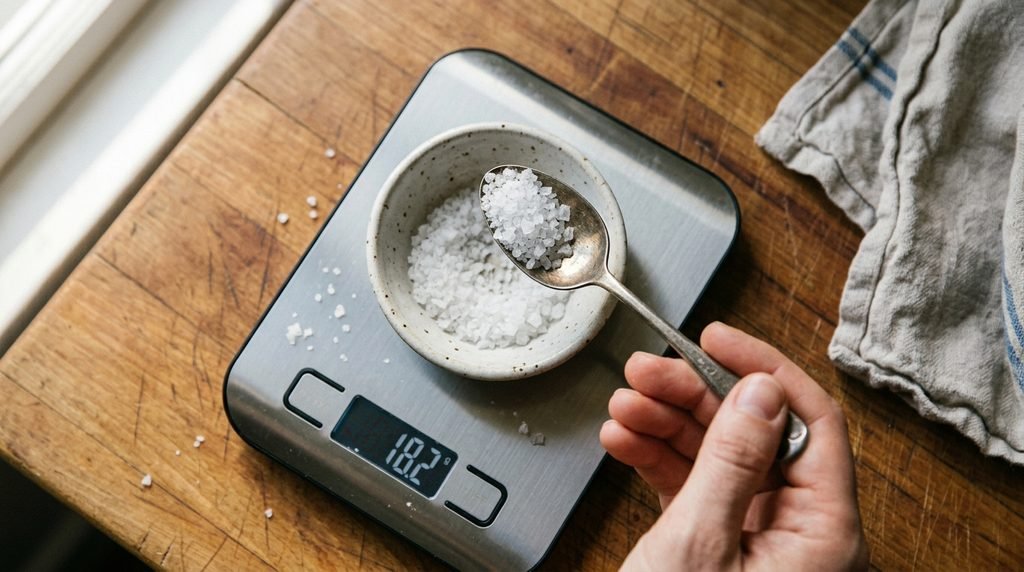
A measuring spoon counts space, not salt, so denser crystals mean more salt per scoop. America’s Test Kitchen has published two sets of weights, and they do not match perfectly, which is itself a reason to trust a scale.
| Salt | Per teaspoon (2019 taste test) | Per tablespoon (2022 column) |
|---|---|---|
| Table salt | about 6 g | 23 g |
| Morton kosher | 4.8 g | 16 g |
| Diamond Crystal kosher | 2.8 g | 10 g |
Read either column and the pattern holds: Morton lands somewhere past two-thirds of table salt by volume, and Diamond Crystal comes in at well under half. Adams closes his column by recommending a scale over measuring spoons for precise salt amounts.
Swapping One for Another
America’s Test Kitchen’s house rule is one part table salt to one and a half parts Morton to two parts Diamond Crystal. Cook’s Illustrated states the same ratio in teaspoons: 1 teaspoon of table salt equals 1½ teaspoons of Morton and 2 teaspoons of Diamond Crystal. The magazine adds that the brands’ crystal sizes differ considerably, which makes a difference when measuring by volume.
Two adjustments from the 2019 taste test cover most real recipes:
- Diamond Crystal recipe, Morton in the box: reduce the volume by 25 percent.
- Table salt recipe, Morton in the box: increase the volume by 50 percent.
A quick worked example: a recipe that calls for 2 teaspoons of Diamond Crystal becomes 1½ teaspoons of Morton. Run the arithmetic on the gram weights above and the swap is close but not exact, which is why the ratio is a rule of thumb and not a law. When the dish is delicate, such as a custard, a brine, or a bread dough, weigh the salt.
What the Tasters Found
America’s Test Kitchen named Diamond Crystal its winner in that 2019 test and noted it had favored the brand for more than 25 years. Tasters liked its soft, delicate texture, which crushes easily between the fingers and spreads evenly, and they preferred its light crunch on buttered bread, where it stuck well to the butter. Morton’s flakes were bigger, harder, and crunchier, and spread less evenly, though testers still liked the flavor.
One result matters more than the ranking. In warm chicken broth, both salts dissolved well and tasted the same when seasoned by weight. Nothing about one brand is saltier in the pot, so the whole contest comes down to how each one measures and handles.
Additives and Label Claims
Iodine is the only additive Adams discusses, and it appears in table salt, not kosher. Diamond Crystal’s own website goes further, calling its salt additive-free and saying the competing brand contains an anti-caking agent. That is brand marketing from one side of a rivalry, so check the ingredient list on the box in your hand.
Questions People Ask
Is kosher salt less salty? By weight it tastes the same, according to the broth test. By volume, a teaspoon of Diamond Crystal holds less than half the salt of a teaspoon of table salt.
Do I need to own both? Adams marks table salt as a yes and kosher salt as recommended, which is a fair summary of how most cooks stock a kitchen.
What about sea salt and pink salt? The same column says sea salts are not a need to own, and Himalayan pink salt gets its color from traces of iron with little flavor difference.
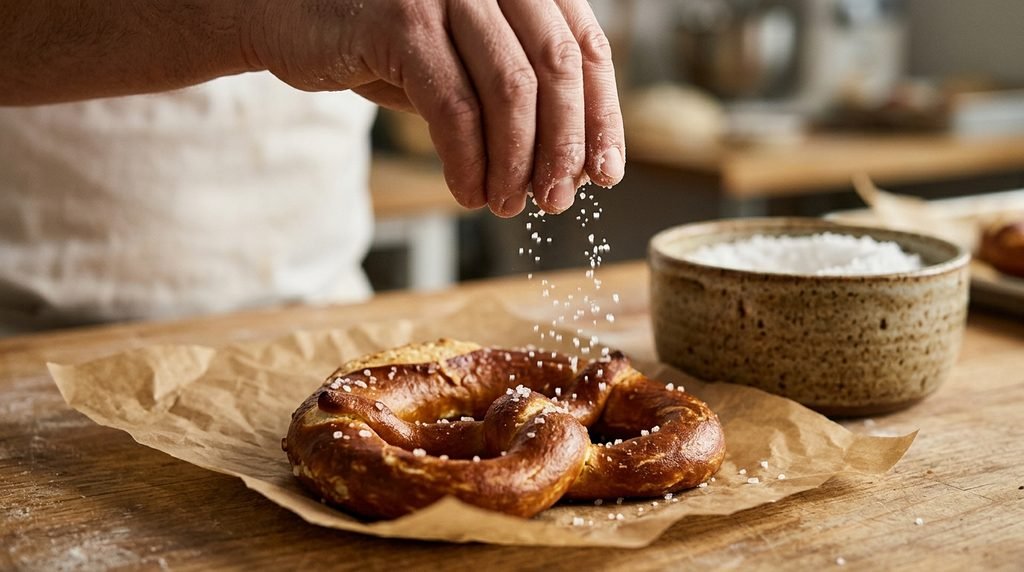
For salt in a very different role, there is the salt cod preservation diet of Greenport fishermen, and for the finishing kind, a batch of buttery soft pretzels with sea salt.