 275 Route 25A, Mt Sinai, NY 11766


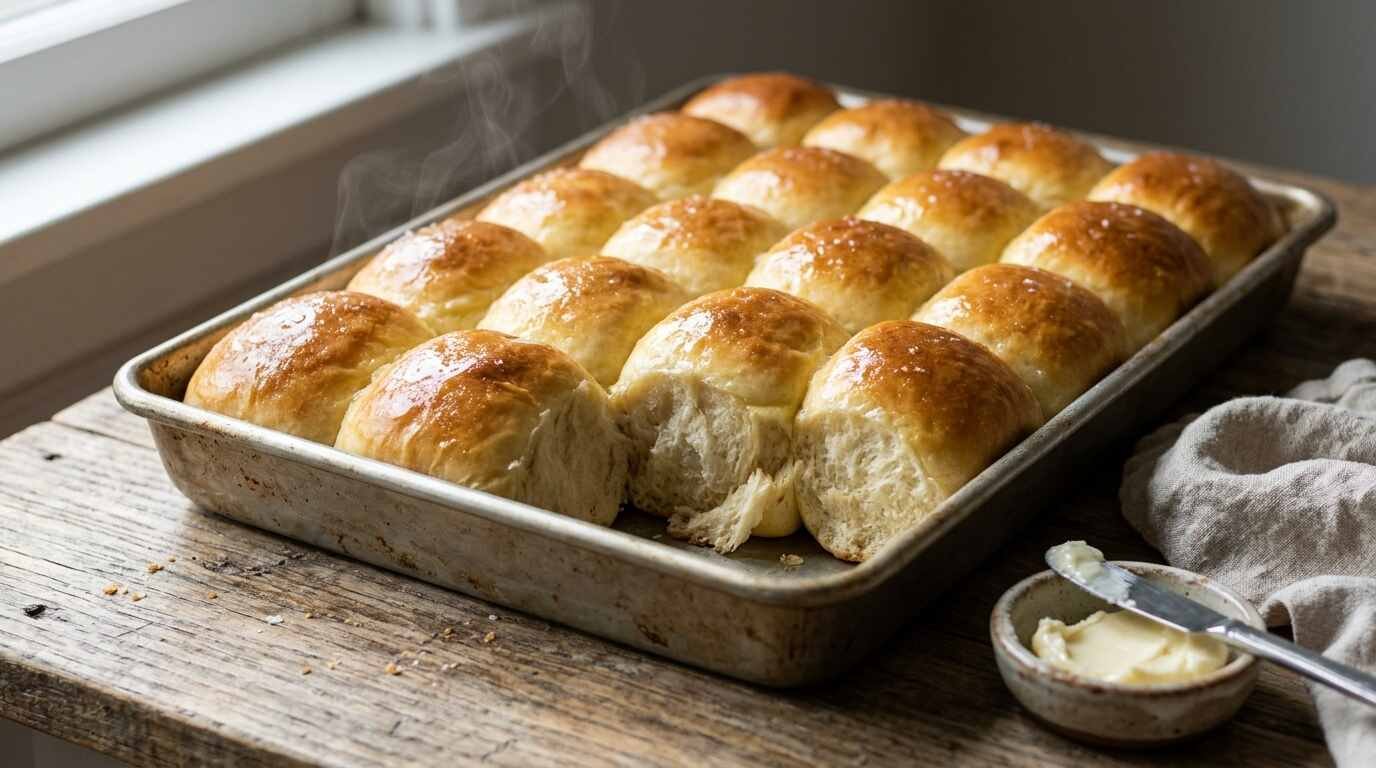
The building where the Parker House roll was born no longer stands. The J. R. Whipple Corporation closed the old hotel on November 23, 1925, tore it down, and the Parker House that opened on the same Boston corner on May 12, 1927 is a different structure entirely, according to the City of Boston’s Landmarks Commission study report. The roll survived the wrecking ball. It travels better than masonry, which is a low bar, but a real one.
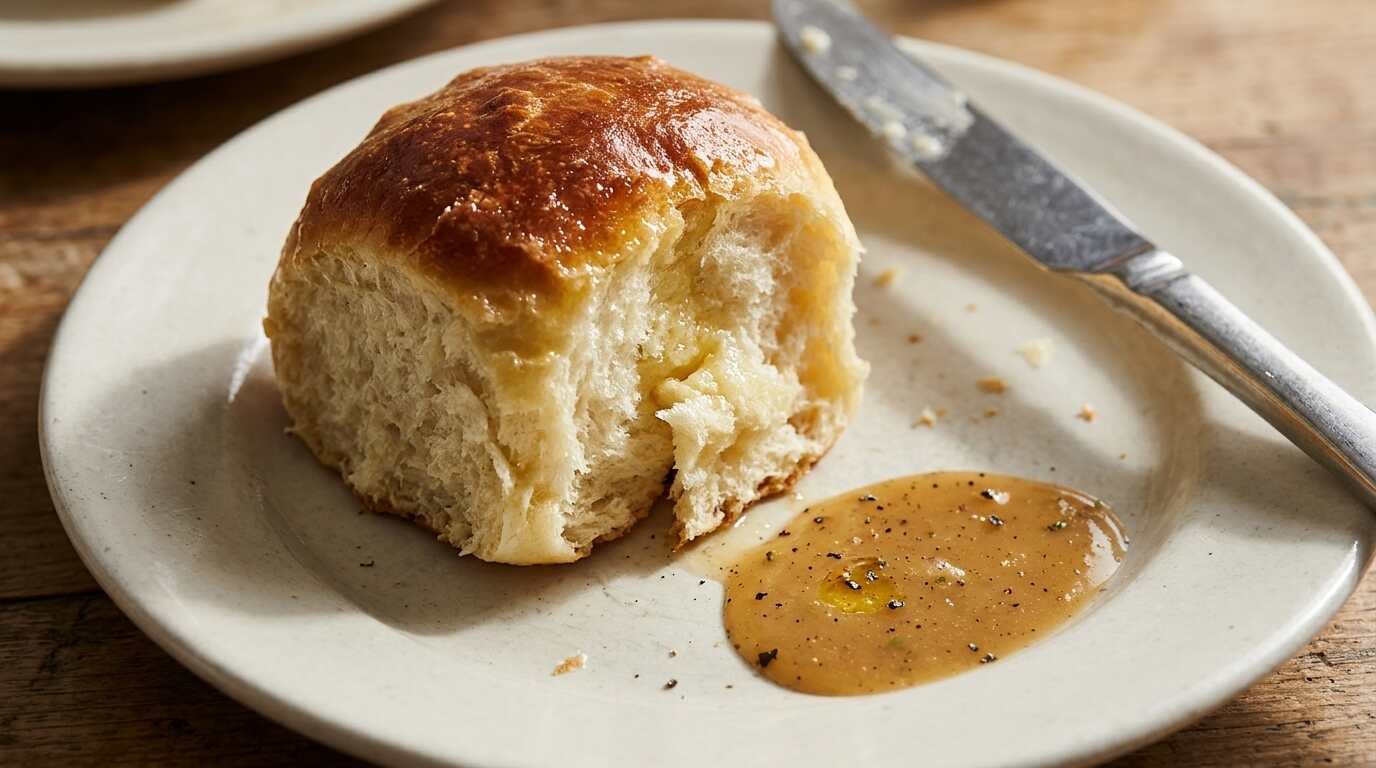
What survived is a small piece of engineering. A round or rectangle of enriched yeast dough gets brushed with butter, folded so one edge sits over the other, and baked tight against its neighbors. The butter inside the fold keeps the two layers from fusing completely, so the finished roll opens along a seam the way a wallet opens along its spine. Tear one at the table and it comes apart in a soft hinge, steaming, already buttered on the inside before anyone reaches for the dish.
A hotel built by a coachman
The roll came out of a restaurant that started for $432.
Harvey D. Parker reached Boston from Maine in 1825 at age twenty with less than a dollar, worked as a caretaker and then a coachman, and in 1832 bought John E. Hunt’s café in Court Square for $432, renaming it Parker’s Restaurant, per the hotel’s own history document. The same document says he bought the old Mico Mansion on April 22, 1854 and razed it to make room for something larger.
The Landmarks report dates the opening precisely: the five-story, marble-front hotel opened October 8, 1855. Parker lived from 1805 to 1884, long enough to see the roll’s first decade of fame under his own roof.
That rise came with company. The Omni Parker House history page describes the Saturday Club meeting at the hotel, with Emerson, Longfellow and Mark Twain among the regulars, and Charles Dickens reading A Christmas Carol to the members in 1867. The same page lists Babe Ruth, James Dean and Judy Garland among guests, and a restaurant staff that once included Emeril Lagasse, Malcolm X and Ho Chi Minh. Historic Hotels of America specifies that Malcolm X worked as a busboy in the restaurant kitchen.
A dinner roll is a strange thing to carry out of a room like that. It is also the one thing from the room that a home kitchen on a Tuesday can actually reproduce.
Three stories about who made it
The hotel tells its origin more than one way, and the versions do not line up.
The first story is the legend. Yankee Magazine’s Aimee Tucker relays the version in which a “disgruntled hotel baker threw a batch of unfinished rolls into the oven” after a run-in with a guest, and the dented, folded shape came out of the heat by accident. Yankee presents it as legend. The Wikipedia entry on the roll, used here only as a pointer to how widely the tale circulates, says the variations all involve an angry pastry cook throwing unfinished rolls into the oven.
The second story is a name. The Omni history PDF credits the roll to an in-house German baker named Ward, working under Chef John Bonello. It gives no date.
The third story comes from the city. The Landmarks Commission report says French chef Augustine François Anezin, who lived from 1824 to 1881, ran the kitchen from 1865 until his death, and that his years in charge brought the “development of the Parker House roll, a sponge-based, slightly sweet dinner roll.” The same report attributes Boston cream pie to Anezin’s bake staff.
So the hotel’s own paperwork names a German baker, a public study names a French chef, and the most famous version names nobody at all, just a temper and a hot oven. None of these is a lie on its face. A kitchen is a crew, and a roll that took a generation to settle into its shape could easily pass through several pairs of hands before anyone wrote it down.
The 1870s, and a secret that was already in print
The date is firmer than the inventor, and it undercuts the most repeated claim about the recipe.
The Omni history page says the hotel introduced Parker House rolls in the 1870s, and Yankee agrees the rolls first originated during that decade. The hotel’s PDF adds a scene from 1876: the composer Jacques Offenbach, staying at the Parker House, was served the rolls at his first dinner and was so taken that he hummed and sang their praises.
Then comes the secret. Both the hotel PDF and Historic Hotels of America say the recipe was kept secret until 1933, when Franklin and Eleanor Roosevelt asked for it; the Omni web page says Eleanor Roosevelt personally requested that it be sent to the White House.
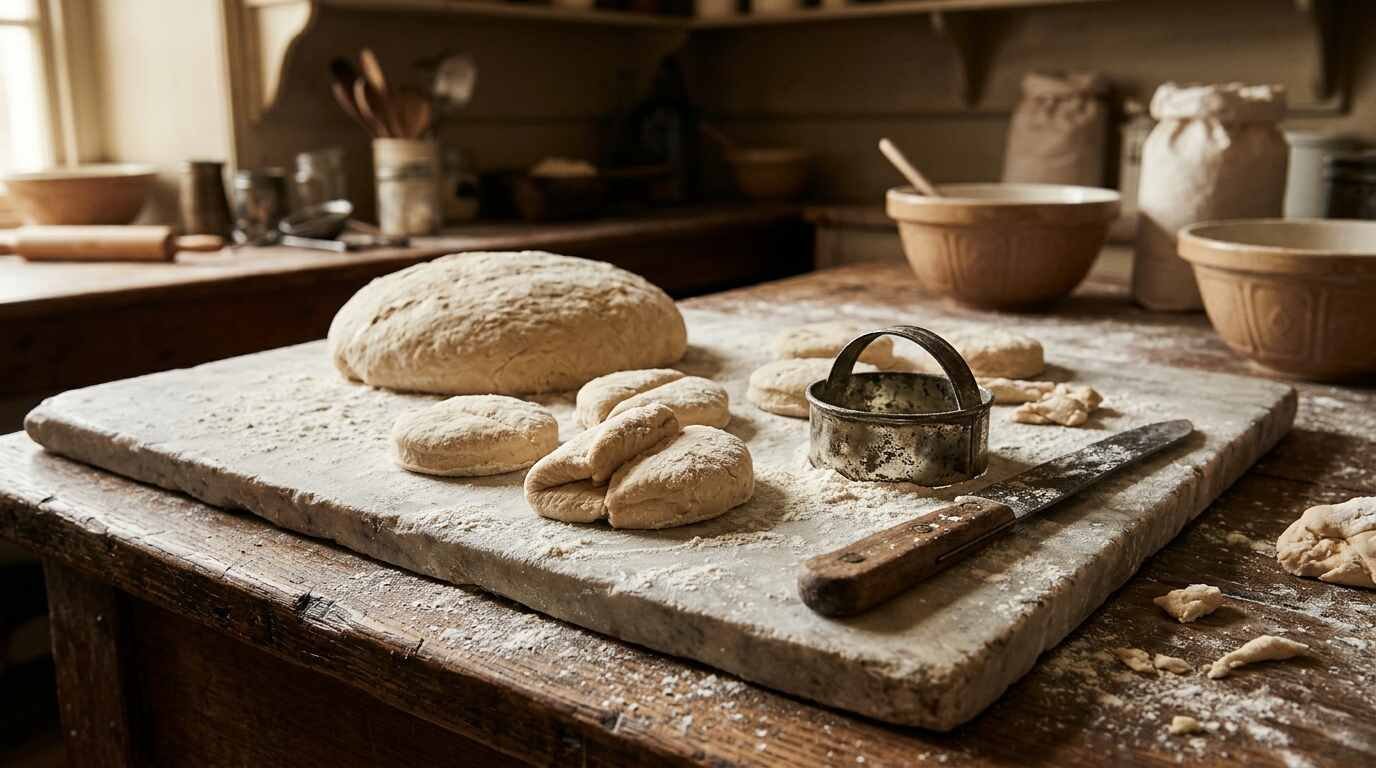
Here the story starts to strain. Yankee reports that the oldest printed Parker House roll recipe it has on file ran in the New Hampshire Sentinel in April 1874. And Fannie Farmer printed a full Parker House Rolls recipe in The Boston Cooking-School Cook Book. The Project Gutenberg edition is the 1910 revision, and its copyright lines run from 1896 through 1906, so the book had been on sale for years. Her shaping instruction is exact down to the tool: the floured handle of a case knife presses a crease through the middle of each round before the fold.
A recipe printed in a famous Boston cookbook decades before 1933 is an odd kind of secret. The likeliest reading is that the hotel guarded its own specific formula, its exact proportions and handling, while the method and the name escaped into newspapers and cookbooks long before the Roosevelts asked. That reading is an inference, not something any of these sources states. What the sources do establish is that home cooks were folding buttered dough rounds under the Parker House name decades before 1933.
Boston cream pie and the arithmetic problem
The hotel’s other famous dessert carries a date that its own chef could not have met.
Parker’s Restaurant calls itself the “birthplace of the Boston Cream Pie and Parker House Rolls” on the Omni Boston cream pie page, which credits Chef Anezin and his bake staff with topping custard-filled sponge cake with chocolate. The Omni history page places the pie shortly after the hotel opened.
The Historic Hotels of America dining page gives two dates for the pie on the same page, 1856 in one section and 1855 in another, and calls it the official Massachusetts state dessert. Its history timeline names the pie’s inventor as a French chef called “Raelyn,” a name that does not match Anezin.
Now set those dates beside the Landmarks report, which says Anezin ran the kitchen from 1865. A chef who took over a decade after the opening could not have made the pie in the opening year, unless he was working there in some other role first, which none of these sources says. Either the pie is younger than the hotel claims, or someone other than Anezin made it, or the report’s start date describes when he became head of the kitchen rather than when he arrived. The sources do not settle which.
None of this makes the pie less good. It makes it a pastry with a paperwork problem, which describes a lot of American food.
The recipe
Potato, egg and butter do the structural work; the fold does the rest.
The ratio below comes straight from King Arthur Baking’s Parker House Rolls recipe, credited to PJ Hamel, and makes 16 rolls in a 9 x 13-inch pan. Weights are King Arthur’s.
Ingredients
- 3 cups (360 g) unbleached all-purpose flour
- 2½ teaspoons instant yeast
- 3 tablespoons (39 g) granulated sugar
- 1¼ teaspoons (8 g) table salt
- ¼ cup (50 g) potato flour, or ¾ cup (50 g) dried potato flakes
- 3 tablespoons (43 g) butter, at room temperature
- 1 cup (227 g) milk
- 1 large egg
- 3½ to 4 tablespoons (50 to 57 g) melted butter, divided, for the fold and the finish
Method
- Weigh the flour, or spoon it lightly into the cup and level it. Mix everything except the melted butter into a shaggy dough. Warming the milk and egg slightly first takes the chill off and speeds the rise.
- Knead about 10 minutes by hand, or 7 to 8 minutes by machine, until the dough is smooth.
- Let it rise in a lightly greased bowl for about 90 minutes. King Arthur notes it will turn puffy without necessarily doubling, and that it moves slowly at first and quickens in the last half hour.
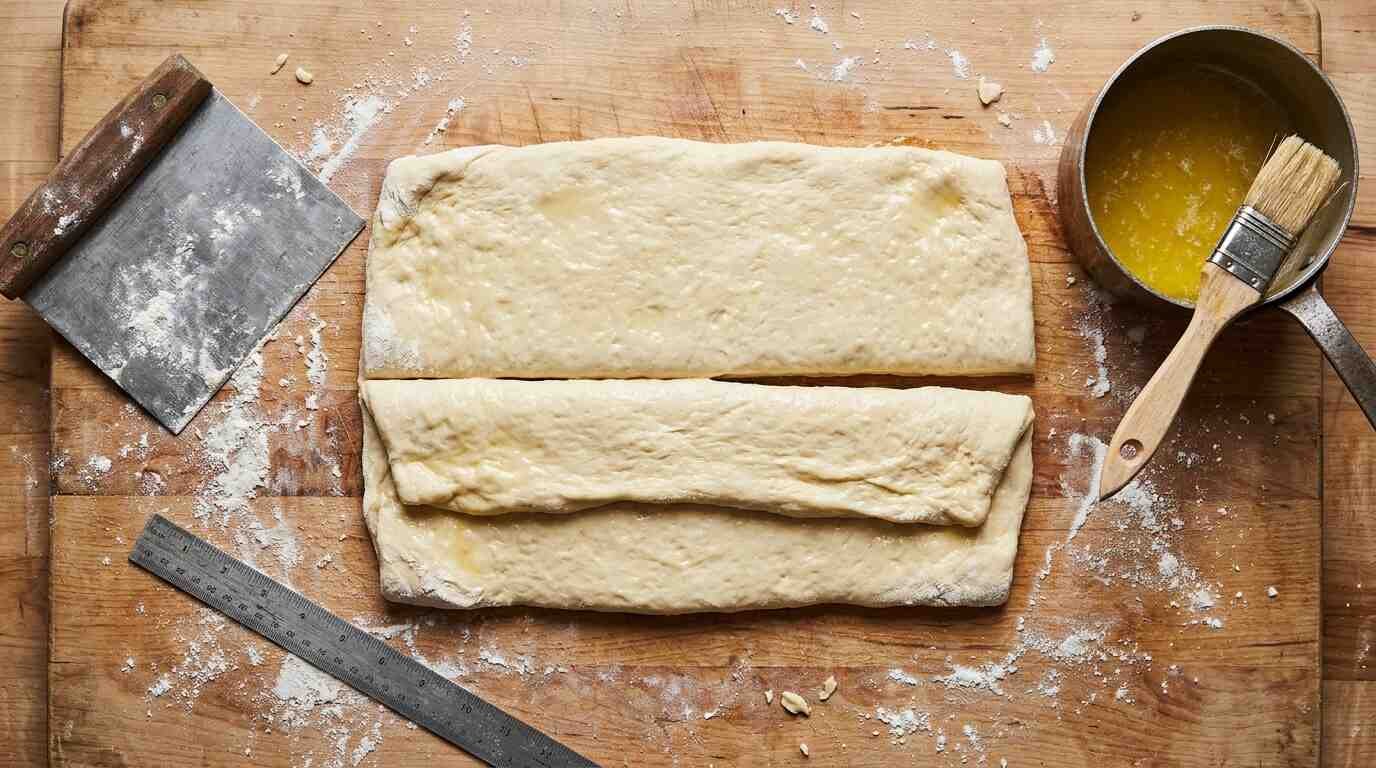
- Divide the dough in half. Pat or roll one half into an 8 x 12-inch rectangle and brush it lightly with melted butter, holding back the rest for the second half and the finish.
- Cut the rectangle lengthwise into two 4 x 12-inch strips. Fold each strip lengthwise so the top edge overhangs the bottom by about ½ inch.
- Cut each folded strip crosswise into four 3-inch pieces. Set them smooth side up in a lightly greased 9 x 13-inch pan, four rows of four, pressing gently so they fill the bottom. Repeat with the second half.
- Cover and let rise 45 to 60 minutes, until puffy but not doubled. Heat the oven to 350°F toward the end of this rise.
- Bake 20 to 25 minutes, until golden brown and firm to the touch.
- Brush the hot rolls with the remaining melted butter and pull them apart at the table.
The total time runs about 2 hours 55 minutes, with roughly 20 minutes of actual handling, per King Arthur.
Why the modern fold is a rectangle
The old round fold had a habit of springing open, and two recipe writers a century apart noticed.
Farmer’s method, as printed in the 1910 revision, cut rounds with a biscuit cutter, creased them, buttered one half, folded and pressed the edges. She also warned that the rolls “if hastened in rising are apt to lose their shape.” King Arthur’s recipe explains that its bakers moved away from the round-and-fold method because those rolls “popped open in the oven.” Same failure, described twice, by cooks a century or so apart.
The physics is not mysterious. A buttered fold is a joint that has been deliberately greased so it will not weld. Push the rise too hard and the gas in the dough pries the joint open like a jack under a hinge. The strip method in the recipe above changes the geometry: long folded strips, cut and packed shoulder to shoulder in the pan, so each roll is braced on four sides by its neighbors and has nowhere to unfold except up.
That bracing is also why the sides come out pale and pillowy while the tops brown. The pan works like a crowded counter at lunch rush, everyone held upright by the people next to them.
Food bloggers who bake these by the dozen land on the same point from the eating end. Leigh Anne Wilkes at Your Homebased Mom writes that “that iconic folded shape gives each roll the perfect mix of tender interior and lightly crisp, buttery edges.”
The rolls pair naturally with the gravy-heavy plates of late November. A lump-free turkey gravy built on a roux gives them something to mop, and anyone planning a holiday bake around a single oven can slot them into a Thanksgiving timeline counted backward from the table, since the dough’s long first rise fits neatly while the bird rests. For a dough with the opposite temperament, cold butter kept in pieces rather than melted into the crumb, the all-butter pie crust runs on a different set of rules entirely.
The roll that the hotel claims to have guarded until 1933 was printed in a New Hampshire newspaper in 1874, sat in Fannie Farmer’s Boston cookbook by 1910, and is now baked from a free recipe page in kitchens everywhere. The building that kept the secret was demolished in 1925. Which recipe would anyone trust as the real Parker House roll at this point: the hotel’s, Fannie Farmer’s, or the one that comes out of the home oven next week?
You Might Also Like
- Griddled Corn Muffins
- Pecan Pie History: The Karo Syrup Claim and the Recipes That Came Before It
- Green Bean Casserole History: Dorcas Reilly’s 1955 Recipe
Sources
- City of Boston, Boston Landmarks Commission, Parker House Study Report (amended May 11, 2023): https://search.boston.gov/sites/default/files/file/2023/05/Parker%20House%20Study%20Report%20_Amended%205-11-2023.pdf
- Omni Parker House, hotel history (PDF): https://www.omnihotels.com/-/media/images/hotels/bospar/hotel/pdfs/parker-house-history.pdf
- Omni Parker House, Historic Omni Parker House: https://www.omnihotels.com/hotels/boston-parker-house/property-details/history
- Omni Parker House, Boston Cream Pie: https://www.omnihotels.com/hotels/boston-parker-house/dining/boston-cream-pie
- Historic Hotels of America, Omni Parker House history: https://www.historichotels.org/us/hotels-resorts/omni-parker-house/history.php
- Historic Hotels of America, Omni Parker House dining: https://www.historichotels.org/hotels-resorts/omni-parker-house/dining.php
- Aimee Tucker, “Parker House Rolls | Recipe and History,” Yankee Magazine (New England Today): https://newengland.com/food/breads/parker-house-rolls-recipe-history/
- Fannie Merritt Farmer, The Boston Cooking-School Cook Book (Project Gutenberg edition): https://www.gutenberg.org/ebooks/65061
- King Arthur Baking, Parker House Rolls (PJ Hamel): https://www.kingarthurbaking.com/recipes/parker-house-rolls-recipe
- Wikipedia, Parker House roll (used as a pointer only): https://en.wikipedia.org/wiki/Parker_House_roll
- Leigh Anne Wilkes, Parker House Rolls, Your Homebased Mom: https://www.yourhomebasedmom.com/parker-house-rolls/
Suggested category: Food recipes
Leave a Reply