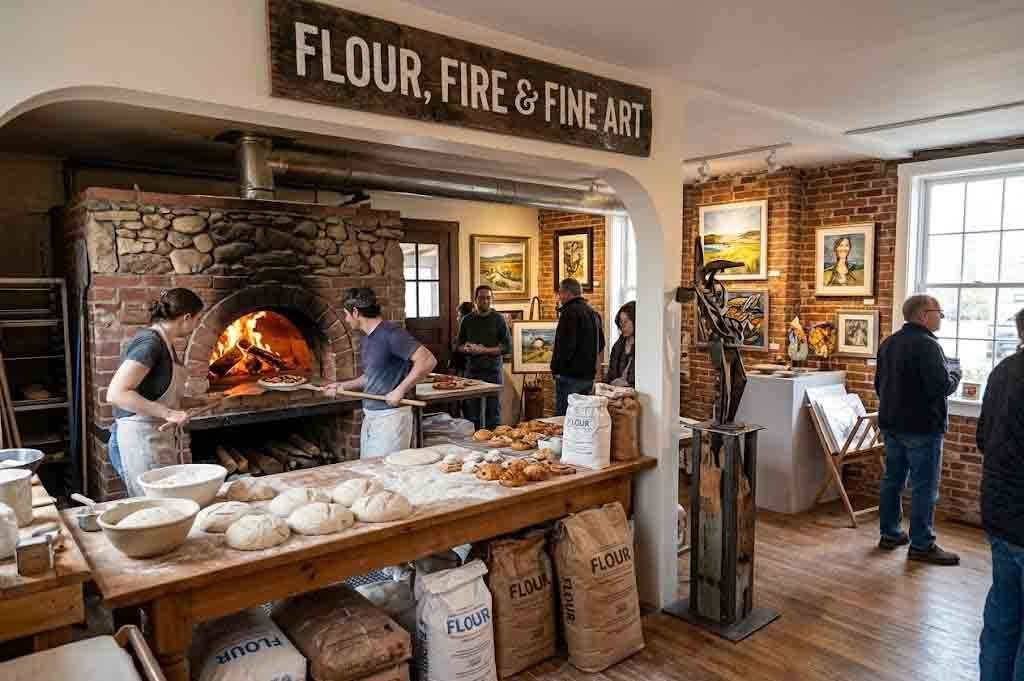
Somewhere in the overlap between a sculptor’s studio and a wood-fired bakehouse, a new cultural institution has taken root — one measured not in square footage or exhibition schedules, but in hydration percentages, fermentation timelines, and the unforgettable smell of a crust achieving its final bloom in a stone-deck oven. The culinary arts and artisanal baking festival circuit has matured into something genuinely serious. It is no longer a niche gathering of hobbyists comparing starter cultures. Today’s premier baking festivals host world-class competitions, attract chefs with Michelin pedigrees, showcase large-batch sourdough production alongside fine-dining gastronomy, and treat the scored surface of a slow-fermented loaf with the same reverence a gallery curator reserves for a newly acquired canvas.
The numbers tell part of the story. The global sourdough market was valued at approximately $2.5 billion in 2024 and is projected to reach $3.8 billion by 2029, growing at a compound annual growth rate of 9.2%. The drivers behind that growth are not industrial — they are cultural. The re-emergence of artisan bread-making, fueled by growing interest in traditional baking techniques particularly in North America and Europe, is a primary contributor to this market expansion. That cultural momentum has found its most concentrated expression in the festival circuit — events where the ancient craft of fermentation meets the aesthetics of the contemporary art world, and where a 3-pound naturally leavened loaf can stop a crowd in its tracks as surely as any hanging canvas.
The International Baking Industry Exposition: Where Craft Meets Commerce at Scale
The International Baking Industry Exposition (IBIE) returned to Las Vegas in September 2025 for what proved to be the largest event in its 105-year history, with a sold-out show floor reaching a record 451,100 square feet — a 9% increase over the previous edition — and more than 1,000 exhibiting companies from 96 countries represented.
For the artisan baking community, IBIE’s most significant programming lived inside the Artisan Village. The Artisan Village served as an interactive, innovative hub offering exceptional learning opportunities and exciting competitions — a prime destination for bakers looking to hone their skills, make connections, and walk away inspired across every aspect of their craft, with programming spanning bread, bagels, and pastry.
The competition that drew the most international attention was the Coupe du Monde de la Boulangerie. IBIE hosted international baking teams from Brazil, Canada, Ecuador, Mexico, and the United States competing in Bakery, Viennoiserie, and Artistic Bread Showpiece categories, with two teams advancing to the world finals in Paris. The Artistic Bread Showpiece category is precisely where the boundary between baking and visual art dissolves entirely — competitors constructing sculptural bread installations that function as neither food nor decoration, but as something altogether more difficult to categorize: edible architecture conceived entirely from fermented dough.
The World Bread Awards USA, widely regarded as the Oscars of the bread world, also took place at IBIE 2025, with 13 award categories spanning everything from baguettes and bagels to sourdough, flatbreads, and student baker entries — with sourdough entries required to be naturally leavened with no added commercial yeast whatsoever.
For professionals and serious enthusiasts alike, IBIE represents the most comprehensive single gathering of baking talent, technology, and competitive spirit in the Western Hemisphere. Details and future event information at bakingexpo.com.
The Kneading Conference and Maine Artisan Bread Fair: The Soul of Grain-Grown Community
If IBIE operates at the scale of industry, the annual Kneading Conference and Maine Artisan Bread Fair — organized by the Maine Grain Alliance and held each July in Skowhegan, Maine — operates at the scale of the human. The Kneading Conference, now in its 17th year, began in 2007 when a group of community organizers began discussions on how to revitalize local grain economies. It has since grown into an event expected to draw approximately 250 people from 27 states.
What distinguishes Skowhegan is the depth of its curriculum and the seriousness with which it treats fermentation as both science and craft. The 2025 conference program included sessions on einkorn sourdough and cottage baking, the soul of panettone and its sourdough applications, heritage grains of the Northeast, wood-fired English muffins, and the art of oven construction — the last of which is taught by master oven builders Albie and Michele Barden, whose wood-fired installations have become pilgrimage sites in their own right (kneadingconference.com).
The Maine Artisan Bread Fair, which follows the conference, is one of a kind — a fair dedicated solely to real bread and everything associated with this most ancient and central staple, with over 60 vendors offering everything from wood-fired pizza and fresh sourdough loaves to artisan halvah, maple syrup, local cheeses, and specialty baking books and equipment.
The convergence of grain farmers, professional bakers, maltsters, food entrepreneurs, and wood-fired oven builders in a single New England fairground for two days each summer is perhaps the most authentic expression of what the artisan bread revival actually means at street level. This is not a trade show. It is a living institution.
123 Farm Sourdough Bread Festival: Where Fermentation Meets the Vineyard
The Sourdough Bread Festival at 123 Farm draws a clear and compelling parallel between two of the most time-honored fermentation traditions: sourdough bread and wine. Both rely on wild fermentation, patience, and a fundamental respect for nature’s timeline.
Held on an organic working farm in California, the event has evolved into one of the more visually and sensory immersive experiences on the artisan food festival calendar. The Sourdough Bread Hall offers education on ancient grains and their health benefits, the difference a real wild starter makes, and the history of bread, with sampling of olive oils, fresh sourdough loaves, pastries, and cookies — alongside the opportunity to take home a live starter culture.
Hands-on workshops form the event’s backbone. Participants can attend sessions in crafting nutrient-dense sourdough loaves using organic ancient grains — covering fermentation techniques, shaping, and baking to create their own finished loaves — while others focus on sourdough pizza from scratch, prepared without commercial yeast and baked in a high-heat oven. The festival also includes free lectures on sourdough, farming, and gut health, alongside guided wagon tours of the vineyard and an exploration of regenerative organic farming practices that parallel the patience and intention embedded in the sourdough process itself.
This is the festival for those who understand that a loaf of bread and a glass of natural wine are not merely foods — they are arguments for a different relationship with time.
The Art of the Score: When Bread Becomes a Visual Medium
No conversation about where culinary arts and artisanal baking festivals intersect would be complete without addressing what may be the most quietly spectacular development in contemporary baking: the elevation of bread scoring to a legitimate art form.
Professional and home bakers around the world are using dough as a canvas to create visually stunning loaves — artisans mold dough into leaves, flowers, and geometric shapes, pushing the boundaries of traditional bread-making while drawing inspiration from nature, architecture, and cultural motifs, sometimes collaborating with visual artists to push the boundaries of bread design entirely.
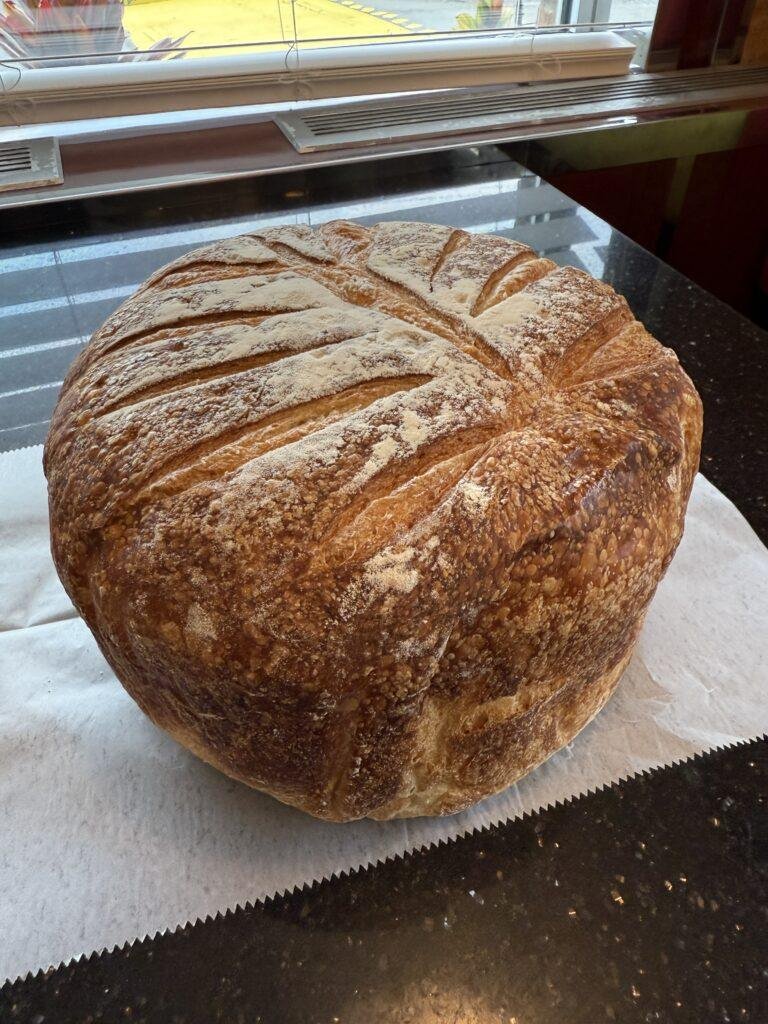
The tools are minimal — a lame, a razor blade, sometimes sewing thread for guide lines — but the results can be extraordinary. Professional and home bakers are creating rustic rye boules with spirals expanding from the epicenter, sourdough baguettes with elaborate geometric patterns, and robust miches slashed to illustrate the bushels of heirloom wheat they were baked with — each scoring pattern serving as the baker’s individual signature on the final product.
Festivals have taken notice. The Coupe du Monde de la Boulangerie’s Artistic Bread Showpiece category is the most formal acknowledgment of this at the competition level, but bread scoring demonstrations now appear across the festival circuit — from the Kneading Conference’s hands-on dough scoring workshops to events like the Harvest in the Harbor Sourdough Baking Contest, which judges loaves across four criteria: appearance at 25 points, crumb structure at 25 points, flavor at 30 points, and crust texture at 20 points — a rubric that is, at its core, an aesthetic evaluation as much as a culinary one.
The physics of this art form are unforgiving. The dough is not a static canvas — it will expand and transform in the oven, meaning every pattern must account for movement, tension, and heat. What you score at room temperature is never precisely what emerges from the oven. That gap between intention and result — that negotiation between craft and natural process — is where the artistry lives.
Denver Bake Fest and the Rise of Community-Scale Artisan Festivals
Not every great baking festival requires a Las Vegas convention center or an international delegation. Denver Bake Fest, hosted by Rebel Bread bakery, demonstrates what a community-scale artisan baking event can accomplish when it is organized with genuine care.
The 2025 Denver Bake Fest raised $10,245 for Culinary Hospitality Outreach and Wellness, an organization whose mission is to support wellness within the hospitality industry and to improve the lives of the broader community through shared stories, skills, and resources. The competition categories at Denver Bake Fest capture the spectrum of what serious home and professional bakers are doing right now — the Heritage Sourdough category, presented in partnership with Sunrise Flour Mills, requires entries to contain at least 20% Colorado-grown grains or regional heritage grain flour.
That grain-sourcing requirement is not incidental — it is a philosophical position. It reflects the same conviction driving the Maine Grain Alliance and the 123 Farm Festival: that artisan baking without local grain economy is an aesthetic exercise, not a cultural one. The bread you bake is only as rooted as the flour you choose.
Festivals like Denver Bake Fest serve as on-ramps for bakers who may not yet be competing at the IBIE level but who take their craft with complete seriousness — and who understand that the best baking communities, like the best sourdough cultures, are sustained through continuous feeding and attention. (rebelbreadco.com)
The Market Behind the Movement: Why Artisan Baking Festivals Are Growing
The festival circuit is not growing in spite of the broader market — it is growing because of it. The U.S. sourdough market is projected to grow from approximately $832 million in 2025 to $2.14 billion by 2035, at a compound annual growth rate of 9.9%, driven by increasing consumer demand for artisanal products and the health benefits associated with naturally fermented bread.
Traditional sourdough holds a significant 40% market share globally in 2025, with this dominance driven by consumers’ growing interest in authentic, naturally leavened bread and the long fermentation process that enhances its distinctive taste and artisanal qualities.
Behind the numbers is a consumer who has fundamentally changed their relationship with bread. The pandemic-era surge in home baking introduced millions of people to the slow discipline of sourdough. Many of them never stopped. Consumers are now investing in specialty flours and fermentation tools, and have become increasingly knowledgeable about fermentation time, the age of the starter culture, and the source of the flour — information that commercial bakers are increasingly sharing, which was previously kept as proprietary knowledge.
Festivals accelerate this knowledge transfer in ways that no YouTube tutorial or bread-baking subreddit can replicate. Standing next to a master baker in a workshop, watching them shape a batard and feeling the resistance of well-developed gluten through your own hands — that is a transmission of craft knowledge that requires physical presence. The festival circuit is, at its core, an infrastructure for that kind of learning.
What Every Serious Baker Should Take Away from the Festival Circuit
The best artisan baking festivals share a set of underlying convictions that have nothing to do with trends and everything to do with permanence. They believe that bread made slowly from well-sourced grain, allowed to ferment according to its own biological logic, is categorically different from bread made quickly and industrially — not just in flavor and nutrition, but in cultural meaning. The growing appreciation for artisanal sourdough and recognition of its unique qualities have inspired home bakers worldwide, fostering an increased interest in sourdough and propelling its market growth — but the festivals are where that appreciation deepens into genuine expertise.
They also believe that baking is a visual art. A scored loaf laid out on a floured couche before it goes into the oven is as compositionally considered as any object made by human hands. The fermentation process leaves its own markings — the blisters of a long cold proof, the irregular pattern of wild-yeast gassing, the way a crust caramelizes unevenly along a deep ear. These are not defects. They are the record of time.
Whether you attend the Kneading Conference to study ancient grains with researchers from across the Northeast, enter the World Bread Awards USA to measure your sourdough against the nation’s best, or simply wander the Maine Artisan Bread Fair sampling wood-fired loaves and talking to bakers who have spent thirty years refining a single crumb structure — the festival circuit is where craft baking declares, without ambiguity, that what happens between flour, water, salt, and time is worth gathering for.
Sources
- MarketsandMarkets. “Sourdough Market by Type, Application, Ingredients, and Region — Global Forecast to 2029.” marketsandmarkets.com
- Market Research Future. “US Sourdough Market Size, Share and Forecast 2035.” marketresearchfuture.com
- Future Market Insights. “Sourdough Market Size & Demand 2025–2035.” futuremarketinsights.com
- Mordor Intelligence. “Sourdough Market — Industry Trends, Value & Size.” mordorintelligence.com
- International Baking Industry Exposition. “IBIE 2025 Marks Largest Show in Its 105-Year History.” bakingexpo.com
- IBIE. “World Bread Awards USA 2025.” bakingexpo.com
- IBIE. “What’s Happening — Show Features.” bakingexpo.com
- Maine Grain Alliance. “Kneading Conference 2025 Schedule.” kneadingconference2025.sched.com
- Maine Grain Alliance. “Maine Artisan Bread Fair.” kneadingconference.com
- 123 Farm. “Sourdough Bread Festival.” 123farm.com
- Ashtabula Local Food Festival. “Harvest in the Harbor Sourdough Baking Competition 2025.” ashtabulalocalfoodfestival.org
- Rebel Bread. “Denver Bake Fest 2025.” rebelbreadco.com
- Bake from Scratch. “Our Favorite Bread Artists.” bakefromscratch.com
- Central Maine. “Bread Focus of Conference and Fair Set for Skowhegan.” centralmaine.com