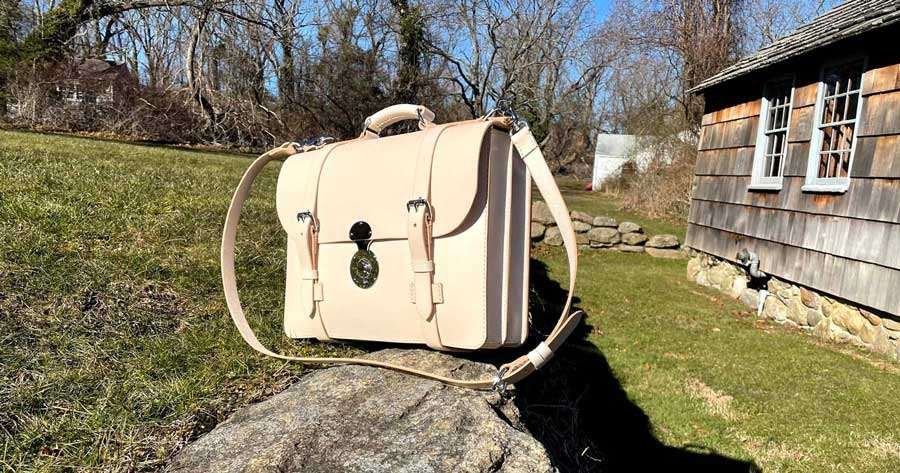
Two brands. One promise. Completely different philosophies about how you keep it.
The “buy it for life” conversation has a dominant voice online, and for good reason: Saddleback Leather out of Texas has spent over two decades building a cult following around the idea that a briefcase should outlast the man carrying it. Their slogan — “They’ll fight over it when you’re dead” — is one of the most memorable lines in the leather goods space, and their 100-year warranty is as serious as it sounds. These are not fashion bags dressed up in rugged marketing language. Saddleback makes genuinely indestructible goods, and their community of loyal owners will tell you that without hesitation.
Which makes the comparison worth having. Because Marcellino NY arrives at the exact same destination — a briefcase designed to outlive its owner, then his children, then possibly his grandchildren — through an entirely different road. Same century-long promise. Profoundly different execution.
The Philosophy of Durability: Brute Force vs. Surgical Precision
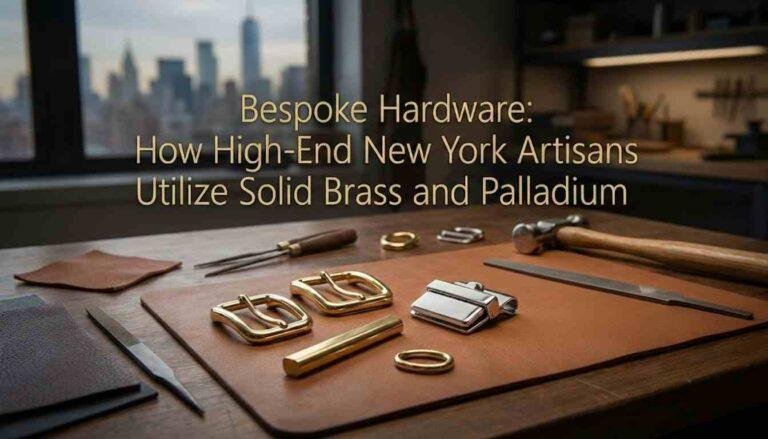
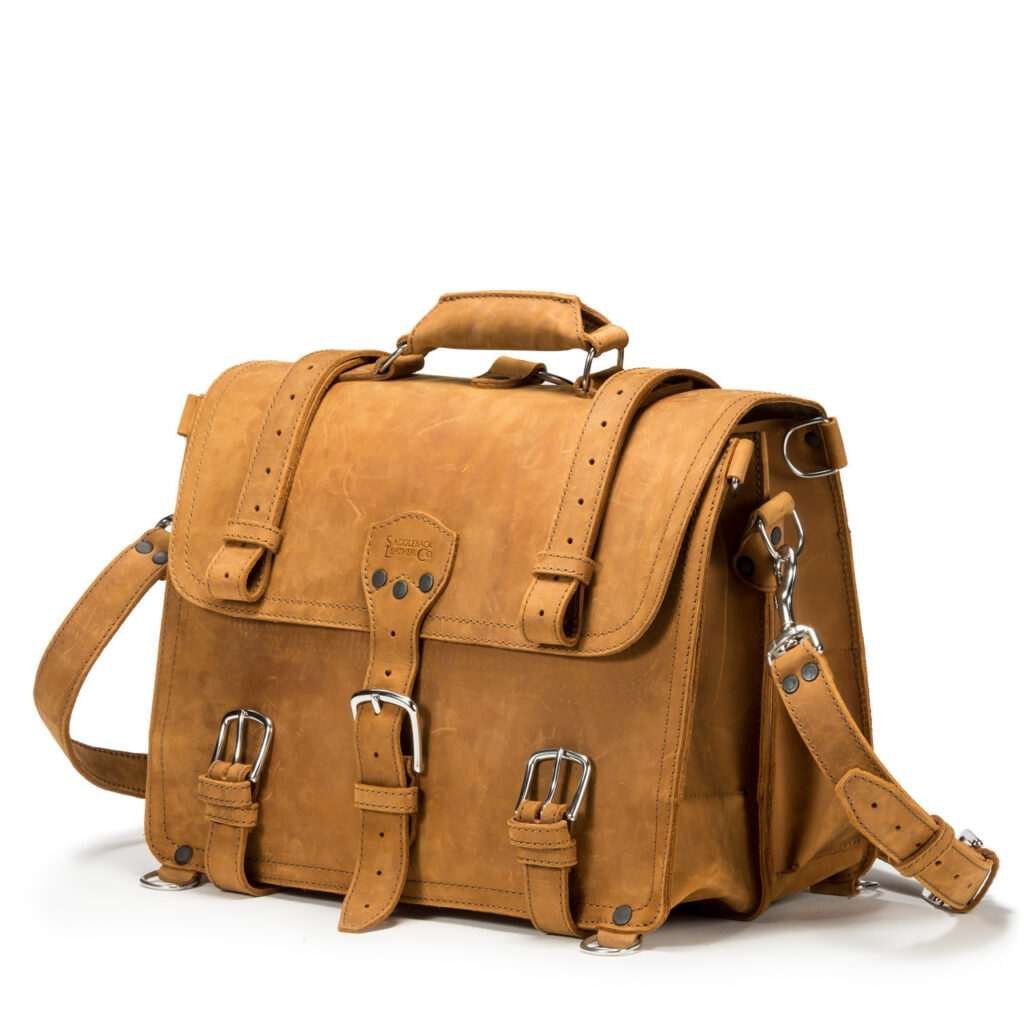
Saddleback’s approach to longevity is elemental. Their briefcases are built with no breakable parts — no magnets, zippers, buttons, or snaps — reinforced with rivets and hidden industrial polyester strapping wherever stress concentrates. The leather is thick, dense, and unapologetically heavy. Their thread is marine-grade polyester, the same material used in boat sails and parachutes, and their hardware is surgical-grade stainless steel 316. This is a system built to survive almost anything. You could drop a Saddleback off a loading dock, drag it across gravel, hand it to a laborer on an oil rig, and it would hold. The philosophy is total, overwhelming resistance to failure through sheer structural mass.
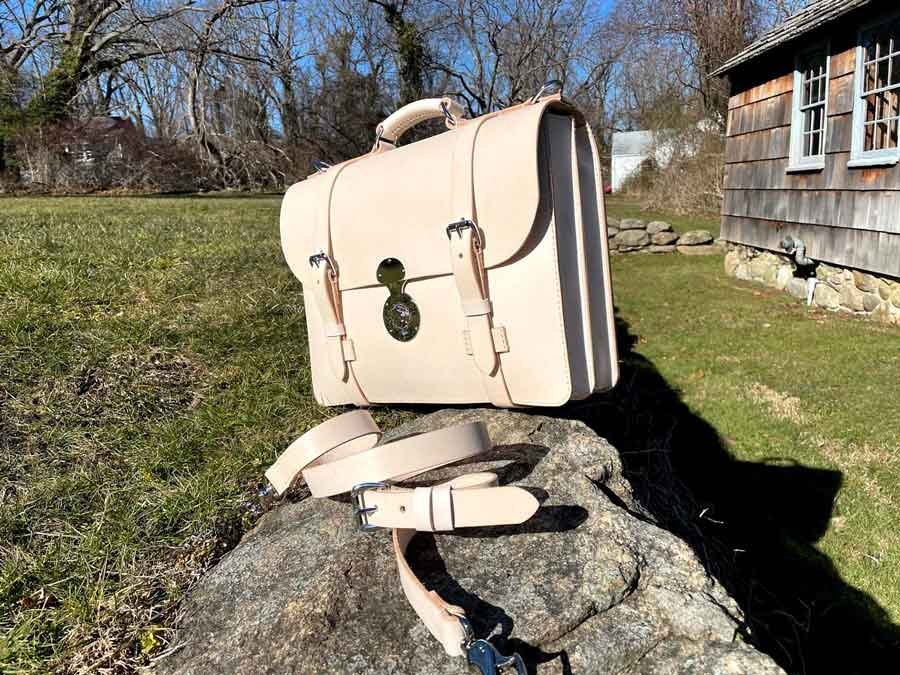
Marcellino NY takes a fundamentally different position. The briefcase is not designed to resist everything — it is designed to respond to everything. English bridle leather from J&E Sedgwick & Co. in Walsall, England, is a living material. Tanned using century-old vegetable techniques in a process that runs over three months from start to finish, and finished entirely by hand, Sedgwick bridle leather is stuffed with oils that reflect over time in a leather that is both rigid and pliable when needed. It does not fight the world. It weathers it — and gets more beautiful in the process.
The Leather Itself: Chrome vs. Vegetable, and Why It Matters
This is the technical heart of the comparison, and it deserves plain language rather than jargon.
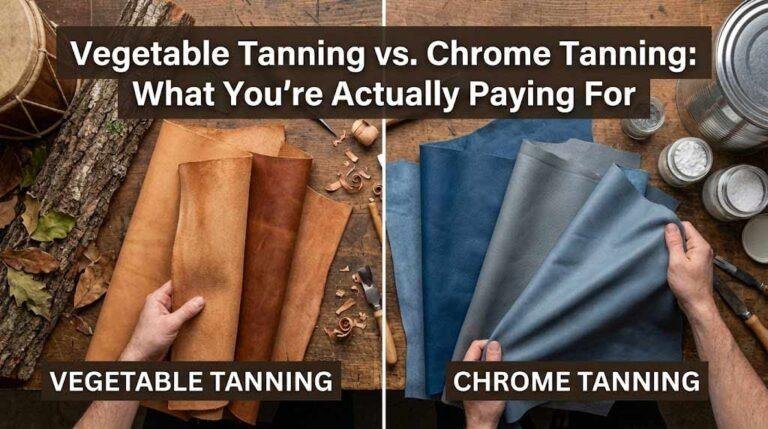
Saddleback uses premium chrome-tanned full-grain leather — the real thing, sourced from reputable tanneries. Chrome tanning produces leather that will not age the way vegetable-tanned leather does. That’s a factual statement, not a criticism. Chrome tanning is faster, more uniform, and produces leather with excellent water resistance and flexibility. Saddleback’s product is extremely well made within that category.
Vegetable-tanned English bridle leather operates by different physics entirely. Sedgwick has produced vegetable-tanned leathers since its founding in 1900, using the highest quality hides from the UK and Ireland, pit-tanned and hand-waxed with an open grain texture to ensure fiber strength and surface smoothness. The tanning process forces plant-based tannins deep into the hide’s fiber structure, creating a density and responsiveness that chrome tanning does not replicate. The result is a leather that hardens with age, develops a patina that becomes genuinely personal to the owner, and — critically — can be repaired at the fiber level over decades.
The UK bridle leather is stiffer, waxier, with a greasy top coat that softens and settles over time — a long break-in that rewards patience. What you carry on day one is not what you carry on year ten. By year ten, the briefcase has memorized you: the way you grip the handle, the pressure of your shoulder strap, the wear pattern of your daily commute. Chrome tanning cannot do this. It stabilizes. Vegetable tanning evolves.
Construction: The Difference Between a Rivet and a Stitch
Saddleback’s construction methodology centers on hardware. Copper rivets, industrial polyester thread, and minimal seaming reduce the number of potential failure points. It is an engineering solution to a mechanical problem, and it is effective. The Saddleback thin briefcase is made from only four main pieces of leather — front flap running around the back, front panel, and two gussets — because each seam is a potential weak point. Fewer pieces, fewer vulnerabilities. Smart design.
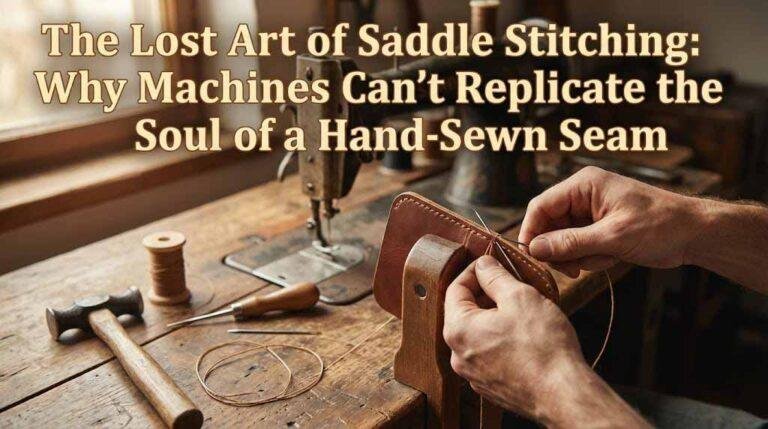
Marcellino NY uses hand saddle-stitching — a two-needle technique borrowed directly from English saddlery — that creates a structurally superior seam for a completely different reason. In a machine-stitched seam, if one thread breaks, the entire seam can unravel like a zipper. In a hand saddle stitch, each thread is locked independently: if one loop fails, the stitch on either side holds. The seam degrades one loop at a time, and each loop can be re-stitched by a craftsman without disturbing the surrounding structure.
A rivet is permanent until it fails. A saddle stitch is repairable — stitch by stitch, generation by generation — for as long as the leather beneath it holds.
The 100-Year Warranty vs. The 100-Year Briefcase
Saddleback’s warranty covers defects in materials and workmanship and does not cover misuse or abuse or normal wear and tear. This is reasonable and honest. The warranty is a confidence statement: Saddleback stands behind the structural integrity of what they make, and given what they make, that’s a significant commitment. The bag will not fall apart. The hardware will not corrode. The leather will not delaminate. These are meaningful guarantees.
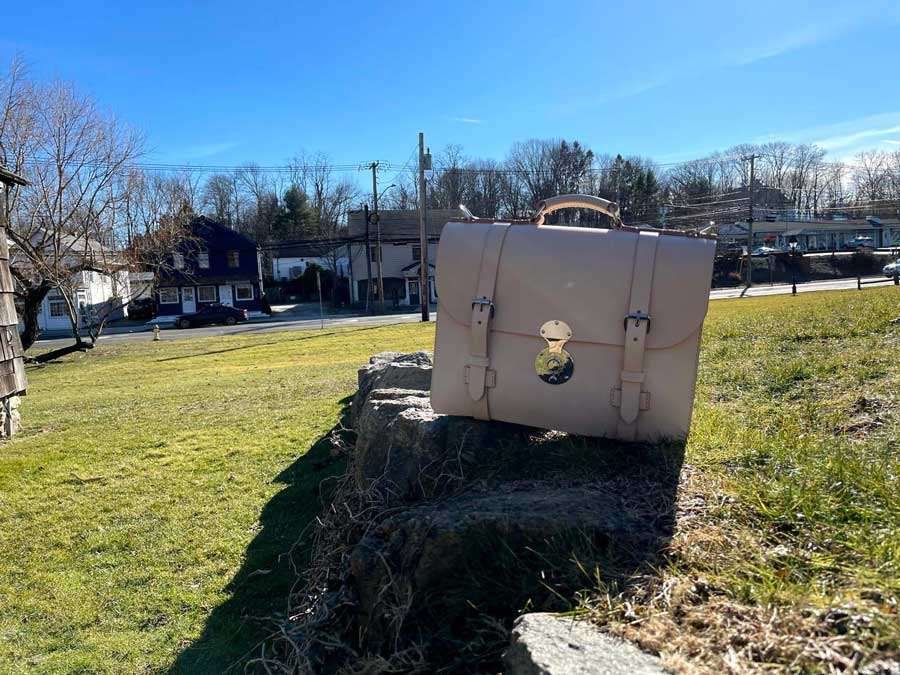
Marcellino NY’s hundred-year promise works differently. It is built into the material and construction itself, not into a warranty document. English bridle leather that has been vegetable-tanned, hand-finished, and properly maintained improves continuously. It does not need to be replaced — it needs to be cared for. Hand saddle-stitched seams do not need factory repair — they need a skilled craftsman with a needle and waxed thread. The briefcase is designed to be maintained by anyone with the knowledge and the patience to do it, rather than shipped back to a company that may or may not exist in fifty years.
One model is a warranty. The other is a survival strategy.
Who Carries Each Bag — and What That Tells You
Saddleback receives testimonials from executives, lawyers, attorneys, military personnel, police, and college students. This is a wide audience, and it reflects the bag’s character: democratic, versatile, built for anyone who values lasting goods over disposable fashion. It is the right bag for someone who wants to stop thinking about bags forever. It is confident in its indifference to occasion.
A Marcellino briefcase goes to a different kind of person. The wait list currently runs past six months. The clients who commission them tend to be lawyers who carry them to federal courtrooms, physicians who have reached the point in their careers where the details of what they carry matter, collectors who understand that a bespoke object made by hand is categorically different from any production item at any price point. They are not buying a bag. They are commissioning a document of their taste.
The Saddleback says: I have excellent judgment and I am done with this category.
The Marcellino says: I understand what I carry, and I made a deliberate choice.
The Verdict That Is Not Really a Verdict
Framing this as a competition misses the point. Both briefcases will be in circulation in 2125. Both carry their makers’ pride without apology. Both exist in a market where the dominant option is a Chinese-manufactured synthetic that begins deteriorating the day it leaves the warehouse.
What separates them is the nature of the thing being made. Saddleback makes a remarkable production product — one of the finest in the world at what it does. The Classic Briefcase is an achievement of design and materials science applied to the goal of indestructibility.
Marcellino NY makes one briefcase at a time, by hand, from a hide selected for that specific commission. The construction techniques come from English saddlery traditions that predate industrialization. The leather comes from a tannery that has been doing this since 1900 without changing its methods because the methods already work. There is no production line, no batch, no inventory.
A Ford F-150 and an Aston Martin will both get you from point A to point B. Only one of them, a century from now, will be worth something to the person who inherits it.
Saddleback Leather: saddlebackleather.com Marcellino NY: marcellinony.com
Sources: Saddleback Leather Co. product pages and warranty documentation (saddlebackleather.com); Stridewise 11-Year Saddleback Review, Nick English (stridewise.com, 2024); J&E Sedgwick & Co. tannery documentation (sedgwickandcoleather.com); Coastal Leather Supply — Sedgwick English Bridle overview (coastalleathersupply.com.au); Buckleguy.com Sedgwick English Bridle product descriptions; Marcellino NY leather specification page (marcellinony.com/leather-choice).