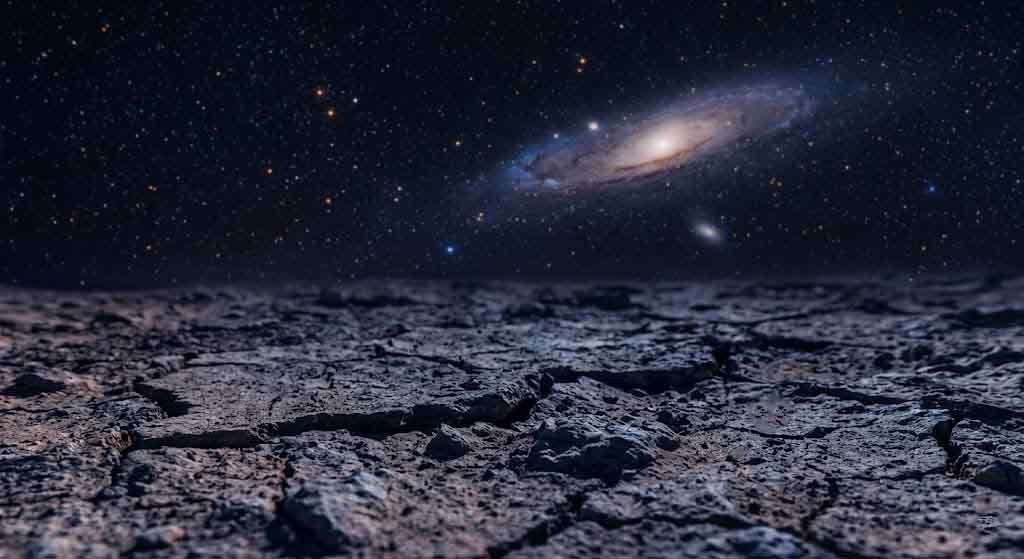
Fourteen billion years is long enough for anything to happen. Stars have been born and collapsed into white dwarfs. Galaxies have collided, merged, and settled into new spirals. Heavy elements forged in the hearts of supernovae have drifted across interstellar clouds and condensed into rocky worlds with liquid water and the raw chemistry of amino acids. The observable universe contains an estimated two trillion galaxies, each hosting hundreds of billions of stars, a significant fraction of which harbor planets in habitable zones where temperatures permit liquid water on the surface. The arithmetic alone should produce a cosmos teeming with intelligence — civilizations older than ours by millions, perhaps billions, of years. Civilizations that should have colonized entire galaxies by now, reshaped stars for energy, left fingerprints so obvious that even a modest radio telescope on Long Island could detect them.
And yet the sky is quiet. Not a whisper. Not a signal. Not a single artifact.
This is the Fermi Paradox — arguably the most unsettling question in all of science. And its most chilling proposed answer, the Great Filter, suggests that the silence itself is the message, and that what it’s telling us may be the most consequential thing our species will ever need to hear.
The Question That Changed Everything
In the summer of 1950, physicist Enrico Fermi was walking to lunch at Los Alamos National Laboratory with colleagues Edward Teller, Herbert York, and Emil Konopinski. The conversation had drifted to recent UFO reports and the plausibility of faster-than-light travel. Fermi, whose genius lay partly in his ability to make rapid, accurate estimates from incomplete data, suddenly asked a question that silenced the table: “But where is everybody?”
The remark was casual. The implications were not. Fermi understood, intuitively, that even without faster-than-light travel, a civilization with modest rocket technology could colonize the entire Milky Way in a few million years — a geological blink. Given that our galaxy is roughly 13.6 billion years old and contains between 100 and 400 billion stars, there has been more than enough time for thousands of independent civilizations to arise, expand, and leave marks visible across interstellar distances.
A decade later, astronomer Frank Drake formalized this intuition into what became known as the Drake Equation — a probabilistic framework for estimating the number of detectable civilizations in the Milky Way. The equation multiplies the rate of star formation by the fraction of stars with planets, the fraction of those planets that are habitable, the fraction where life actually emerges, the fraction where intelligence evolves, the fraction that develop detectable technology, and the average lifespan of such civilizations. Plug in even conservative numbers and you get tens of thousands of civilizations that should be broadcasting right now. Optimistic estimates push toward millions.
NASA’s Kepler mission and its successor TESS have since confirmed that roughly one in five Sun-like stars hosts a planet in the habitable zone. The James Webb Space Telescope — which I’ve written about in depth on this blog — is now probing the atmospheric chemistry of these worlds, searching for biosignatures like methane and oxygen in combination. The ingredients for life appear to be everywhere. The universe is not stingy with opportunity.
So the question remains, more pointed than ever: where is everybody?
Robin Hanson and the Architecture of the Filter
In 1996, economist Robin Hanson published an essay that reframed the Fermi Paradox from a question of astronomy into a question of probability and existential risk. Hanson’s argument was deceptively simple. If the universe appears devoid of advanced civilizations despite having every statistical reason to produce them, then somewhere between dead matter and galaxy-spanning empires there must be an extraordinarily improbable barrier — a step so difficult that virtually no species in the history of the cosmos has ever cleared it.
He called it the Great Filter.
Hanson outlined nine developmental stages that a species must pass through on the road from raw chemistry to interstellar colonization: the formation of a suitable star system, the emergence of self-replicating molecules, the development of simple single-celled life, the leap to complex eukaryotic cells, the evolution of sexual reproduction, the arrival of multicellular organisms, the development of tool-using intelligence, the creation of advanced technology, and finally the colonization of other star systems. At least one of these steps, Hanson argued, must be so phenomenally unlikely that it functions as a near-absolute barrier. The silence of the cosmos is the evidence.
The critical question — the one that determines whether humanity should feel relief or dread — is where the Filter sits. Behind us, or ahead?
The Case for a Filter Behind Us: We Got Lucky
There are strong biological arguments that the Great Filter may already be in our evolutionary past — that one or more of the steps leading to complex intelligent life are so improbable that we are among the vanishingly rare species to have cleared them.
The most compelling candidate is the leap from prokaryotic to eukaryotic life. For roughly two billion years — nearly half the history of life on Earth — every organism on the planet was a simple, single-celled prokaryote. Bacteria and archaea dominated a world without nuclei, without organelles, without the cellular machinery required for complex multicellular life. Then, somewhere around 1.5 to 2 billion years ago, an archaea swallowed a bacterium, and instead of digesting it, formed a symbiotic relationship that gave rise to the mitochondrion — the energy-producing organelle that powers every complex cell on Earth.
This event, known as endosymbiosis, appears to have happened exactly once in the entire history of life. As biochemist Nick Lane has argued, if the origin of the eukaryotic cell was not a developmental bottleneck, then it was likely a sequence of events so improbable that its singular occurrence across billions of years and trillions of organisms speaks for itself. A 2021 study published in Astrobiology by Snyder-Beattie, Sandberg, Drexler, and Bonsall used Bayesian modeling to analyze the timing of major evolutionary transitions — abiogenesis, eukaryogenesis, sexual reproduction, and intelligence — and concluded that the expected transition times likely exceed the habitable lifetime of Earth by orders of magnitude. In plain language: we beat odds that the math says we probably shouldn’t have.
A 2025 paper in Proceedings of the National Academy of Sciences added further weight to this picture, describing the emergence of eukaryotic complexity as an “algorithmic phase transition” — a fundamental shift in how genetic information was regulated that occurred abruptly at a critical threshold after billions of years of incremental growth. The researchers found that for the entire prokaryotic era, protein length tracked gene growth in a simple, predictable pattern. At the onset of eukaryotic life, protein length stabilized while genes continued expanding through noncoding sequences that enabled vastly more complex regulation. The architecture of the cell changed not gradually but at a tipping point — one that may require conditions so specific that most planets never reach it.
Abiogenesis itself — the origin of life from non-living chemistry — is another candidate. Life appeared on Earth remarkably quickly, possibly within a few hundred million years of the oceans forming. Optimists interpret this as evidence that life emerges easily wherever conditions allow. But the Bayesian analysis complicates that reading: even rapid abiogenesis on Earth is statistically consistent with it being an extraordinarily rare event, because we can only observe transitions that happened to occur within our planet’s habitable window. We are, by definition, observing a biased sample.
Then there is the Great Oxygenation Event, roughly 2.4 billion years ago, when cyanobacteria began flooding the atmosphere with molecular oxygen — a waste product of photosynthesis that was toxic to most existing life. This catastrophe paradoxically created the conditions for aerobic metabolism, which produces far more energy per unit of glucose than anaerobic processes and is a prerequisite for the energy demands of complex multicellular organisms. The oxygenation of Earth’s atmosphere was not inevitable. It required a specific kind of photosynthesis, a specific planetary chemistry, and a specific geological timeline. Chopra and Lineweaver proposed in 2016 what they called the “Gaian Bottleneck” — the idea that most planets with nascent life fail to evolve organisms capable of regulating their own atmospheric and surface conditions quickly enough, and the window of habitability slams shut before complexity can emerge.
If the Filter is behind us — if the leap from prokaryote to eukaryote, or from chemistry to biology, or from anoxic to oxygenated atmosphere is the near-impossible step — then we are the winners of a cosmic lottery. Life may be scattered across the universe in microbial form, trapped forever in a prokaryotic purgatory on a billion worlds, never making the jump that Earth made. The silence of the sky would be the sound of a universe full of bacteria and nothing more.
The Case for a Filter Ahead: The Darkest Possibility
But there is a more disturbing interpretation. If the steps behind us turn out to be relatively common — if life emerges easily, if eukaryotic complexity is not as rare as it appears, if intelligence is a convergent evolutionary outcome — then the Great Filter must be ahead of us. Something between our current technological stage and the colonization of the stars must be so lethal, so reliably catastrophic, that no civilization in the observable universe has ever survived it.
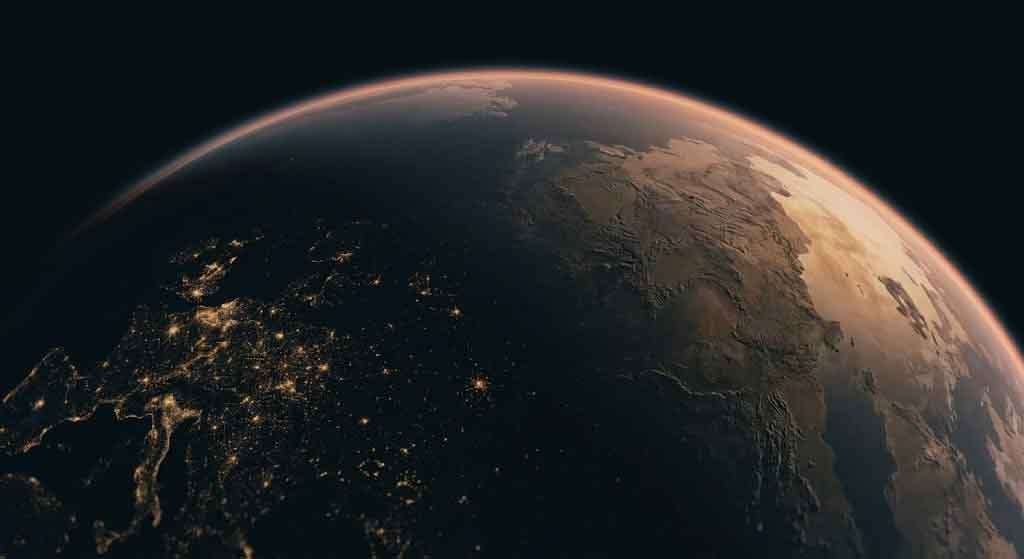
The candidates are not difficult to imagine. Nuclear warfare. Engineered pandemics. Artificial intelligence that escapes the intentions of its creators. Climate destabilization that collapses agricultural systems. Resource depletion that triggers civilizational collapse before interstellar capability is achieved. Or something we haven’t thought of yet — some inherent tendency in technologically advanced species to destroy themselves within a narrow window after they gain the power to do so but before they develop the wisdom or the infrastructure to survive it.
The philosopher Heidegger wrote about Gestell — the essence of modern technology as a “framing” that reduces everything, including nature and human beings, to standing reserve, to resources awaiting extraction. It is a mode of existence that is extraordinarily powerful and extraordinarily dangerous, because it places no inherent limit on its own expansion. A species that learns to split the atom can power cities or incinerate them. A species that masters genetic engineering can cure disease or weaponize pathogens. A species that builds artificial general intelligence can accelerate every field of knowledge or lose control entirely.
This is the terrifying implication of a forward-positioned Filter: the very capabilities that make a civilization detectable are the same capabilities that make it self-destructive. The energy required for interstellar travel is, by definition, sufficient to annihilate a planet. And perhaps every civilization that reaches this threshold destroys itself before it crosses it — not out of stupidity, but out of some structural feature of technological development that makes self-destruction statistically inevitable on a long enough timeline.
Hanson himself noted that if we cannot locate the Great Filter convincingly in our biological past, we must fear it in our technological future. And the absence of any evidence — no Dyson spheres, no megastructures, no electromagnetic signatures from any of the hundreds of billions of galaxies in the observable universe — remains the most powerful data point we have.
The Paradox of Good News
There is a counterintuitive corollary to the Great Filter that cuts against the optimism of space exploration advocates. If we were to discover microbial life on Mars, or in the subsurface oceans of Europa or Enceladus, our first reaction would likely be celebration. Life beyond Earth. Proof that biology is not unique to our planet.
But within the framework of the Great Filter, such a discovery would be catastrophic news.
Here is why. If life arises easily and independently on multiple bodies within a single solar system, then abiogenesis is not the Filter. And if abiogenesis is not the Filter, the Filter must lie elsewhere — likely ahead of us. Every step we discover to be common pushes the probable location of the Filter forward in the developmental sequence, closer to our present, closer to our future. Finding complex multicellular life on another world would be even worse. Finding evidence of an extinct technological civilization — ruins on Mars, artifacts on the Moon — would be the most terrifying discovery in human history, because it would mean that reaching our level of development is achievable and that something after it consistently proves fatal.
The best news for humanity’s long-term survival, paradoxically, would be a completely sterile universe — empty oceans on Europa, barren soil on Mars, no biosignatures in any exoplanet atmosphere. A dead cosmos would mean the Filter is behind us. We passed it. We are the exception, the anomaly, the one-in-a-trillion accident that cleared the impossible hurdle.
Silence, in this reading, is not lonely. It is the sound of safety.
What the Silence Demands
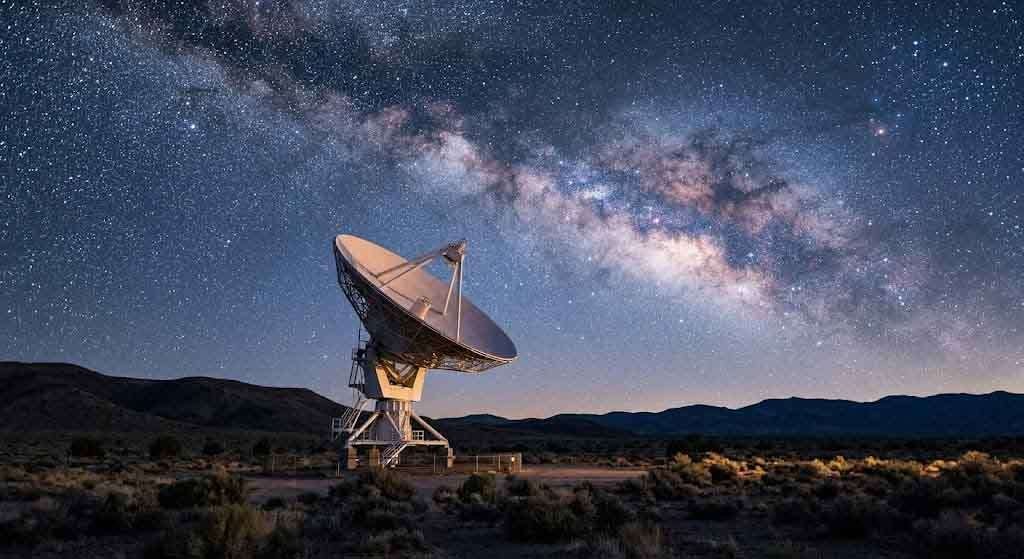
The Fermi Paradox and the Great Filter together form something more than an abstract intellectual exercise. They constitute what may be the most important risk assessment our species will ever conduct. If there is even a reasonable probability that the Filter lies ahead — and we cannot yet rule this out — then the implications for how we govern ourselves, how we develop technology, and how we allocate resources are staggering.
The problem of induction that David Hume articulated centuries ago applies here with terrifying precision. We cannot derive the future from the past. The fact that no previous technology has destroyed our civilization does not mean the next one won’t. Every civilization that ever destroyed itself presumably had a perfect track record of survival right up until the moment it didn’t.
Thomas Kuhn’s framework of paradigm shifts in scientific understanding is relevant here as well. The Great Filter hypothesis asks us to undergo a paradigm shift of the deepest kind — not merely revising our model of the cosmos, but revising our model of our own future. It asks us to take seriously the possibility that the default trajectory of technological civilization is extinction, and that avoiding this outcome requires deliberate, sustained, unprecedented coordination.
This is not fatalism. It is the opposite of fatalism. Hanson’s framework is ultimately a call to vigilance — an argument that the stakes of existential risk management are not merely political or economic but cosmic. If we are among the first civilizations to reach this threshold (an idea supported by the relative youth of our solar system compared to many older star systems), we may have a narrow window in which the choices we make determine not only our survival but whether the universe ever produces a lasting technological civilization at all.
The astronomer Carl Sagan once observed that we are a way for the cosmos to know itself. The Great Filter suggests an addendum: we may also be one of the cosmos’s only chances to know itself, and the window in which this knowing is possible may be far more fragile than we imagine.
The Loudest Silence
Fourteen billion years. Two trillion galaxies. Hundreds of billions of stars in each one. Planets beyond counting, many with liquid water, with organic chemistry, with the raw materials for biology. And from all of that — from all of that unimaginable vastness and time and opportunity — nothing. No signals. No visitors. No evidence of engineering on any scale. Just a silence so total it should stop us in our tracks.
Perhaps the silence means we are early, the first sparks of technological awareness in a universe still waking up. Perhaps it means the leap from microbe to mind is so improbable that Earth is one of a handful of worlds where it ever occurred. Or perhaps it means something darker — that civilizations like ours arise regularly and never last, that the energy required to reach the stars is the same energy that consumes the species that wields it, and that the cosmos is littered with the unmarked graves of worlds that burned too bright.
We do not yet know which interpretation is correct. But the silence demands that we take the question seriously — not as a thought experiment, but as the most consequential assessment of risk our species has ever undertaken. The Filter is real. It exists somewhere in the chain from dead chemistry to living galaxy. The only open question is whether we’ve already passed through it, or whether it is waiting for us, patient and indifferent, somewhere just ahead.
Sources
- Hanson, Robin. “The Great Filter — Are We Almost Past It?” 1996, revised 1998. George Mason University.
- Snyder-Beattie, Andrew E., Anders Sandberg, K. Eric Drexler, and Michael B. Bonsall. “The Timing of Evolutionary Transitions Suggests Intelligent Life Is Rare.” Astrobiology, Vol. 21, No. 3, 2021.
- Frank, Adam, and Woodruff Sullivan. “A New Empirical Constraint on the Prevalence of Technological Species in the Universe.” Astrobiology, Vol. 16, No. 5, 2016.
- Chopra, Aditya, and Charles H. Lineweaver. “The Case for a Gaian Bottleneck: The Biology of Habitability.” Astrobiology, Vol. 16, No. 1, 2016.
- Chernikova, D., et al. “The Emergence of Eukaryotes as an Evolutionary Algorithmic Phase Transition.” Proceedings of the National Academy of Sciences, 2025.
- Lane, Nick. The Vital Question: Energy, Evolution, and the Origins of Complex Life. W.W. Norton, 2015.
- Webb, Stephen. If the Universe Is Teeming with Aliens… Where Is Everybody? Springer, 2nd ed., 2015.
- Stern, Robert J., and Taras V. Gerya. “The Importance of Continents, Oceans, and Plate Tectonics for the Evolution of Complex Life.” Scientific Reports, 2024.
You Might Also Like