Every time a diner closes on Long Island, someone posts a sad Facebook memory and moves on. The photo gets maybe thirty likes. A few comments — “So many memories!” — and that’s it. The wound closes on social media before it even opens in the neighborhood.
But the wound is real. And it takes years to show.
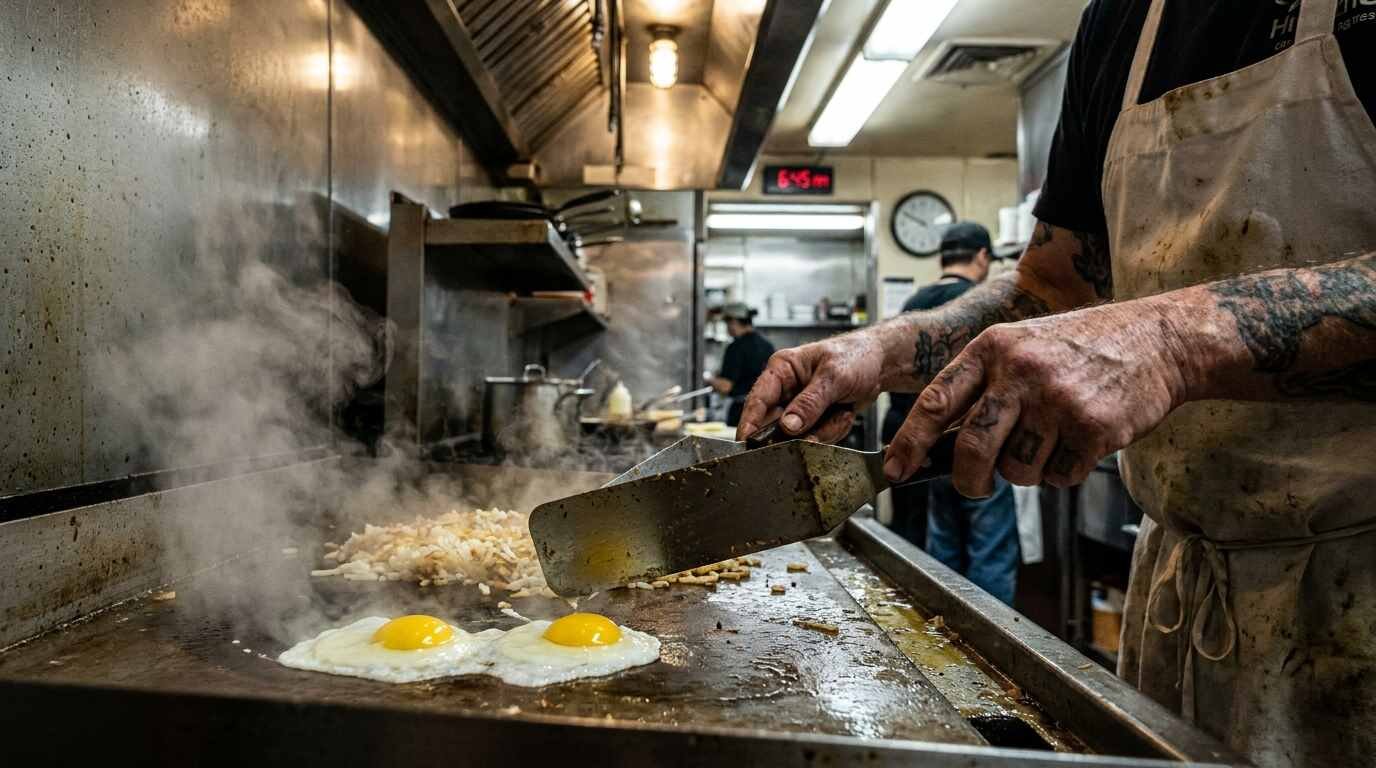
I’ve been behind the counter of Heritage Diner in Mount Sinai since 2000. Twenty-five years. Long enough to know the exact moment a regular realizes you’re not going anywhere — that little exhale, the way they stop glancing at the specials board and just order. Long enough to know what the week before a closing looks like from the inside. The walk-in gets quieter. The orders from your suppliers drop. Your staff knows before you tell them.
I’m not writing about a specific closing today, though I could name a dozen from recent years. I’m writing about the pattern. Because the pattern is what nobody wants to say out loud.
The Closing Nobody Saw Coming — Or Did They?
They always saw it coming. The regulars who were there every Tuesday morning, the ones who noticed the soup got thinner in October and the specials board stopped getting updated in January — they knew. They just didn’t say anything, because naming it makes it real.
Patch.com ran a piece last year with a headline that should have stopped everyone cold: “The Diner Industry On Long Island Is Dying.” Not struggling. Not pivoting. Dying. The owners they interviewed weren’t being dramatic. Dennis Pavlatos, who runs East Bay Diner in Seaford and Infinity Diner in West Babylon, said it plainly: the diners that survived did so because their owners owned the building. If you’re paying rent on Long Island right now, the math is already against you.
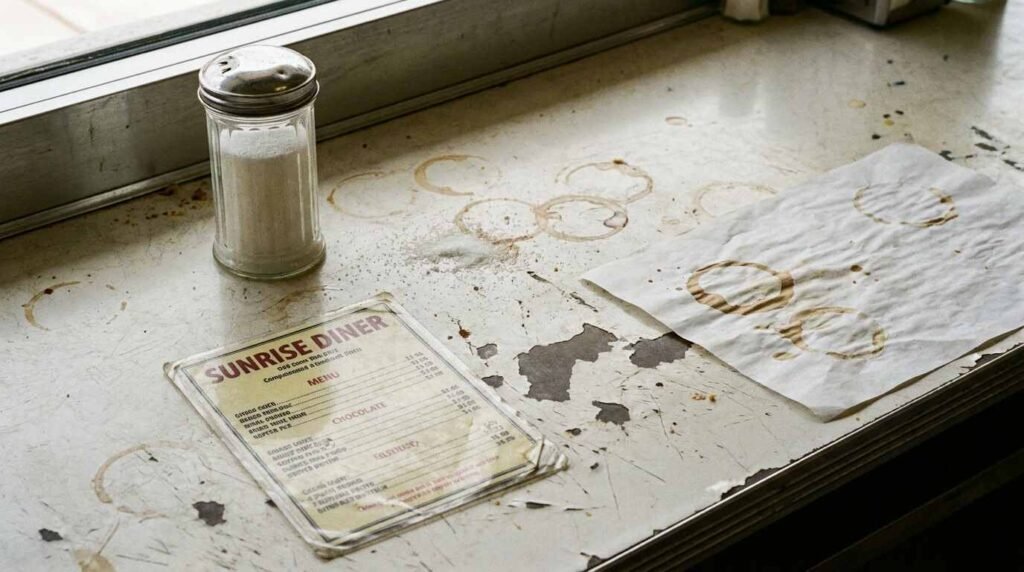
Peter Tsadilas, owner of the Golden Globe Diner in Huntington, told Patch his monthly rent was $22,230 — plus a $5,600 tax increase for the year. One diner. Those numbers put a closing in a different light. It’s not failure. It’s arithmetic. You can run a perfect kitchen and still lose to a lease renewal.
I know that arithmetic personally. I’ve lived inside it. What the coverage never quite captures is what it feels like on the other side of the counter when the decision gets made.
What a Diner Closing Actually Costs a Neighborhood
The Forum Diner in Bay Shore ran for 52 years before it closed. Fifty-two years of shift workers and school bus drivers and families making the same left turn off the expressway without thinking about it — because the turn was just part of how Tuesday worked. I wrote about the Forum a while back: The Forum Diner of Bay Shore: 52 Years, One Closing, and What Comes Next.
When a place like that closes, the economic conversation is too small. People talk about the jobs — fair — and the tax revenue, also fair. But what about the guy who ate breakfast there every morning for thirty years and now has nowhere to go at 7 AM that isn’t a chain with a drive-through and a loyalty app? What he loses isn’t just a meal. It’s the specific gravitational field of a place that knew his name and didn’t need him to explain himself.
That is not a small thing. That is the thing.
The Ronkonkoma station diner ran on train schedules, on the rhythms of people who needed to be somewhere by eight o’clock and knew the eggs would be ready. I traced that economy in The Diner That Survived on Train Time. What built those places wasn’t entrepreneurial inspiration. It was necessity meeting consistency, every morning, for decades.
When that’s gone, what replaces it doesn’t replace it.
The Numbers That Kill a Small Restaurant
Let me be specific, because sentimentality won’t pay your food costs.
An egg now costs close to a dollar. Kevin Denis, who ran Professor’s Cafe in Kings Park for decades and retired in 2024, told Patch he remembered when an egg cost three cents. That’s not nostalgia talking — that’s a commodity line item that rewrites your menu pricing every quarter. Food costs “became crazy” toward the end of his run. He said he wouldn’t go into the food business today.
And he was one of the good ones. He had good years. He just ran out of margin.
Add rent that’s doubled or tripled since the original lease. Add the insurance line items — comp, unemployment, liability, health. Add the delivery platforms that take their cut of every order and train your customers to think of you as a ghost kitchen. Add labor. Add the utility bills that nobody ever talks about until July or January, when the cost of keeping a flat-top at temperature becomes a real conversation.
The math is not mysterious. It’s just relentless.
The zoning quirk that helped Smithtown diners outlast their competitors for decades — I wrote about it here: Why Smithtown Diners Outlived Every Chain That Tried to Replace Them — is exactly the kind of structural accident that kept some places alive. It wasn’t better operators. It was better real estate law from fifty years ago.
Why Chains Move In When Diners Move Out
I have no quarrel with chain restaurants on principle. They employ people. They fill a space that would otherwise be empty. What I have a quarrel with is the story we tell about why they win.
The story goes: consumers chose them. Preferences shifted. The market spoke.
The market didn’t speak. The landlord did.
When a diner’s lease comes due and the landlord knows a national chain will sign a ten-year deal without blinking, the negotiation is over before it starts. The diner operator, already running thin margins, cannot compete with a corporate balance sheet that treats a $40,000-a-month rent as a rounding error. This is not a consumer preference story. This is a capital story.
What moves into the empty space is not what the neighborhood chose. It’s what could afford to be chosen.
The egg cream and the expressway through Dix Hills created a dead zone on Long Island that never recovered — I traced that history here — and what replaced that economy wasn’t neighborhood restaurants. It was whatever a chain could build fast enough to capture the traffic.
What North Shore Regulars Lose That They Can’t Get Back
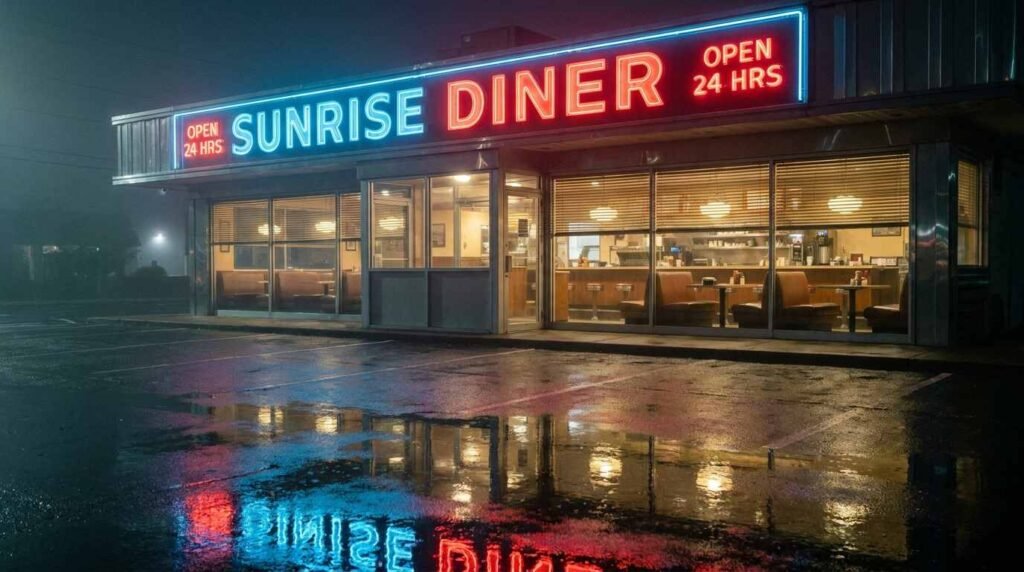
There’s a kind of social infrastructure that never appears on a balance sheet. It’s the table where the school board member eats across from the plumber, both ordering the same eggs, both invisible to each other on LinkedIn. It’s the counterman who knows you take your coffee light and doesn’t ask. It’s the specific rhythm of a place that opens before the sun does and closes after the last shift ends.
Eric Hoffer — the longshoreman-philosopher, the guy who thought through mass movements while working the docks — understood the diner in a way most academics don’t. He wrote about the social anchoring function of ordinary public spaces long before anyone had a theory for it. I put that together in The Philosopher Who Ate at Diners. The counter stool is a leveler. A democracy of appetite.
When the diner closes, the leveler disappears.
What replaces it — the fast-casual concept, the upscale brunch spot — has customers, not regulars. There’s a difference. Customers complete a transaction. Regulars are participants in something ongoing. That ongoing thing is what holds a neighborhood together in ways nobody can quantify until it’s gone.
The Formica counter, the percolator, the booths with the cracked vinyl — those weren’t aesthetic choices. They were infrastructure. The diner that closes on the North Shore in 2026 takes a piece of that infrastructure with it. Somebody will sign a lease on that space. They’ll put something new in. The new place might be good.
It won’t be the same thing.
You Might Also Like: – The Formica Conspiracy: How a Union Carbide Patent Changed Every Diner Counter on Long Island – The Philosopher Who Ate at Diners: How Eric Hoffer’s Logic Maps onto the Counter Stool Economy – The Forum Diner of Bay Shore: 52 Years, One Closing, and What Comes Next
Sources
– “‘The Diner Industry On Long Island Is Dying’: Owners Talk Evolving Landscape.” Patch — Huntington, NY, May 28, 2025. https://patch.com/new-york/huntington/diner-industry-long-island-dying-owners-changing-landscape – “Long Island Said Goodbye to These Restaurants in 2024.” LongIslandRestaurants.com, January 1, 2025. https://www.longislandrestaurants.com/long-island-said-goodbye-to-these-restaurants-in-2024/ – “The Forum Diner of Bay Shore: 52 Years, One Closing, and What Comes Next.” Heritage Diner Blog. https://heritagediner.com/forum-diner-bay-shore-history-closing/ – “Why Smithtown Diners Outlived Every Chain That Tried to Replace Them.” Heritage Diner Blog. https://heritagediner.com/smithtown-diners-outlived-chain-restaurants-zoning/