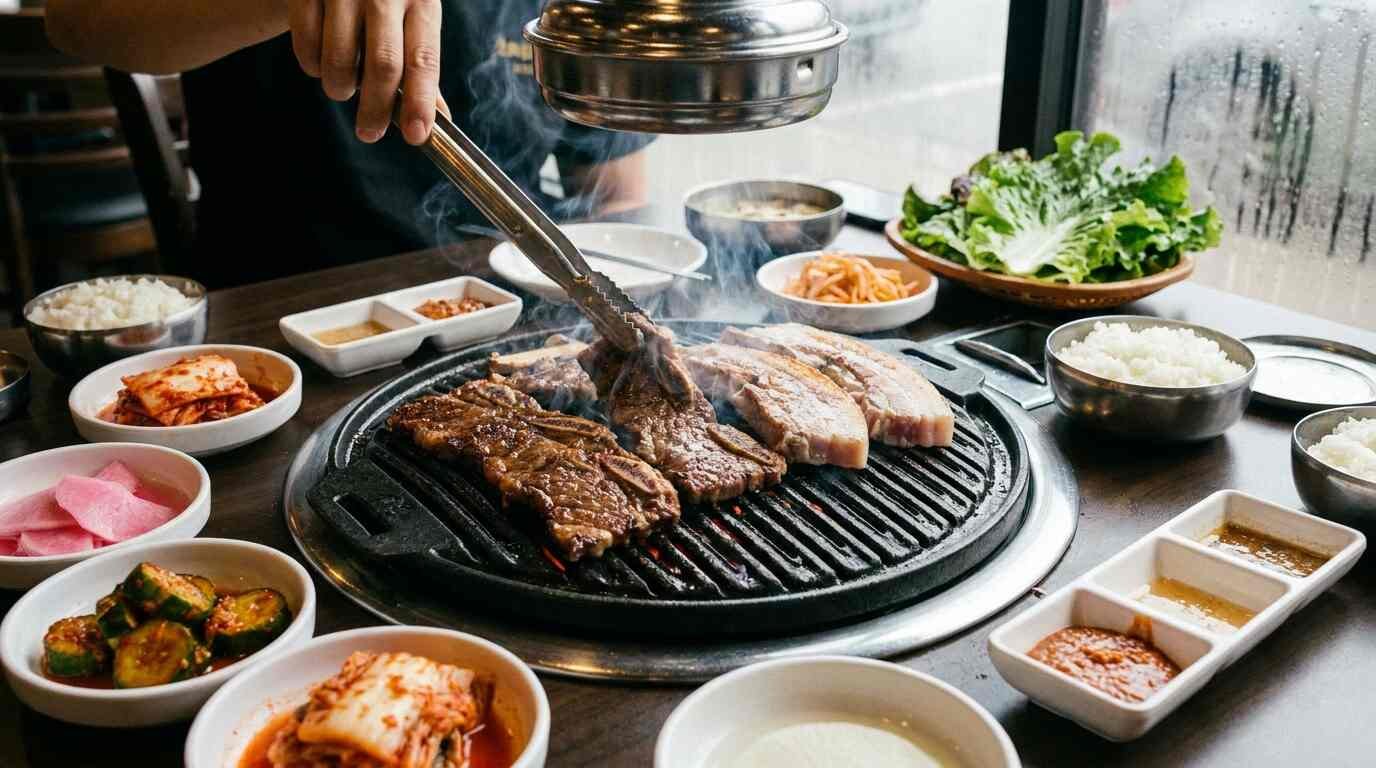
Drive Old Country Road through Carle Place on a Friday night and you will pass it without a second look: a storefront in a commercial strip, the kind of address that usually houses a phone repair shop or a tax preparer. Inside, the tables have grills set into them, the air carries the particular sweetness of marinated short rib hitting hot metal, and a server is turning your beef with tongs while explaining which sauce goes with which cut. This is Korean barbecue, one of the most theatrical and social cuisines on earth, and on Long Island it has set up in the least theatrical real estate imaginable. That contradiction is the whole story.
In Manhattan, Korean barbecue is a scene. Koreatown’s stretch of 32nd Street is a vertical stack of grill houses that food media has covered exhaustively for two decades. Push east into Queens, into Flushing and Bayside, and the density only thickens. Then the cuisine crosses the county line into Nassau and something strange happens: the restaurants keep coming, but the coverage stops. The format has taken real, growing root across Long Island’s suburbs, and almost nobody outside the neighborhood has written it down.
A Map Hiding in Plain Sight
Start in Nassau and the cluster reveals itself quickly. Won KBBQ sits at 125 Old Country Road in Carle Place, a relatively new arrival that reviewers describe cooking the meat tableside and laying out sauces and banchan before the first order lands. A few minutes east, inside the Samanea mall at 1500 Old Country Road in Westbury, KPOT Korean BBQ & Hot Pot runs an all-you-can-eat model that folds grilling and hot pot into one tablet-ordered system. Down in Levittown, K-City BBQ at 3056 Hempstead Turnpike piles barbecue, hot pot, and sushi into a single sensory-overload buffet. Valley Stream has Rockstar Korean BBQ & Chicken at 99 Fourth Street, neon-lit and built for a night out, while Albertson’s Food Court Korea on Willis Avenue handles the comfort end of the spectrum with homemade banchan and free ice cream at the close of the meal.
The pattern repeats as you cross into western Suffolk. Won KBBQ opened a second location at 200 Jericho Turnpike in Commack, and the reviews carry a telling note: customers from Suffolk County thrilled to finally have authentic Korean barbecue closer to home rather than driving toward the city. East Northport’s Korean Grill on Jericho Turnpike works the charcoal-grill tradition. Huntington’s Kuku Korean Cuisine on East Main Street brings a polished, modern room to the village. Out by the university, Ssambap Korean BBQ in Stony Brook has been feeding students and locals for over a decade, and Smithtown’s JBBQ Hot Pot & BBQ on Route 111 draws crowds large enough that diners report driving in from the five boroughs to reach it.
The Suburban Adaptation
The format did not arrive on Long Island unchanged. In the city, Korean barbecue often skews à la carte, expensive, and late, a cuisine for groups who do not mind a steep check and a midnight finish. The suburban version made adjustments the geography demanded. All-you-can-eat dominates here in a way it does not in Koreatown, because suburban families want a predictable price for a table of varied appetites, and the AYCE model delivers exactly that. The combination of barbecue and hot pot under one roof, common at the Long Island spots, addresses the same logic: one restaurant that satisfies the meat eater, the soup lover, and the person who only wants to graze the banchan.
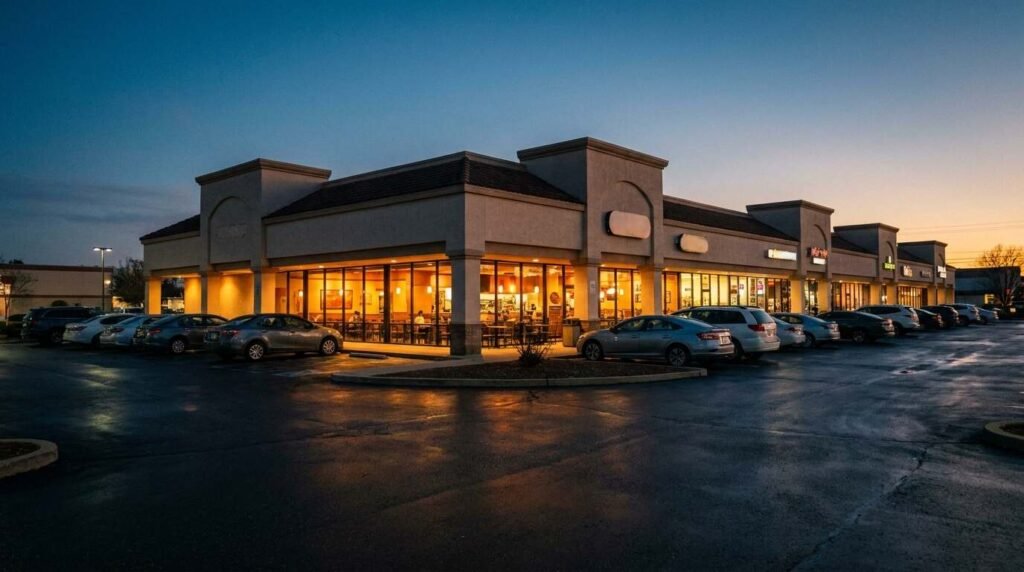
The real estate tells the rest of the story. Where Manhattan Korean barbecue stacks vertically and trades on density, the Long Island version spreads into the architecture the suburbs actually have: strip malls, shopping centers, converted spaces on the big commercial turnpikes. Free parking becomes a feature worth mentioning in reviews, which would be unthinkable in the city. The cuisine adapted to the car, to the family table, to the fixed-price expectation, and in doing so it became something subtly different from its urban parent, a suburban dining institution wearing the clothes of an urban one.
Why the Silence
So why has none of this generated the coverage it has earned? Part of the answer is structural. Food media concentrates where food writers live and where the dining economy rewards attention, and that means the city. A new Korean barbecue room in Manhattan is a story because the audience and the critics are already there. The same room in Levittown is a local favorite that travels by word of mouth, not by review, because the apparatus that would write it up is pointed in the other direction.
This is not a quirk specific to Korean barbecue. It is the standing condition of ethnic dining on Long Island, which has long run richer and deeper than its press coverage suggests. The assumption that interesting immigrant cuisine is an urban phenomenon, that the suburbs are a desert of chain restaurants and red-sauce Italian, is decades out of date and was never quite true to begin with. Long Island absorbed waves of immigration that built genuine culinary communities, and Korean barbecue is simply the latest cuisine to demonstrate the gap between what the suburbs actually offer and what the food world bothers to notice.
What the Format Asks of You
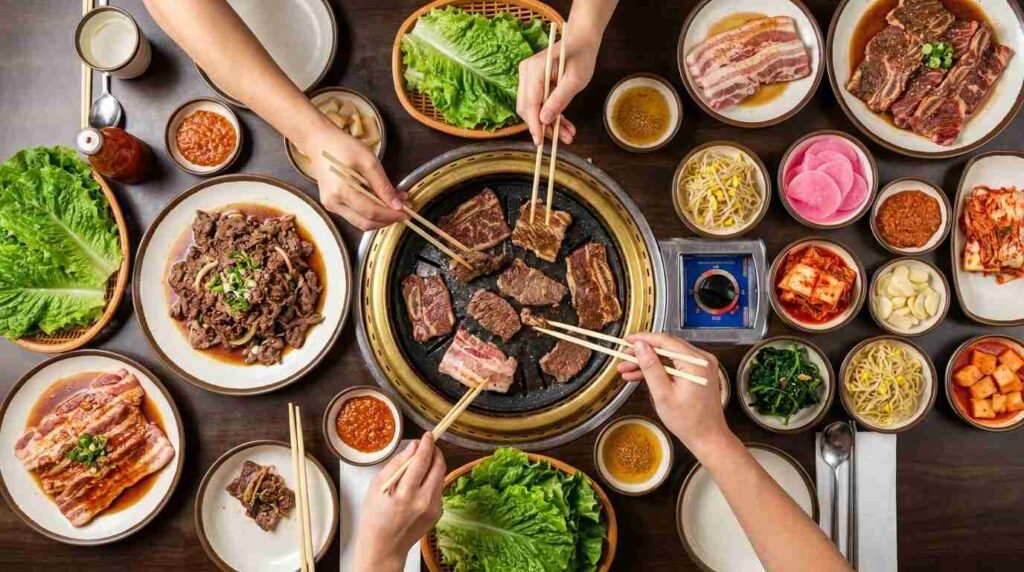
There is a reason this cuisine inspires loyalty wherever it lands, and it has little to do with food media. Korean barbecue is participatory in a way almost no other restaurant experience is. You cook. You make choices about timing and char. You pass cuts around the table and assemble bites in lettuce wraps and argue gently about whether the pork belly is ready. The meal is slow by design, built to occupy an evening rather than fill a stomach, and the grill in the center of the table turns strangers into collaborators and a family into a crew working a shared project.
That communal quality is exactly what suits it to suburban life, even if the suburbs took their time figuring that out. A format built around a long, shared, hands-on meal is a natural fit for the kind of unhurried weekend gathering the suburbs are organized around. The cuisine that conquered Koreatown by being cool has quietly conquered Long Island by being warm, by giving a table full of people a reason to stay put and do something together for two hours.
The Quiet Boom Deserves a Louder Read
The growth is real, the restaurants are good, and the only thing missing is attention. From Carle Place to Commack, from a mall in Westbury to a turnpike storefront in East Northport, Long Island has built a Korean barbecue landscape substantial enough to merit the kind of writeups the city’s version gets as a matter of routine. The disparity says less about the quality of the food than about where the food world has trained itself to look. The smart move, for anyone who eats on Long Island, is to stop waiting for permission from a downtown critic and go find the grill in the strip mall yourself.
For more of the region’s dining range, I mapped the broader scene in my complete guide to dining on Long Island’s North Shore, and I wrote about another standout in the area’s modern Asian category in my profile of Toku Modern Asian in Manhasset.
You Might Also Like
- Mirabelle Restaurant and Tavern — Stony Brook
- Sweet Mama’s Family Restaurant — Stony Brook
- Cipollini Trattoria & Bar — Manhasset
Sources
- Won KBBQ — 125 Old Country Rd, Carle Place, NY 11514 · (516) 226-3282
- KPOT Korean BBQ & Hot Pot — 1500 Old Country Rd #102B-2, Westbury, NY 11590 · (631) 228-3668
- K-City BBQ Hot Pot & Sushi — 3056 Hempstead Tpke, Levittown, NY 11756 · (516) 520-0888
- Rockstar Korean BBQ & Chicken — 99 4th St, Valley Stream, NY 11580 · (516) 224-3222
- Food Court Korea — 947 Willis Ave, Albertson, NY 11507 · (516) 996-2882
- Won KBBQ (Commack) — 200 Jericho Tpke, Commack, NY 11725 · (516) 855-0202
- Korean Grill — 2074 Jericho Tpke, East Northport, NY 11731 · (631) 499-9999
- Kuku Korean Cuisine — 92 E Main St, Huntington, NY 11743 · (631) 888-3818
- Ssambap Korean BBQ — 2350 Nesconset Hwy Ste 700B, Stony Brook, NY 11790 · (631) 675-6402
- JBBQ Hot Pot & BBQ — 41 NY-111, Smithtown, NY 11787 · (631) 656-0630