You sit down, and the room has already started working on you. Not the menu, not the server, not the food — the space itself. The brightness of the bulb over your table, the distance to the next chair, the hardness of the seat under you, the wash of noise you stopped consciously hearing within thirty seconds of arriving. These are not accidents of décor. They are decisions, made by people who study how humans behave in rooms, and they are aimed at outcomes you were never told about. The strange part is how little resistance they meet, because the whole point of good environmental design is that it operates below the level you would think to argue with.
Environmental psychology applied to dining is a real field with real practitioners and a respectable research literature behind it. The findings are consistent and, once you know them, slightly unsettling: the same plate of food can taste different, cost more, and occupy more or less of your evening depending entirely on the box it is served in. None of this requires a conspiracy. It only requires an operator who has read the same studies the designers have, and who has a clear idea of what your visit is supposed to produce.
The Lighting Is Setting the Clock
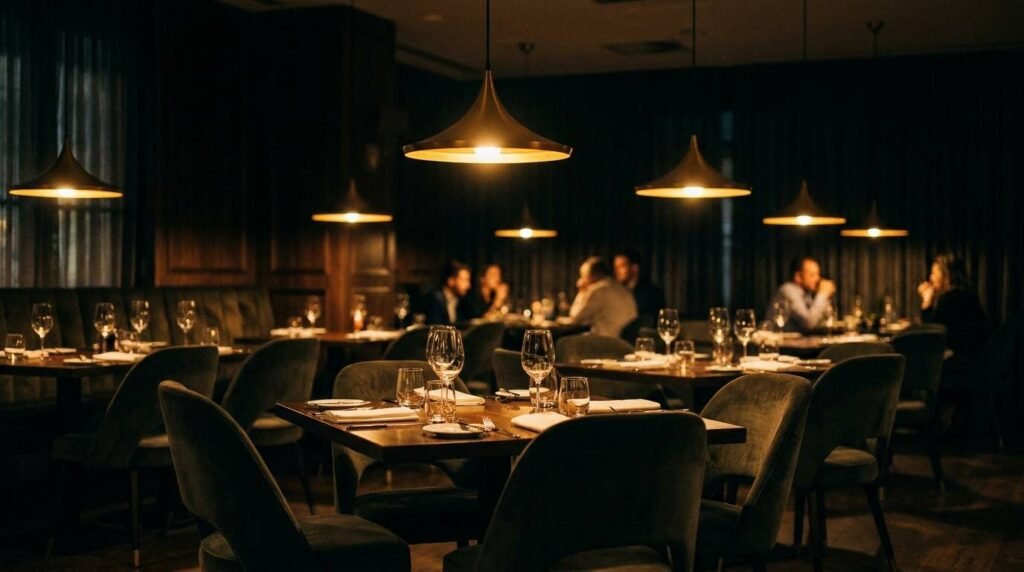
Start with light, because it is the lever with the most documented effects. Dim, warm lighting reliably encourages people to linger — it reads as intimate, relaxed, unhurried, and it nudges diners toward a second drink and a dessert they would have skipped under fluorescent glare. Bright, cool light does the opposite. It signals daytime, efficiency, get-in-get-out, which is exactly why the lunch deli and the fast-casual counter blaze and the date-night room glows.
There is a subtler finding underneath the mood effect. Controlled studies have shown that dim lighting can actually enhance perceived taste, at least for foods built around a single dominant note like sweetness — the diner attends more closely to flavor when the visual field is quieted. So the low light is doing double duty: it slows you down and it flatters the plate. When a room is lit like a cave with a single warm pool over each table, it is not being moody for its own sake. It has decided how long you should stay and how good the food should seem while you do.
The Noise Is Doing More Than You Think
Sound is the element diners complain about most and understand least. The complaint is usually about conversation — a room so loud you cannot hear the person across the table. The mechanism runs deeper than annoyance. Research on taste perception has found that high ambient noise suppresses our ability to register sweet and salty flavors while leaving umami relatively intact. This is the leading explanation for why food tastes flat at 35,000 feet, and it has direct implications on the ground: a deliberately loud room is, among other things, changing the flavor profile of what you eat.
Volume also drives behavior in cruder ways. Louder environments have been shown to increase the pace of eating and, in bar settings, the rate of drinking. A high-energy, hard-surfaced room with no acoustic dampening is generating exactly that energy on purpose — it feels alive, it photographs as vibrant, it turns tables faster, and it loosens spending. The trade-off is conversation and comfort, which the operator has quietly decided are worth sacrificing. The diner registers the loss as “this place is fun,” which is precisely the read the room was engineered to produce.
The Chair Is Not Trying to Be Comfortable
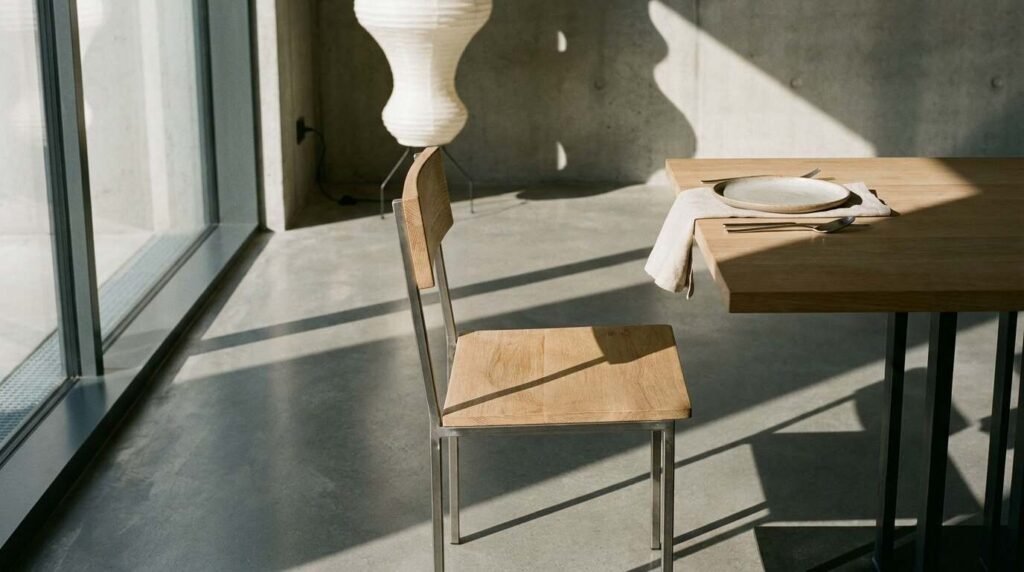
Here is the choice that most clearly reveals intent: the seat. A high-volume room optimizing for turnover does not want you comfortable past a certain point. A genuinely cushioned, supportive chair invites lingering, and lingering is throughput lost. So the hard bench, the slightly-too-upright back, the stool with nowhere to settle — these are not always budget decisions or aesthetic ones. Sometimes the discomfort is the feature, calibrated to keep the table cycling.
The tell is to compare the chair to the rest of the room’s apparent ambitions. A space that has clearly spent money on lighting, finishes, and plating, then sat you on something you want to leave within ninety minutes, has told you something about its model: it wants a beautiful, fast visit. A room with deep banquettes and chairs you sink into is making the opposite bet — fewer covers, longer stays, higher spend per table. Your body knows which one you are in before your mind names it.
Table Spacing Is a Spreadsheet
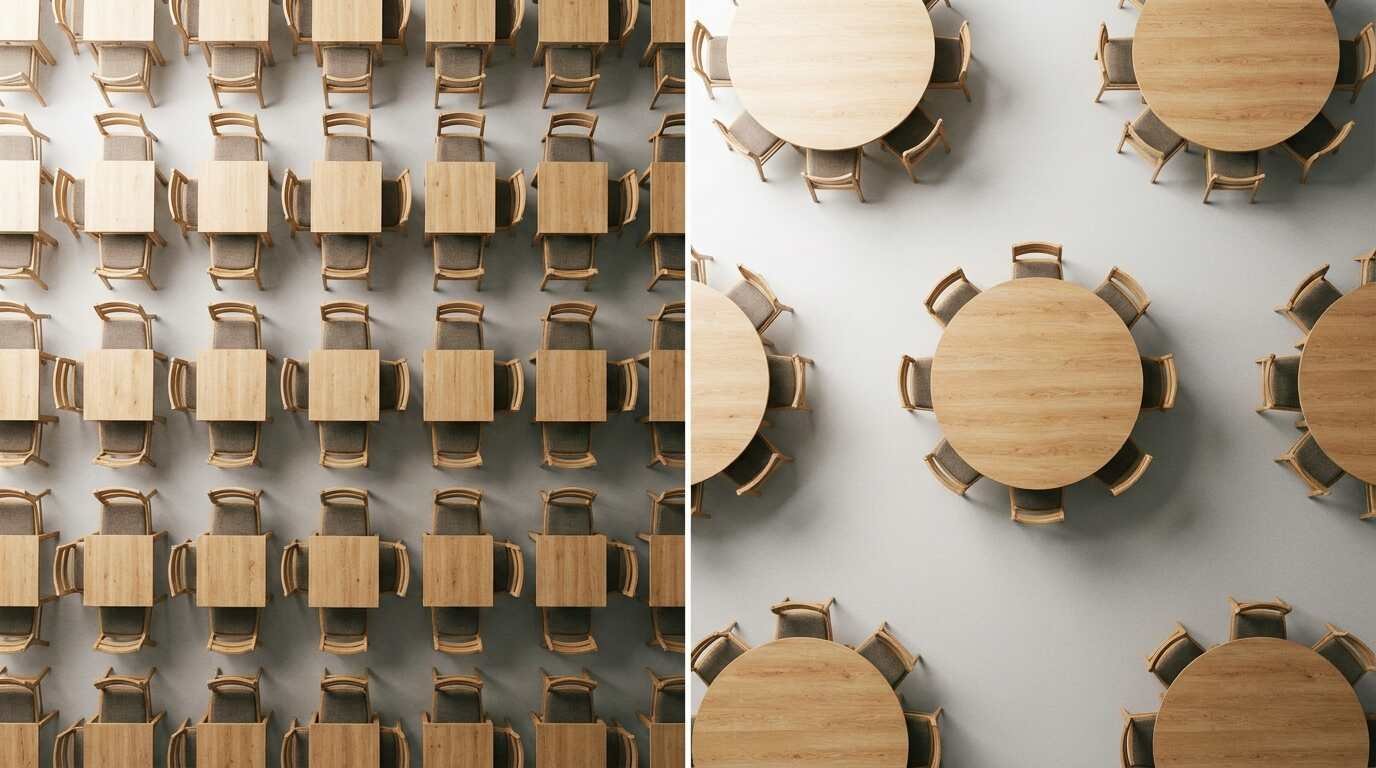
The distance between you and the next table looks like a comfort decision and is mostly a math one. Every inch of additional space between covers is revenue the room is choosing not to capture, traded for the perception of privacy and calm. Tightly packed tables maximize covers per square foot; generously spaced ones signal that the room can afford not to. When you can hear the next table’s entire conversation, that is the spreadsheet talking, not a design oversight.
This is the choice that maps most directly onto price point, which makes it one of the more reliable cues a diner can read. A room that has given you room is telling you, before you have seen a single number, roughly where its prices sit and what kind of evening it expects to sell you. The spacing is a forecast of the check.
Built for the Camera
A newer layer of design intent has nothing to do with how the food tastes or how long you stay, and everything to do with what happens after you leave. Contemporary rooms are increasingly built to photograph — a single dramatic light source, a signature wall, finishes chosen for how they render on a phone screen rather than how they feel in person. Industry coverage of fine dining now treats social-media-driven buzz as a design objective in its own right, with lighting and visual elements selected partly to manufacture the image a diner will post.
This is worth naming because it explains design choices that otherwise seem to fight the comfort findings. A room may be too dark to read the menu comfortably because the darkness makes the focal lighting on each plate read dramatically on camera. The optimization target has shifted from your experience in the room to the free marketing you produce when you photograph it. Once you see this, the otherwise puzzling moments — why is it this dark, why is that wall lit like a stage — resolve into a single question the room is quietly answering: how will this look when you share it?
How to Read the Room You’re In
None of this is cause for paranoia, and the goal is not to ruin a nice dinner by deconstructing the lightbulbs. The point is the opposite — that a little fluency turns a passive experience into a legible one. The room is communicating its intentions constantly, in a language of brightness and volume and seat-hardness and spacing, and you can learn to read it the way you read a menu’s pricing or a server’s recommendations.
Walk in and take the quick inventory. Warm and dim or bright and cool — are they slowing you down or moving you out? Loud and hard or hushed and soft — are they cranking energy and turnover, or selling calm? Hard seat or deep one, tight tables or generous ones — fast beautiful visit, or long expensive one, or comfortable middle? On the North Shore, where a single evening’s options can run from a counter built for speed to a room built for lingering, this read tells you what kind of night each place is actually offering before you commit to it. The environment was always making decisions on your behalf. The only change is that now you can see them being made, and decide whether you agree.
This is for informational purposes only — consult a licensed attorney or financial advisor for your specific situation.
You Might Also Like
- Why Smithtown Diners Outlived Every Chain That Tried to Replace Them
- Googie architecture promised us the moon. We got a two a.m. steak-and-eggs special instead.
- The Complete Guide to Dining on Long Island’s North Shore — From Diners to Fine Dining
Sources
- How restaurant design influences spending, mood and sales — Dojo
- In darkness we seek light: lighting designs and approach intentions — Journal of Environmental Psychology (ScienceDirect)
- The effect of background noise on food liking — Applied Acoustics (ScienceDirect)
- The Psychology of Dining Space Design — KRG Hospitality
- How Light Impacts Psychology & Mood in Restaurants — TCP