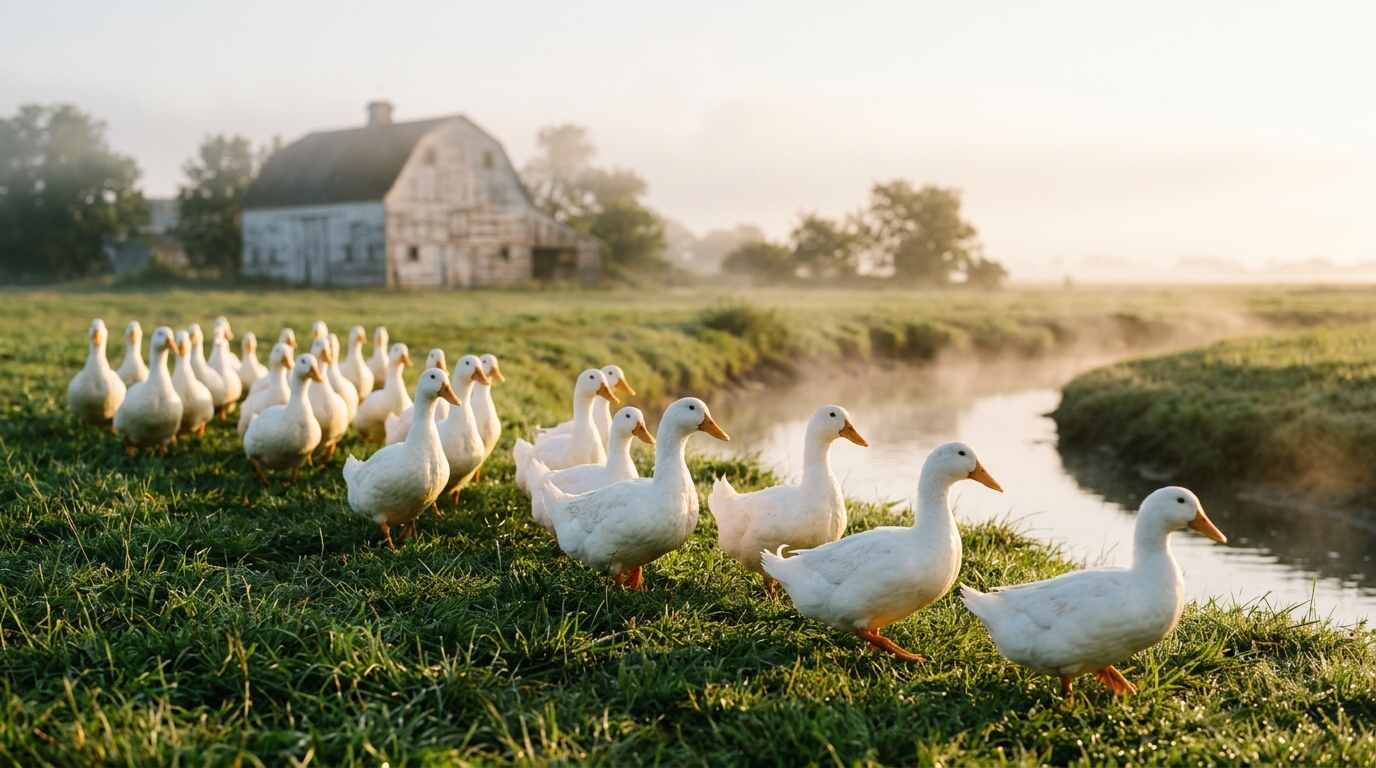
In January 2025, a walk through the barns on a 140-acre farm in Aquebogue turned up dead and sluggish birds, and within days the last commercial duck farm on Long Island had no flock at all. Crescent Duck Farm had outlasted the Depression, a county executive’s call for a “duckless county,” and the slow disappearance of every neighbor in its trade. It had not outlasted H5N1. Nineteen months later, on August 31, 2026, production began again, and Long Island kitchens had their local duck back.
That sequence is the story of one farm. It is also a compact lesson in how a regional food supply works, and how thin it can get.
A Creek, Thirty Ducks, and a Carpenter’s Bet
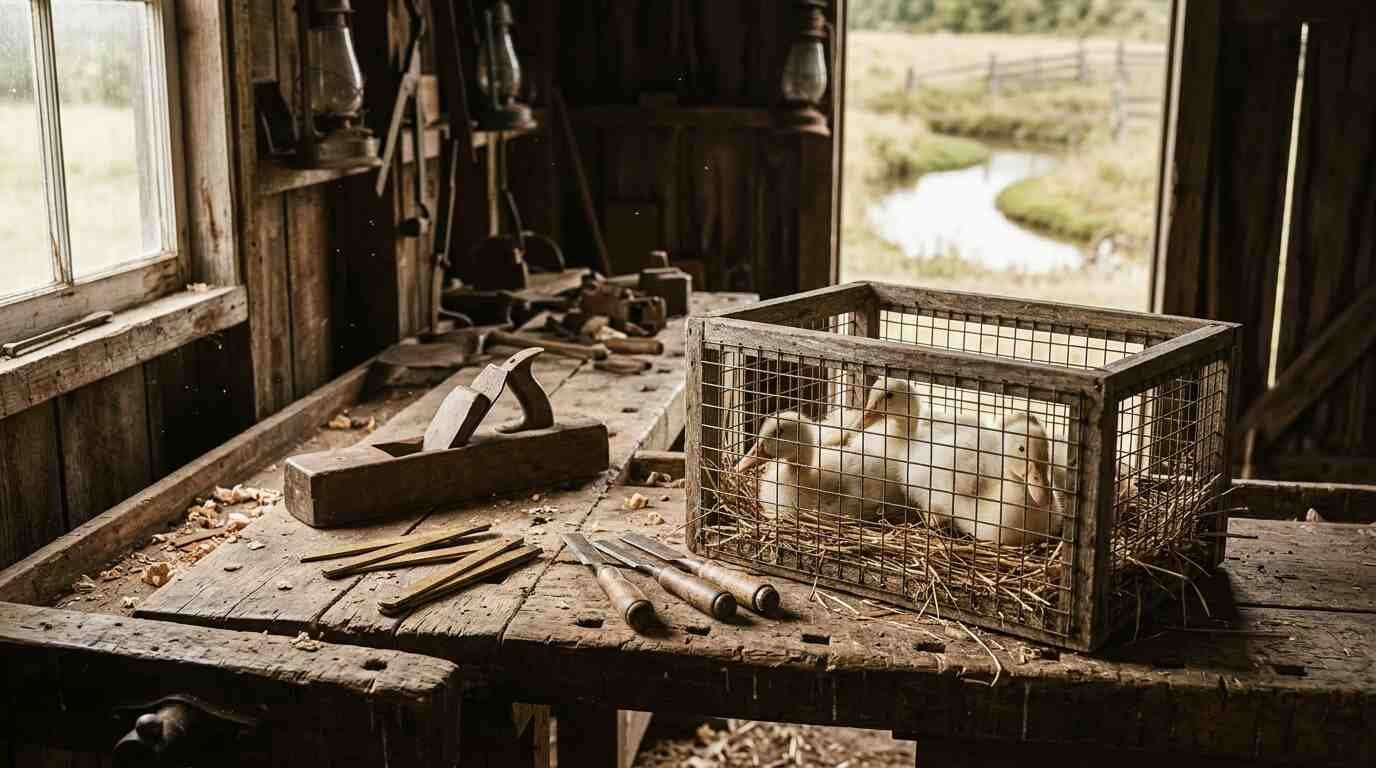
Henry Corwin spent his early working life building things for other people, as a carpenter on major construction projects across eastern Long Island. Around 1907 his wife became ill, and he stepped away from the trade to stay close to home. The following year he put his sandy Aquebogue land to use by buying 30 breeding ducks. His wife named the new venture Crescent Duck Farm for the crescent-shaped brackish creek running beside it, according to the farm’s own history.
Thirty ducks make a modest down payment on a century. By the farm’s account it began on about 25 acres and turned out roughly 4,000 ducks a year in its early stretch, then grew through adjoining land purchases to about 140 acres today. The family’s roots on the island run far deeper than the farm: the same history places Corwin descendants in Southold around 1640 and holding land in Aquebogue by 1655.
Under Henry’s son Lloyd Sr., production reached about 150,000 ducks a year. Then 1929 arrived, farm income fell to nearly nothing, and Lloyd Sr. and his helpers took part-time plumbing work to keep the place going. Every generation since has added something the last one could not have afforded.
| Year | Milestone at Crescent Duck Farm |
|---|---|
| 1908 | Henry Corwin buys 30 breeding ducks and starts the farm |
| Early 1920s | His son Lloyd Sr. joins the business |
| 1929 | Income collapses; Lloyd Sr. and helpers work part time as plumbers |
| Early 1950s | A USDA-licensed processing and chilling facility is added |
| 1980 | Douglas Corwin begins a breeding program for meatier, more succulent ducks |
| 1984 | A modern feed mill is bought to improve duck nutrition |
| 2000 | A waste treatment facility is added, producing biogas equivalent to about 200 kilowatts |
| 2005 | Blake and Pierce Corwin return, the fifth generation |
Source: Crescent Duck Farm, “Our History.”
What a White Pekin Offers a Kitchen
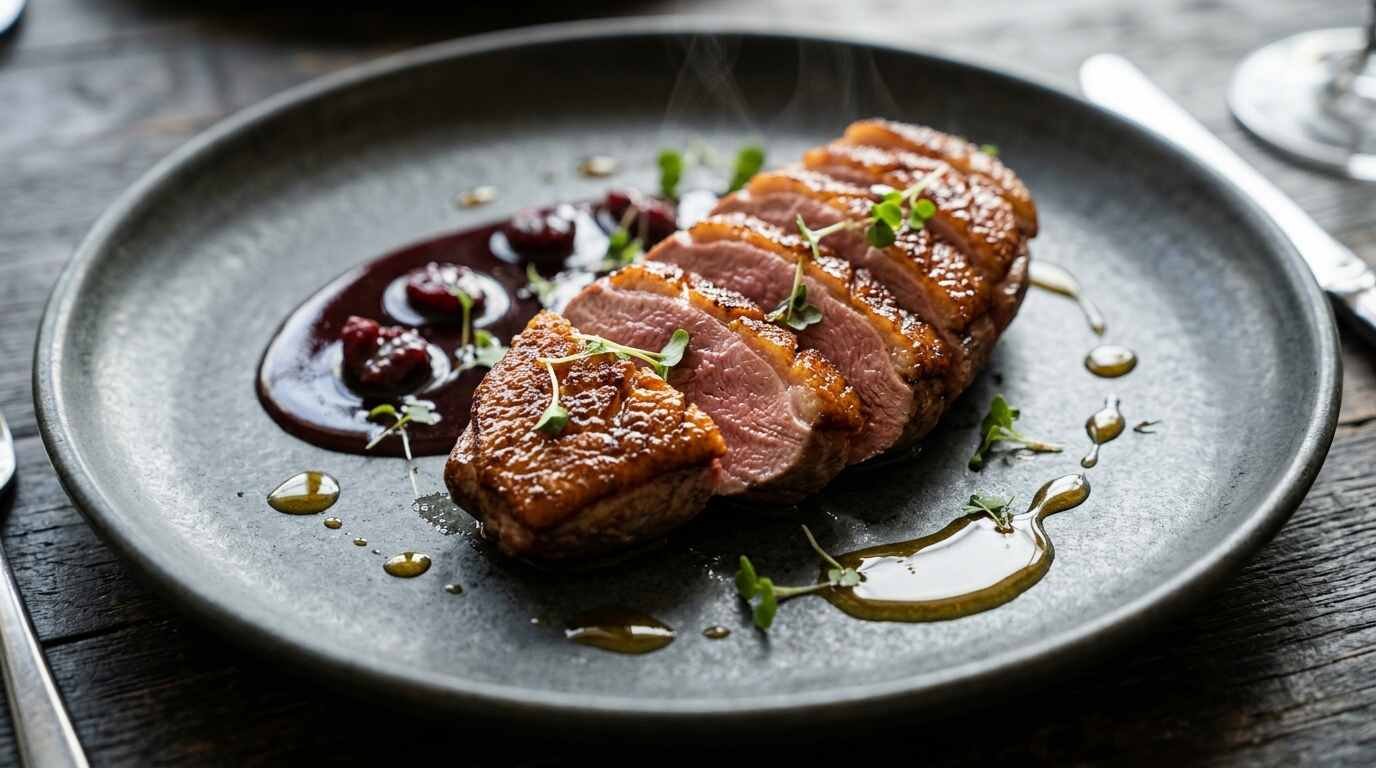
A restaurant duck is judged on three things: skin that crisps, fat that renders cleanly, and breast meat with enough heft to carry a sauce. Crescent’s pitch rests on all three. The farm says its target customer is the most discerning “white table cloth” restaurant, and its product list reads like a single animal taken apart with a chef’s priorities in mind: airline boneless breast, bone-in and skinless breast, whole legs, wings, duck fat, liver, tongues, trimmed feet, and a Confucian-style bird.
The farm’s website says the ducks eat a computer-generated diet of corn, soybean meal, and wheat, supplemented with vitamins, minerals, and amino acids. It states that hormones are never used and that antibiotics are never used to assist growth.
The bird itself is the real asset. After the reopening, Doug Corwin told Patch that, “Without my genetics, which are so unique in my industry, I wouldn’t have survived.” The line is less boast than inventory: a proprietary flock, built by selective breeding since 1980, is the one thing a farm cannot buy back from a catalog once it is gone.
Scale made Crescent a quiet pillar of the high-end duck trade. Dan’s Papers reported that, before the outbreak, the farm supplied close to 4 percent of the nation’s duck meat, mainly through distributors serving upscale restaurants, naming the Four Seasons (since closed) and River Café among its customers. The Associated Press described a farm that had processed about 1 million ducks a year.
One Farm Left Standing
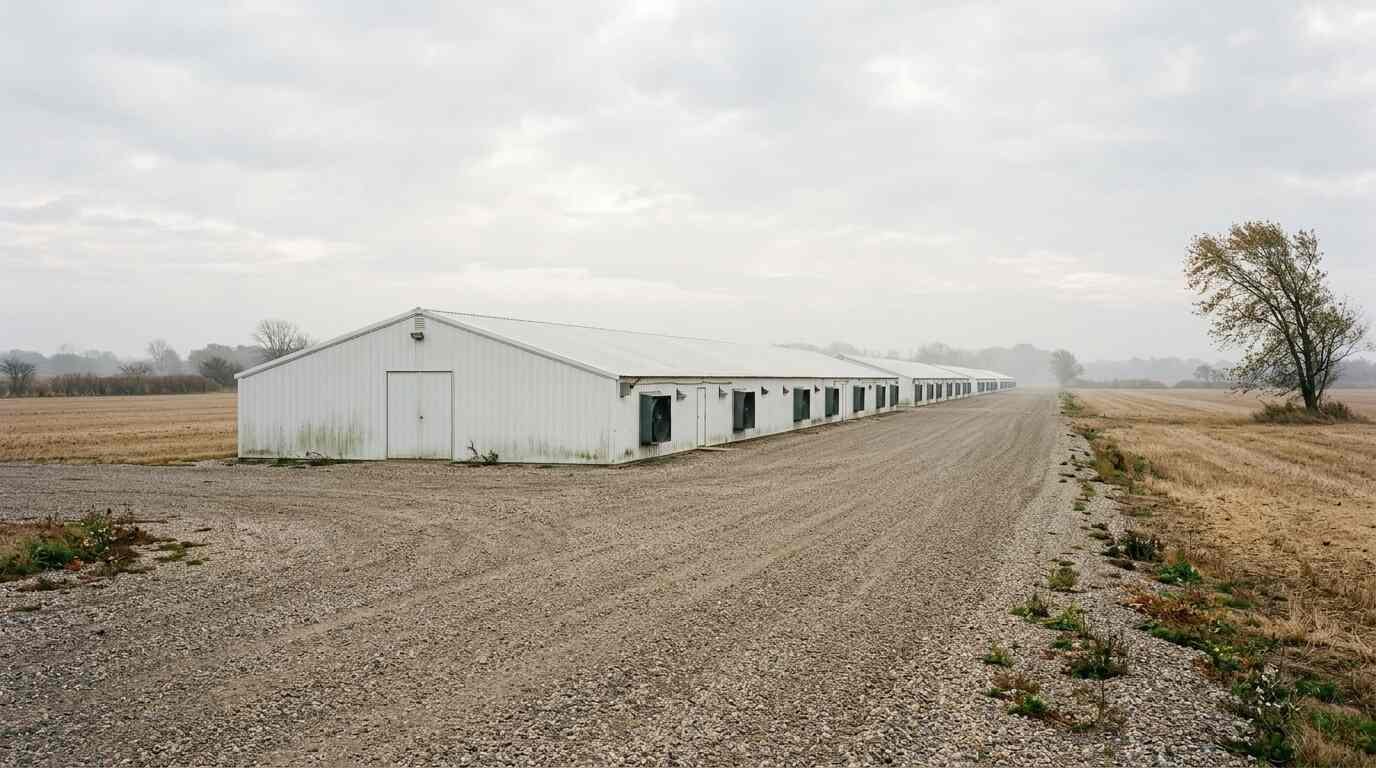
Long Island was once the center of American duck production. By the early 1960s the island had more than 100 duck farms producing roughly two-thirds of the nation’s duck, the Associated Press reported. Around the same period, County Executive H. Lee Dennison called for a “duckless county,” according to Patch. The industry shrank for decades afterward until a single operation remained.
Then came January 2025. Corwin reported signs of illness in his flock, and USDA laboratory tests confirmed H5N1, Patch reported. Suffolk County Department of Health Services announced the detection. With more than 100,000 birds on site, nearly the entire flock was euthanized, and Patch noted that no potentially exposed workers became ill.
“My business went from 100 percent down to zero percent overnight,” Corwin told ABC7 New York weeks later, with all 20 of the farm’s barns sitting empty. Nearly all of the workforce had been laid off. The Associated Press reported that federal compensation arrived but fell far short of the birds’ market value.
Flock Together: A Kitchen Line Forms Around a Farm
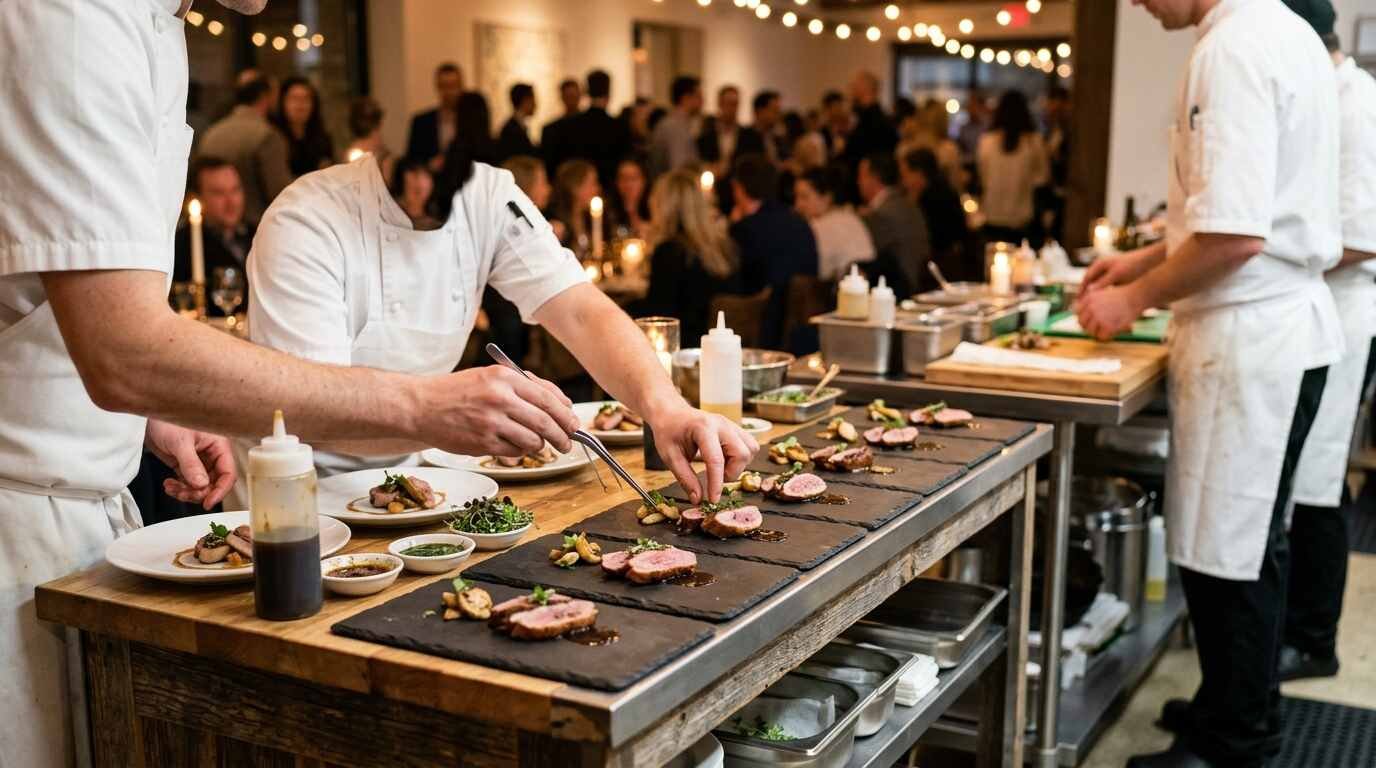
On Friday, February 28, 2025, nine chefs set up food stations at Tellers Next Door in Islip for “Flock Together: A Culinary Tribute to Crescent Duck Farm,” a one-night event with cocktails, wine, and an auction, with every dollar earmarked for the displaced workers.
The Riverhead News-Review reported that organizers planned it in about two weeks. Chef Francis Derby, one of the organizers, said gathering support took little persuading. Reports on the total differ: Dan’s Papers put the event’s take at about $33,000, while the News-Review reported more than $50,000 from the tasting, silent auction, and donations.
Corwin told News 12 Long Island that he had known the farm was popular among restaurants but had not grasped “the depth of the love they have given us.” The same week, the farm took in about 3,700 new ducklings, the first sign of a flock returning.
Recognition followed. In January 2026 the Riverhead News-Review named Corwin its 2025 Person of the Year, noting that the Railroad Museum of Long Island has featured Crescent Duck on special-edition train cars since the early 2000s.
Nineteen Months, One Egg at a Time
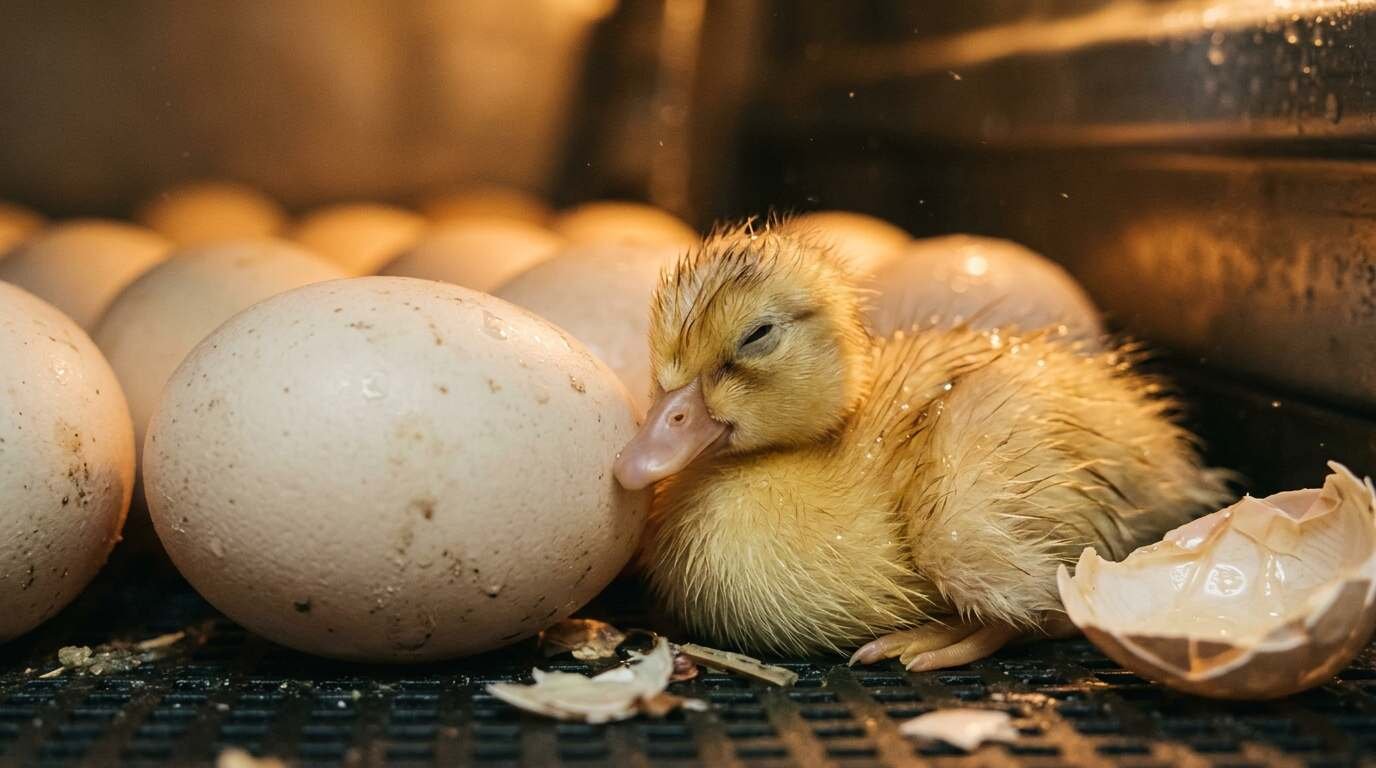
Rebuilding a flock from nothing is slow arithmetic. New York State allowed Corwin to save more than 15,000 eggs that tested negative, according to the Associated Press, and he has called those eggs the lifeline of the business. Dan’s Papers reported that salvaged eggs were hatched in an abandoned duck hatchery in Eastport, that USDA’s Animal and Plant Health Inspection Service lifted the farm’s quarantine on May 12, 2025 after all 500 samples from 20 barns tested negative, and that ducks need about 26 weeks to start laying.
Young ducks raised in quarantine at a nearby farm arrived in batches of roughly 900 that spring, the Associated Press reported. Crews spent months sanitizing dozens of barns and replacing feeders, ventilation, and other structures. Through all of it, the future was not guaranteed. “If I go through this twice, I’m done as a duck farmer,” Corwin told the AP in June 2025.
Biosecurity shaped the timeline as much as biology. Corwin told Patch he delayed the restart because dead geese in February left a heavy viral load in the area. He has also pressed local, state, and federal officials for an avian flu vaccine and works with Cornell’s vaccine lab, the Riverhead News-Review reported. As of spring 2025, Dan’s Papers noted, a vaccine existed but was not approved for use in the United States.
What the Reopening Means for Long Island Menus
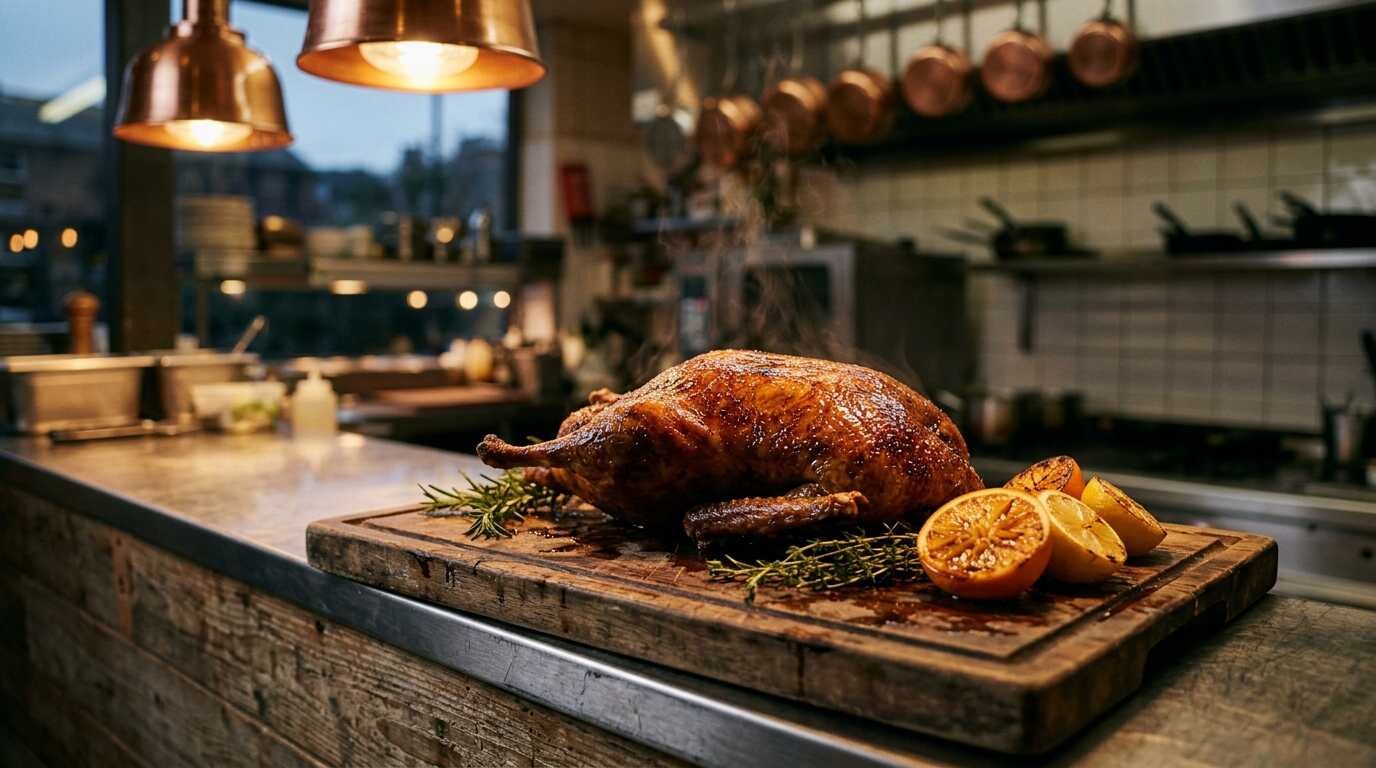
Production restarted on August 31, 2026, and Patch reported the news on September 18. Corwin hired 39 people, 37 of whom he had laid off in January 2025. He had kept 16 employees on the payroll through the 19-month closure.
Chefs had been watching. Jerry Dicecco Jr., owner of Jerry & The Mermaid, told Patch his restaurant bought limited quantities of Crescent duck during the shutdown and plans to feature it regularly now. Derby, culinary director at The Halyard in Greenport when the News-Review profiled Corwin, said of the farm, “Working with Doug, it’s just awesome, because he really appreciates the support.”
For readers who cook at home, the practical question is how to taste the result. Crescent sells to the food trade, and its website lists no consumer ordering process; inquiries go through its contact page or phone line. Restaurants buying from the farm are the realistic route, and the kitchen technique that suits the bird is covered in a guide to pan-roasting Long Island duck breast with crisp skin and a cherry gastrique. The lost regional history behind the breed is told in the story of Long Island’s vanished duck variations, and the wider network of local suppliers is mapped in a look at where Long Island restaurants actually source their food.
Crescent Duck Farm at a Glance
- Location: Aquebogue, Suffolk County, on Long Island’s North Fork
- Mailing address: PO Box 500, Aquebogue, NY 11931-0500
- Phone: 631-722-8000
- Website: crescentduck.com
- Founded: 1908 by Henry Corwin
- Leadership: Doug Corwin, president; sons Blake and Pierce work in the business
- Products: whole ducks, breasts, legs, wings, duck fat, liver, and more, sold to the food trade
This is for informational purposes only — consult a licensed attorney or financial advisor for your specific situation.
Sources
- Crescent Duck Farm, Home, Our History, and Our Press
- Patch (Riverhead), Iconic Crescent Duck Farm, Last On Long Island, Reopens 19 Months After Being Hit By Avian Flu: ‘We’re Back’, Sept. 18, 2026
- Long Island Business, Crescent Duck Farm Finally Reopens After 19-Month Closure Due to Devastating Bird Flu Outbreak, Oct. 2, 2026
- Associated Press (via Bangor Daily News), Ducks return to a Long Island farm that lost its entire flock to the bird flu, June 19, 2025
- Dan’s Papers, Long Island’s Last Duck Farm Rebuilds After Avian Flu, May 2025
- ABC7 New York, LI duck farm rebuilding after devastating bird flu outbreak wiped out 100k ducks, major layoffs, Feb. 28, 2025, and the Eyewitness News segment on YouTube
- News 12 Long Island, Long Island chefs host ‘Flock Together’ event to support laid-off Crescent Duck Farm workers, Feb. 28, 2025
- Riverhead News-Review, Flock Together raises more than $50K for Crescent Duck Farm, March 2025
- Riverhead News-Review, 2025 Person of the Year: Doug Corwin, Jan. 28, 2026