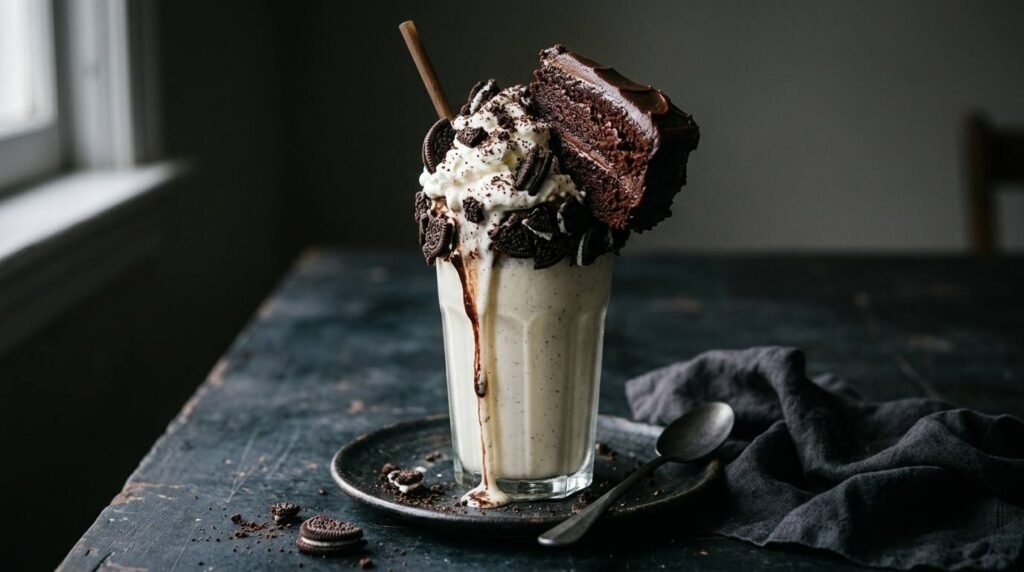
A slice of cake went into a blender this week, and the internet noticed. On October 6, Portillo’s rolled out an Oreo Shake, an Oreo Cake and a third item that does the obvious thing: the Oreo Cake Shake, which blends the new cake into a vanilla shake and finishes it with crushed cookies on top, according to Dexerto’s report. The chain’s fans did what fans do.
Spectacle sells, but the spectacle only works because the base underneath it is sound. Strip away the cake and the cookie crumbs and you are left with the oldest trick in the soda-fountain playbook: cold ice cream, a splash of cold milk, and a spindle that knows when to quit. That is the shake worth learning, and it takes about five minutes.
A Drink That Started Out Drunk
The word “milkshake” first showed up in print in 1885, and it did not mean what it means now. Back then it described a whiskey drink, a “sturdy, healthful eggnog type of drink,” as Wikipedia’s milkshake entry summarizes it. By 1900 the word had been scrubbed clean and attached to wholesome drinks flavored with chocolate, strawberry or vanilla syrup. Ice cream joined the party in the early 1900s, usually by request.
Then the machinery arrived, and machinery is what made the shake a diner institution. Per the same source, William Horlick invented malted milk powder in 1897; Hamilton Beach introduced its Cyclone Drink Mixer in 1911, a fixture of soda fountains; a Walgreens employee added two scoops of vanilla ice cream to the malted drink in 1922; and in 1936 Earl Prince’s Multimixer let one counter worker turn out five shakes at once. Each step solved a diner problem: speed, consistency, volume.
That lineage is why a counter shake tastes the way it does. It was engineered for a line of customers and a stack of tickets, not for a photograph.
Four Rules That Separate a Shake From a Sad Smoothie
Most home shakes fail the same way. They come out thin, icy and pale, like a melted memory of the thing. The fixes are physical, not mysterious.
Less milk than you think. The classic ratio is roughly two parts ice cream to one part milk by volume. Pour milk until the blender “looks right” and you have made chocolate milk with ambition.
Cold everything. Chill the glass in the freezer. Use milk straight from the fridge. Warm ingredients melt the ice cream before the blades finish, and melted ice cream never recovers its body.
Good ice cream, slightly tempered. A full-fat vanilla, one that tastes good on its own, is the engine of the whole drink. Let the scoops sit on the counter a couple of minutes so the blades bite instead of bounce.
Blend short. Ten to fifteen seconds is usually enough. Run it longer and friction warms the mix; the shake loses its thickness and turns into something you drink with a straw through resignation.
The Recipe: A Malted Vanilla Diner Shake
This follows the ratios in Brown Eyed Baker’s malted vanilla milkshake, which uses about two big scoops of ice cream to half a cup of cold milk, with malted milk powder added to taste.
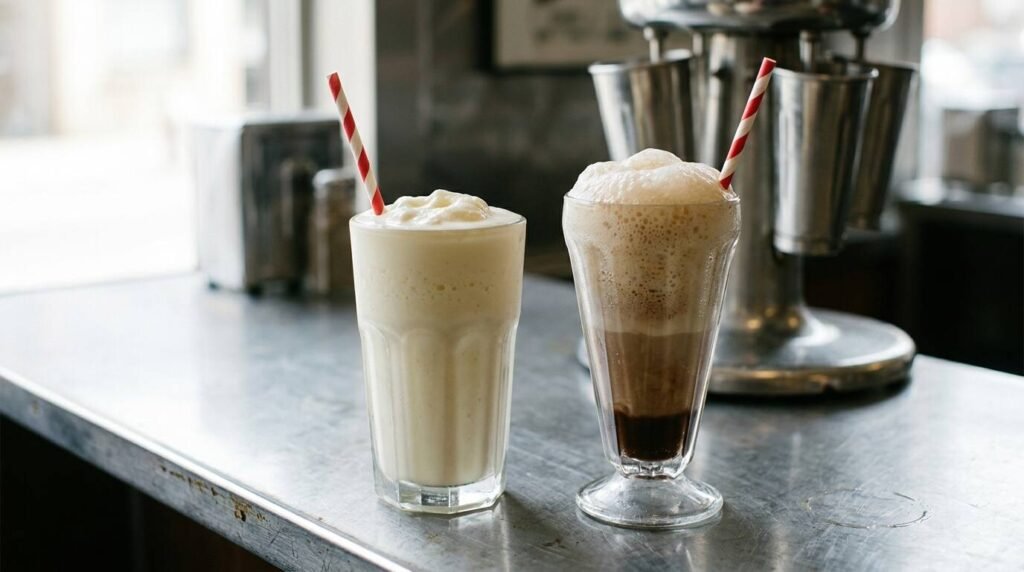
Makes 1 tall shake | Prep: 5 minutes
Ingredients
- 1 cup (about 2 big scoops, 132 g) good vanilla ice cream
- ½ cup (122 ml) cold whole milk
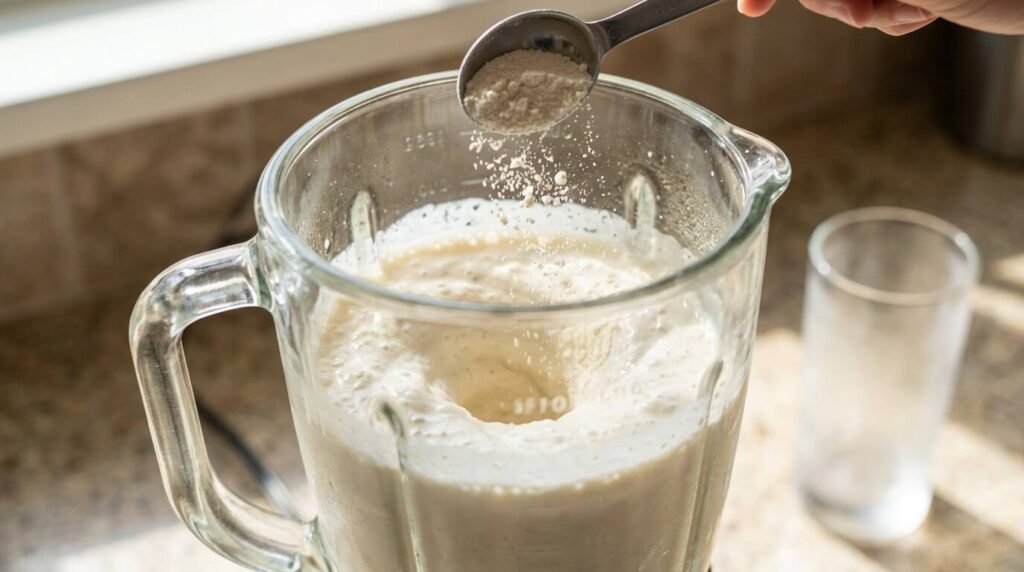
- 2 to 3 tablespoons malted milk powder
- ½ teaspoon vanilla extract
- Whipped cream and a cherry, optional
Method
- Put a tall glass in the freezer for 10 minutes.
- Let the ice cream sit out for about two minutes until the edges give.
- Add the ice cream, cold milk, malt powder and vanilla to a blender, milk first so the blades catch.
- Blend until just smooth, usually 10 to 15 seconds. Stop when the vortex closes.
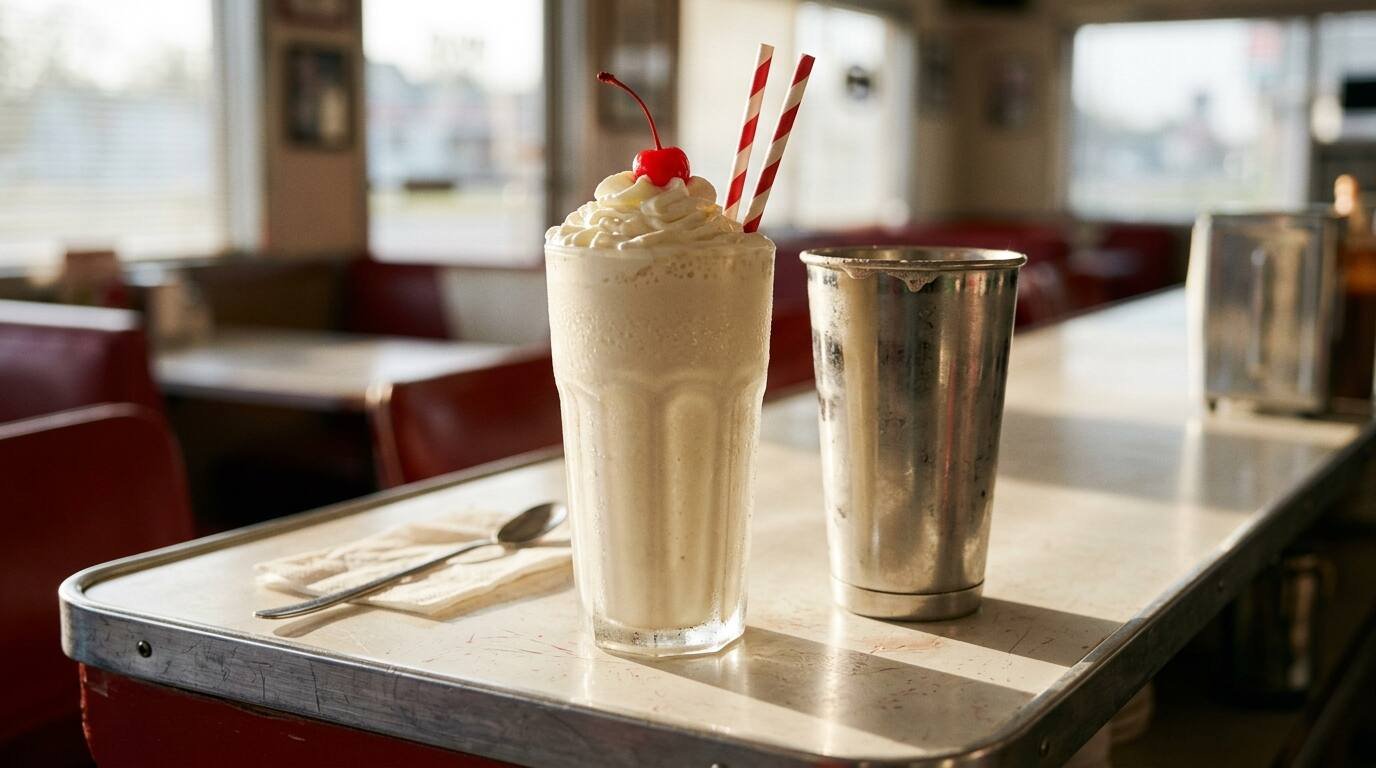
- Pour into the frosted glass. Scrape the last of it into the steel cup if you have one; serve the extra on the side. That second pour is the diner touch.
Adjustments
- Thicker: cut the milk to ⅓ cup or add another half scoop of ice cream.
- Malt-forward: start at 2 tablespoons and add a spoonful at a time. Malt is assertive.
- Chocolate or strawberry: swap the ice cream and leave everything else alone.
- The Portillo’s move: crumble a slice of cake or a handful of sandwich cookies into the blender for the last three seconds only, so the pieces stay visible.
When the Shake Goes Wrong
Most failures trace back to one of three causes, and each has a quick fix.
- Thin and foamy: too much milk or too much blending. Add another scoop of ice cream and pulse twice.
- Gritty malt: the powder clumped. Whisk it into the cold milk first, then add the ice cream.
- Won’t move up the straw: a good sign, actually. Wait 30 seconds and eat the top with a spoon, the way the counter regulars do.
And the Egg Cream, for Contrast
A New York egg cream is the shake’s opposite in almost every respect. No ice cream, no blender, no thickness: it is chocolate syrup, cold milk and seltzer, built in a glass and stirred until the foam crowns. Where the shake is dense and patient, the egg cream is fizzy and quick, and it contains neither egg nor cream.
The whole technique, and its Brooklyn lineage, is already on the site. Start with The Classic New York Egg Cream: Chocolate, Seltzer and Milk Done Right for the build, then read Egg Cream: No Egg, No Cream for the Fox’s U-bet story. Two drinks, one fountain: pick the shake for a long sit and the egg cream for a quick one.
You Might Also Like
- Stainless Steel Cathedrals: Kullman and DeRaffele Diner Manufacturers
- Automat History: Horn & Hardart and the Fast-Food Precursor
- Bottomless Coffee Chemistry: Long Island Diners and the Percolator