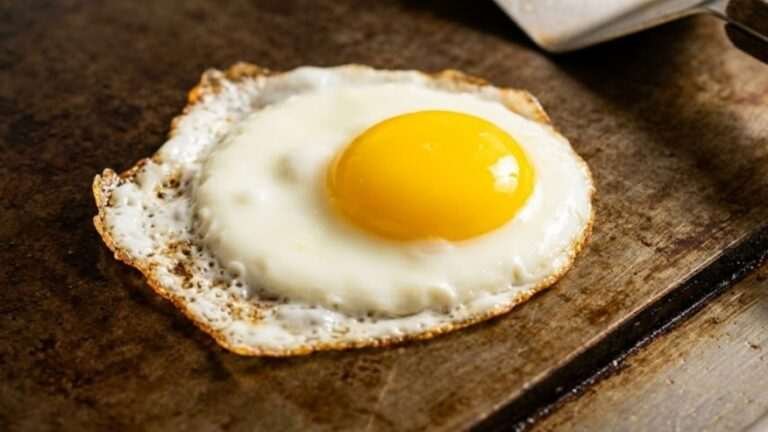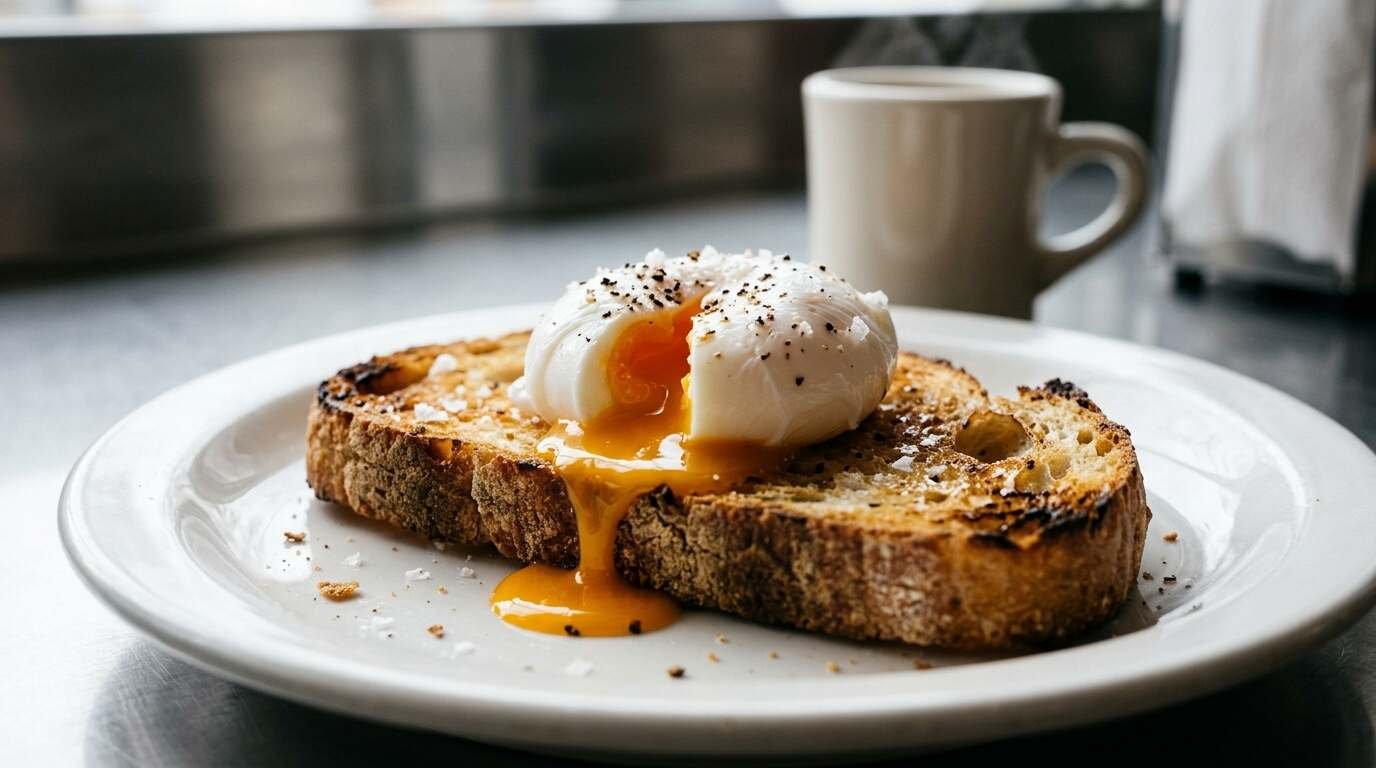
World Egg Day turned thirty on Friday, October 9. The World Egg Organisation, which has marked the occasion since a 1996 start in Vienna, reports that more than 100 countries took part last year, with events that ranged from a record-breaking omelette to egg-cooking competitions. This year’s theme is “Protein that Powers and Protects,” and a new mascot named Eggwin made the debut.
Anniversaries come with speeches. A poached egg comes with a sterner judge: a white that either hugs the yolk or drifts away in strands. What follows is the America’s Test Kitchen method that removes the strands before the egg ever touches water, then four other routes to the same neat result (a shell dip credited to Julia Child, a sous vide bath, a ladle trick from TikTok and a Jacques Pépin lesson on video), and one viral shortcut that deserves a warning label.
Why the White Frays
An egg white is really two substances sharing a shell. According to America’s Test Kitchen, a fresh egg holds mostly thick white, and as the egg ages, the share of thin white climbs. The thin portion is the runny part, and it spreads into ragged tendrils the instant it meets hot water.
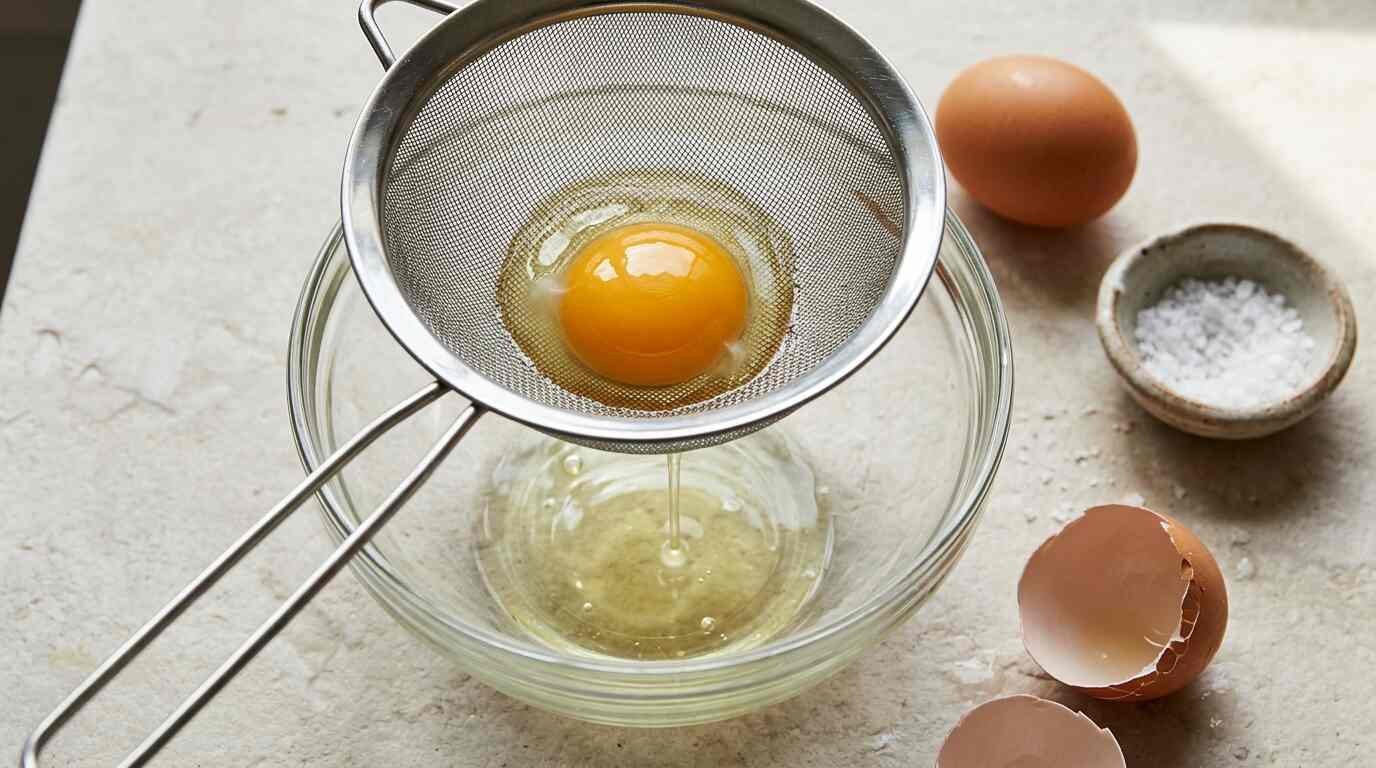
Few home cooks can buy eggs straight from the hen, so the test kitchen skips the hunt for freshness and removes the offending white instead. Crack the egg into a colander, let the loose white drain through the holes, and keep the thick white that clings to the yolk. Every other step in the method serves that single move.
The Colander Method, Step by Step
Andrew Janjigian’s recipe for America’s Test Kitchen serves two with four large eggs, and the same approach works for anywhere from one egg to four. Here is the sequence, restated in plain terms.
- Bring 6 cups of water to a boil in a Dutch oven. The shallow depth is deliberate, because it leaves air above the eggs and lets steam help cook the soft white closest to each yolk.
- Crack an egg into a colander or fine-mesh strainer and let it sit for 20 to 30 seconds while the watery white drains. Slide the egg, one at a time, into a 2-cup liquid measuring cup.
- Stir 1 tablespoon of distilled white vinegar and 1 teaspoon of salt into the boiling water, then pull the pot off the heat. Both additions help the white set quickly, which keeps the slower-cooking yolk liquid.
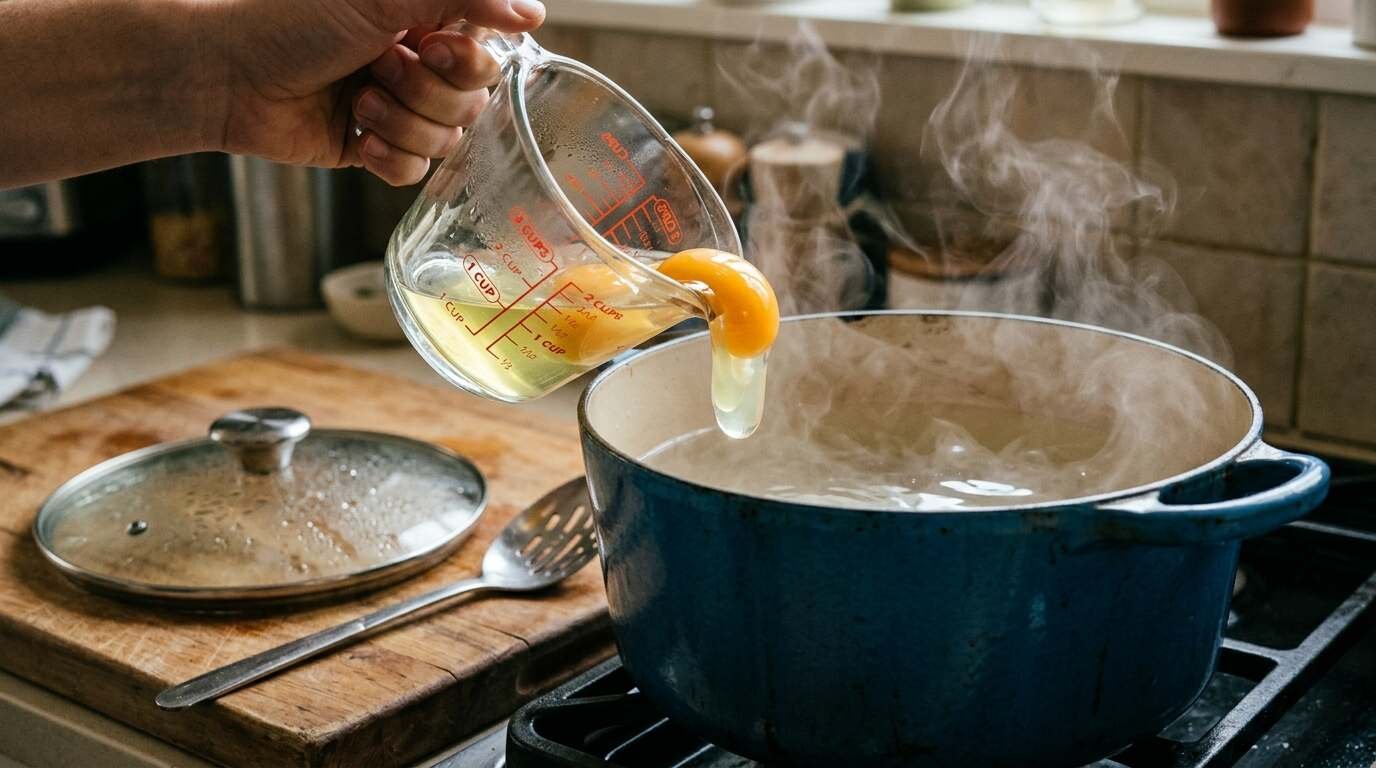
- Hold the lip of the measuring cup just above the surface and tip the eggs in, one after another, with space between them.
- Cover the pot and wait about 3 minutes, until the white nearest each yolk is just set and opaque. If it is not, check again every 30 seconds. For a medium yolk, wait 4 minutes before the first look.
- Lift each egg out with a slotted spoon, drain it over the pot, and season with salt and pepper.
The recipe’s own explanation of the first move is short enough to quote: “Cracking the eggs into a colander will rid them of any watery, loose whites.”
Cooking for a crowd takes one extra step. The test kitchen moves finished eggs into a large covered pot of 150-degree water, where they stay warm for roughly 15 minutes while the poaching water comes back to a boil for the next round.
| Setting | Amount |
|---|---|
| Water in the pot | 6 cups |
| Distilled white vinegar | 1 tablespoon |
| Salt | 1 teaspoon |
| Colander drain time | 20 to 30 seconds |
| Covered, off the heat | About 3 minutes (4 for a medium yolk) |
| Holding bath for batches | 150°F water, about 15 minutes |
Four Other Ways to Get a Neat Egg
The colander is not the only road. Each of these routes attacks the loose white from a different angle, and each comes from a source that can be checked.
| Method | Source | Key move | Time |
|---|---|---|---|
| Shell dip | The Kitchn, citing Julia Child | Prick the shell, dip the whole egg in boiling water, then crack it into a simmer | 10 seconds in the shell |
| Sous vide | Anova Culinary | Cook in the shell at 145°F (62.8°C), then finish in water just under a simmer | 45 minutes |
| Hot ladle | TikTok creator @halfbatchbaking | Oil a preheated ladle, lower it into the water, hold, tilt the egg free | 2.5 to 3 minutes |
| Video lesson | KQED Food, Jacques Pépin | Watch the method; the page promises tricks against rubbery eggs | See video |
Julia Child’s ten-second shell dip
The Kitchn, in a 2015 article last updated in 2019, attributes a pin-and-timer trick to Julia Child. Prick a small hole in the shell to release air, lower the whole egg into boiling water for exactly 10 seconds, then turn the heat down to a simmer. Once the egg is cool enough to handle, crack it into the gently simmering water. The brief boil firms the outer white so it holds its shape. The article does not include a direct quote from Child, so the credit rests on the publication’s attribution.
The sous vide detour
Anova’s recipe starts with a long, gentle bath: the whole egg sits in 145°F water for 45 minutes, leaving it, in the recipe’s words, tender and barely set. A quick final poach in water just below a simmer firms the outer white into a thin skin, and the shell comes off after cooking. It is a project, not a weekday habit, but it explains why restaurants can hold eggs ready for a rush.
The ladle that went around TikTok
A baking creator, @halfbatchbaking, posted a different idea: preheat a metal ladle over the boiling water, coat it with a little oil, lower it in, and hold it for 5 to 6 seconds until the white sets, then tilt the egg free and let it finish for 2.5 to 3 minutes. Her caption argues that hot oil keeps the egg from bonding to the metal. That is the creator’s claim, not a tested result, and hot oil on a hot ladle over a boiling pot calls for careful hands.
A lesson from Jacques Pépin
KQED Food’s video lesson with Jacques Pépin is the quickest way to watch a working chef handle the pot. KQED’s page says he has a number of tricks to keep poached eggs from turning rubbery, and a way to prepare them ahead of serving.
A poached egg is also the foundation of eggs Benedict, which Bay Shore’s rebuilt Peter Pan Diner now lists as a smoked salmon version. For the rest of the egg repertoire, the diner fried egg science guide and the line-cook breakfast at home cover the griddle side, and the Hegel-at-the-counter essay asks which way a philosopher would order them.
The Microwave Shortcut That Went Viral
Every few years a faster way to poach an egg sweeps social media, and the microwave version is the most persistent. Reader’s Digest tested two TikTok variants, one from creator Elise Brulotte (@eliseseats) and one from chef Erica Wides. Brulotte’s method heats a quarter cup of water for a minute, adds the egg, pokes the yolk, covers the dish and cooks it for 30 seconds. It worked every time, though the eggs landed closer to soft-boiled than poached. Wides’s fully submerged version needed about 50 seconds in an 1100-watt microwave to produce a firm white and a runny yolk, and the tester heard a loud pop even with the yolk poked.
The risk is not theoretical. In May 2023, the New York Post, as relayed by SAYS on June 1, reported that Shafia Bashir, a 37-year-old mother in the United Kingdom, tried a viral mug method: boiling water, a cracked egg, a poked yolk and about a minute in the microwave. When she lifted the egg out with a cold spoon, it burst and scalded the right side of her face. She described burning pain that lasted about 12 hours, went to a hospital emergency department and said her face healed without scars. The article offers no expert advice, and its only caution is that an egg keeps cooking after it leaves the microwave, and any disturbance can make it burst.
An open pot, a lid and a few minutes of patience cost very little by comparison.
Gear Worth Owning
Poaching needs almost no equipment, but four items map directly onto the methods above.
- OXO Good Grips 6-Inch Double Rod Strainer: A fine-mesh strainer small enough to drain one egg at a time, standing in for the colander in the test-kitchen method. See it on Amazon (affiliate link)
- Pyrex 2-Cup Glass Measuring Cup: The 2-cup liquid measure the recipe uses to slide each egg in from just above the water. See it on Amazon (affiliate link)
- OXO Good Grips Silicone Egg Poachers: Silicone cups for cooks who prefer a mold to open water. See it on Amazon (affiliate link)
- Norpro Nonstick 4-Egg Poacher: A four-cup poacher pan for cooking several eggs in one go. See it on Amazon (affiliate link)
As an Amazon Associate I earn from qualifying purchases. A commission may be earned if you buy through this link, at no extra cost to you.
Questions People Ask
Why does the recipe add vinegar and salt? According to America’s Test Kitchen, both help the white set quickly, so the slower-cooking yolk stays liquid.
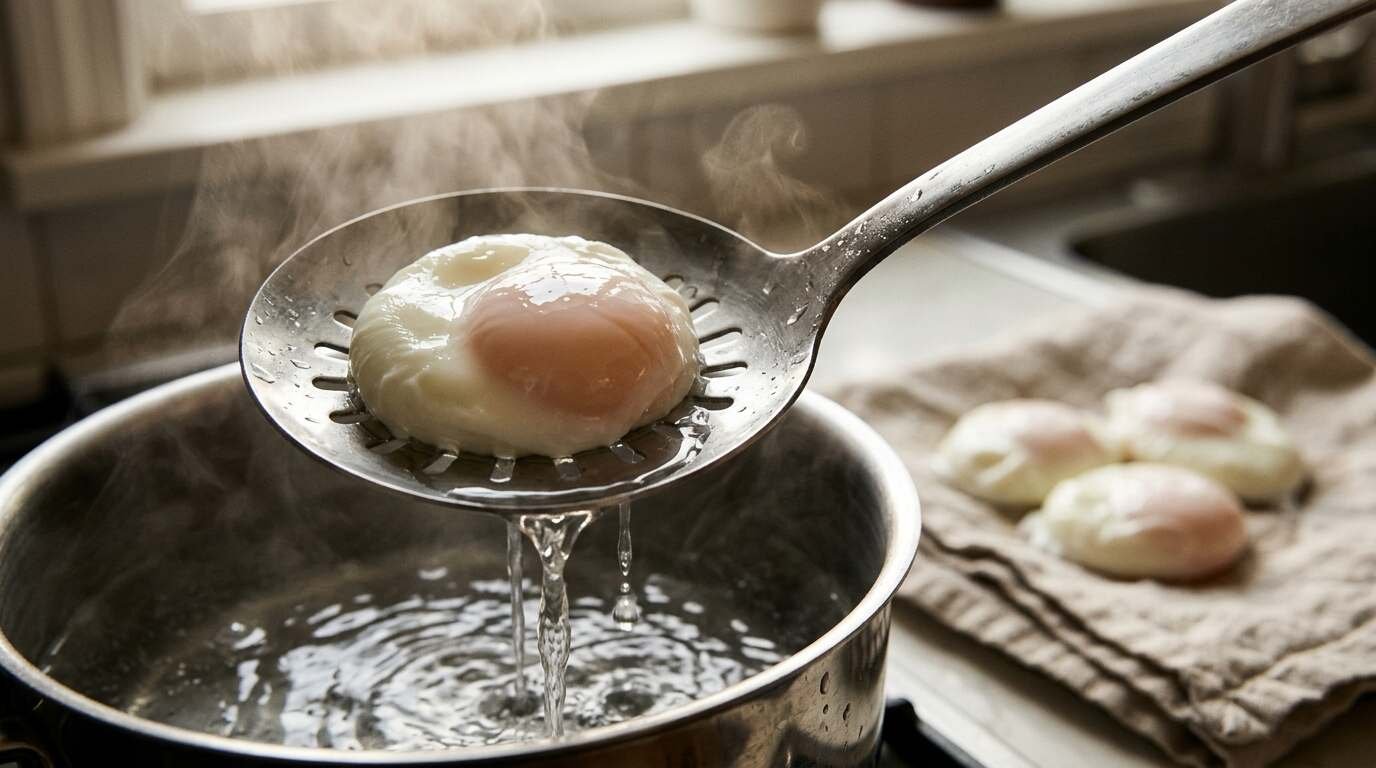
How long does a poached egg take? In the colander method, about 3 minutes covered and off the heat for a firm white and runny yolk, with a first check at 4 minutes for a medium yolk.
Can poached eggs be made ahead? For batches, America’s Test Kitchen holds finished eggs in 150°F water for about 15 minutes. KQED’s Pépin page also mentions a way to prepare them ahead of serving.
How do I stop wispy whites? Drain the egg in a colander first, as the test kitchen advises, or try the ten-second shell dip credited to Julia Child.
When is World Egg Day? On the second Friday in October, which fell on October 9 in 2026.
Sources
- America’s Test Kitchen, Perfect Poached Eggs
- America’s Test Kitchen, For Prettier, Restaurant-Worthy Poached Eggs, Use a Colander
- The Kitchn, Julia Child’s Simple Trick for Perfect Poached Eggs
- Anova Culinary, Poached Egg
- KQED Food, Jacques Pépin Teaches You How to Properly Poach an Egg
- TikTok, @halfbatchbaking ladle poached egg
- Reader’s Digest Canada, We Made Microwave Poached Eggs to See If This Viral Shortcut Really Works
- SAYS, Viral TikTok Hack for Cooking Poached Egg Leaves Mum With Burns on Her Face (June 1, 2023)
- World Egg Organisation, World Egg Day
- Zootecnica International, World Egg Day 2026: 30th anniversary