Three dollars and fifty-nine cents is the median price of a regular cup of coffee in a restaurant, according to Toast figures cited by WRTV in a report on 2026 coffee costs. The same report put the rise in coffee prices at more than 18 percent across 2025, and the average price of ground roast above $9 a pound in the fourth quarter. A diner mug that costs less than a dollar to fill at home is no longer a small thing.
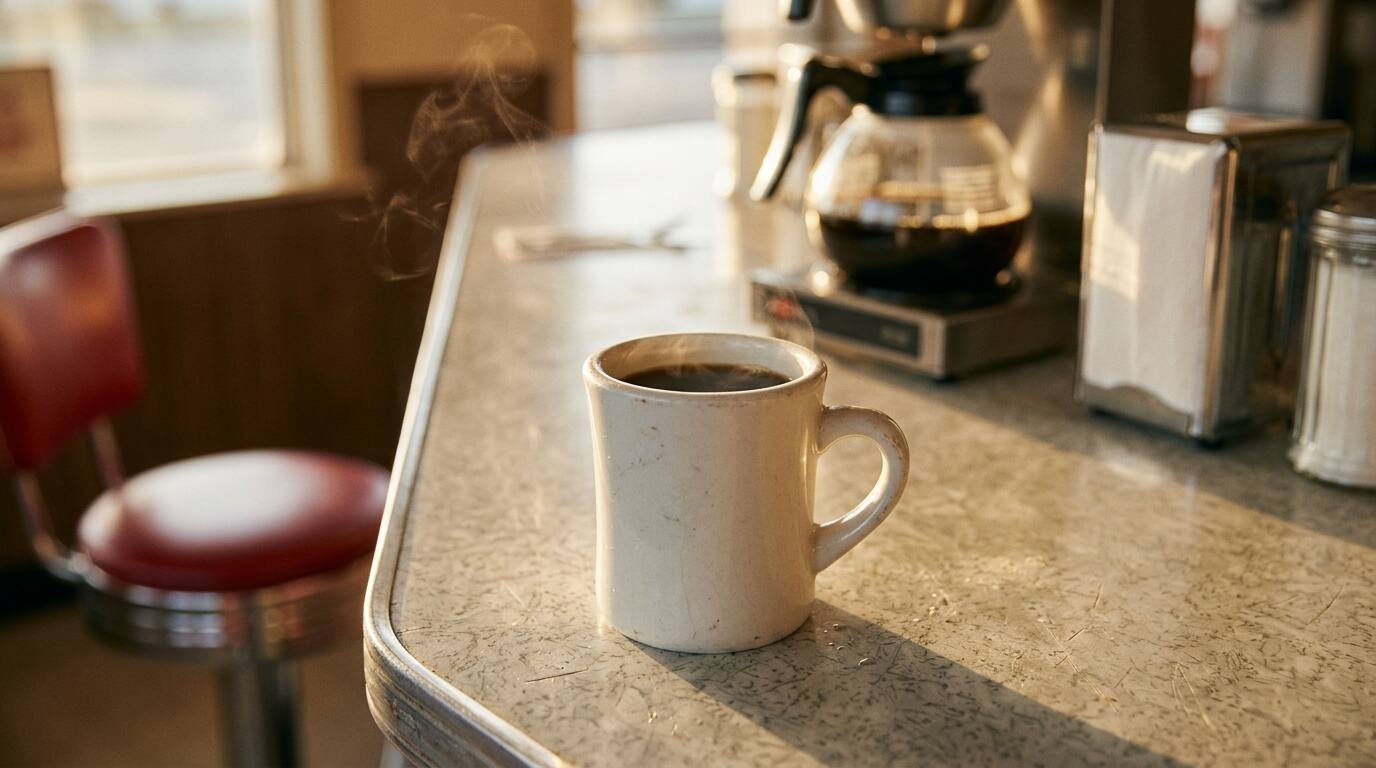
Diner coffee has a recognizable character: hot, clean, a little strong, and always in a thick white mug that holds the heat. Almost all of it can be rebuilt on a kitchen counter, and none of it needs a commercial urn.
The Price Tag on a Regular Cup
WRTV’s coverage traces the climb to weather, tariffs, and higher shipping, labor, and production costs. Greg Peters of Talitha Coffee told the station that the commodity increase “disproportionately is affecting some of those cheaper coffees,” which means the budget end of the grocery aisle took the sharpest percentage hit.
His own advice for saving money was plain: brew at home some days instead of buying out, and buy whole beans rather than pods.
The arithmetic favors the kitchen. A 12-ounce mug takes about 19.5 grams of coffee at the ratio covered below. At $9 a pound, that is roughly 39 cents of beans per mug, against the $3.59 restaurant median. This is a back-of-envelope figure that counts beans only, not filters, water, or the machine, but the gap is wide enough to survive those additions.
The Ratio Ticket
Short-order cooks work from a ticket. Coffee has one too, and it comes from the Specialty Coffee Association’s brewing protocols. For automatic drip, the SCA lists a ratio of 55 grams of coffee per liter of water, with a tolerance of plus or minus 10 percent. Water should meet the grounds at 200°F, give or take 5 degrees. Contact time for drip brewing runs 4 to 6 minutes.
Those three numbers do most of the work. Here is the ratio converted into amounts a home brewer can weigh:
| Brew size | Water | Coffee at 55 g/L |
|---|---|---|
| One 12 oz mug | 355 ml | 19.5 g |
| Half liter | 500 ml | 27.5 g |
| One liter | 1,000 ml | 55 g |
| 50 oz carafe | about 1,480 ml | about 81 g |
The conversions are plain arithmetic on the SCA ratio. The tolerance band means a liter can take anywhere from 49.5 to 60.5 grams. Diner coffee is built to stand up to cream and sugar, a design goal covered in the post on why diner coffee was designed for volume, so the upper half of that band is the place to start if the cup comes out thin.
Grind, Water and Filter
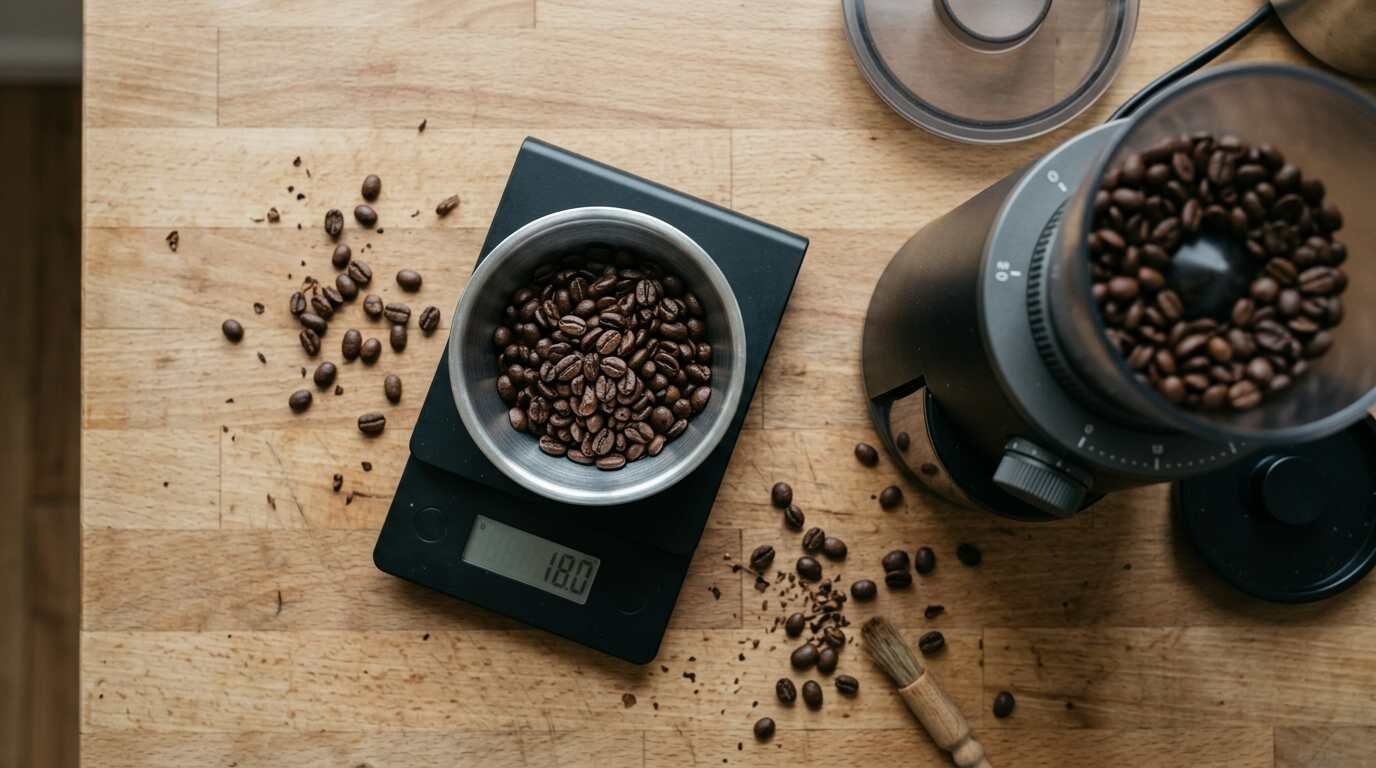
Freshly ground beans make the largest single improvement. A burr grinder produces more even particles than a blade, and even particles extract evenly, which is what keeps a pot from tasting both sour and bitter at once. For a flat-bottom basket, the usual target is a medium grind, roughly the texture of coarse sand.
Water counts too, because a brewed cup is mostly water. Filtered water from a pitcher is enough. Very soft or very hard tap water can flatten or dull the flavor.
Storage deserves a line as well. Roasted coffee stales, and the Specialty Coffee Association has published a literature review on the process, so a smaller bag bought more often beats a large one that sits open for weeks. Keep the beans in an airtight container away from heat, light, and the stove, and grind only what the next pot requires.
Paper filters get a quick rinse with hot water before the grounds go in. The rinse removes loose paper taste and preheats the basket. Discard the rinse water from the carafe before brewing.
From Scale to Mug
The sequence below mirrors what a drip machine does for a home cook, in the order that matters.
- Fill the reservoir to the amount of water needed, then convert that volume to grams of coffee with the table above.
- Weigh the beans and grind them immediately before brewing.
- Rinse a paper filter in the basket, discard the rinse, and add the grounds.
- Level the bed with a gentle shake so water can cover it evenly.
- Run the cycle, and avoid pausing it halfway.
- Swirl or stir the finished pot, because the first and last drips differ in strength.
- Pour into a mug that has been warmed with hot tap water.
The machine decides how well step five goes. The SCA certifies automatic drip brewers against its Golden Cup standard for brew time and temperature, and Gear Patrol has reported that the Bonavita 8-cup is among 25 certified models, with a required brew window of 4 to 8 minutes and a temperature range of 195 to 205. Gear Patrol also timed the Bunn BX-B, a home machine from a company known for commercial equipment, at 3 minutes 10 seconds for ten cups, credited to a pre-heated water tank. That review does not report contact time, so whether the BX-B lands inside the SCA window is not something the sources settle. A faster cycle is not automatically a better one.
Holding It the Way a Diner Does (and Doesn’t)
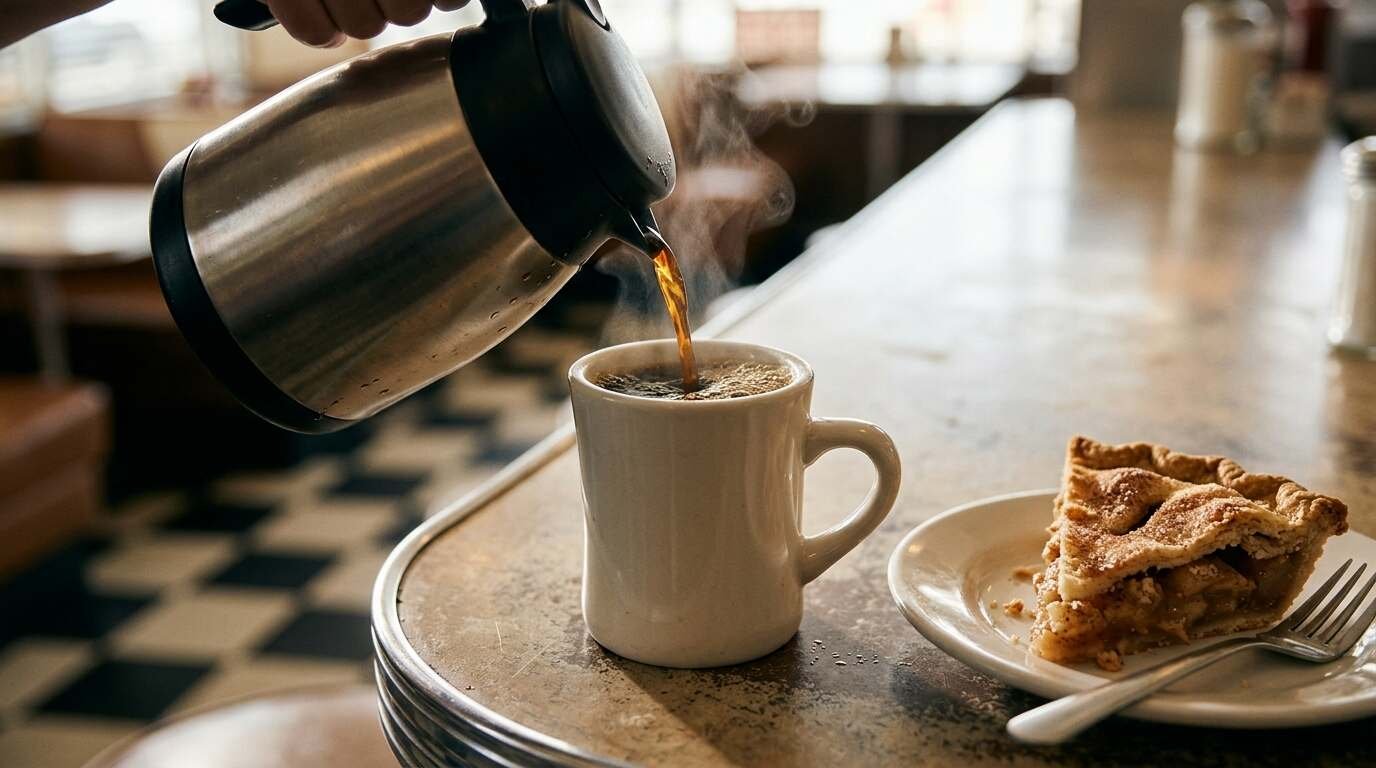
A diner keeps a pot hot for hours so that anyone who sits down gets a refill. That convenience has a cost, laid out in the chemistry of the bottomless cup, where sustained heat dulls the flavor of coffee that has already been brewed. At home, a thermal carafe holds temperature without a hot plate, so nothing keeps cooking.

The mug matters as much as the carafe. A thick, preheated ceramic mug helps diner coffee stay hot through a whole breakfast, and the story of where that mug came from is in the history of the diner mug. Cream is a separate question, and the plant-milk piece on oat milk covers what has changed in the cup. A slice from the fall pie case is the traditional companion.
Questions People Ask
What ratio does the SCA recommend for drip coffee? The SCA lists 55 grams of coffee per liter of water, with a 10 percent tolerance either way.
How hot should the water be? The SCA gives 200°F, plus or minus 5 degrees, at the point where water contacts the coffee.
How long should a drip brew take? The SCA lists 4 to 6 minutes of contact time for automatic drip.
Why does diner coffee taste different from café coffee? Diner coffee is built for volume, refills, and cream, which shapes the roast, the grind, and how it is held. The full case is in the post on urn brewing.
Is a drip machine required? No. A French press works, and James Hoffmann’s technique video below is a clear walkthrough.
Gear Worth a Look
Each pick below links to Amazon. The sentences describe what the cited reviews reported, and none is a claim that the product was tested here.
- BUNN 44900-0000 Coffee Maker, Black (the BX-B 10-cup): Gear Patrol’s 2018 review timed it at 3 minutes 10 seconds for ten cups, thanks to a pre-heated tank. See it on Amazon (affiliate link)
- Bonavita Connoisseur 8-Cup Coffee Brewer: Gear Patrol names it a budget pick and says the Bonavita 8-cup line is SCA-certified. See it on Amazon (affiliate link)
- Baratza Encore Conical Burr Coffee Grinder: A conical burr grinder featured in Gear Patrol’s grinder recommendations. See it on Amazon (affiliate link)
As an Amazon Associate I earn from qualifying purchases. A commission may be earned if you buy through this link, at no extra cost to you.
This is for informational purposes only — consult a licensed attorney or financial advisor for your specific situation.
Sources
- WRTV: High prices follow coffee lovers into 2026
- Specialty Coffee Association: Protocols and Best Practices
- Gear Patrol: Bonavita 8-cup drip coffee maker
- Gear Patrol: This Coffee Maker Is Cheap, Fast and Incredibly Underrated
- Gear Patrol: Baratza Encore grinder guide
- Gear Patrol: The 12 Best Drip Coffee Makers
- Specialty Coffee Association: What is the Shelf Life of Roasted Coffee? A Literature Review on Coffee Staling
- YouTube: The Ultimate French Press Technique, James Hoffmann