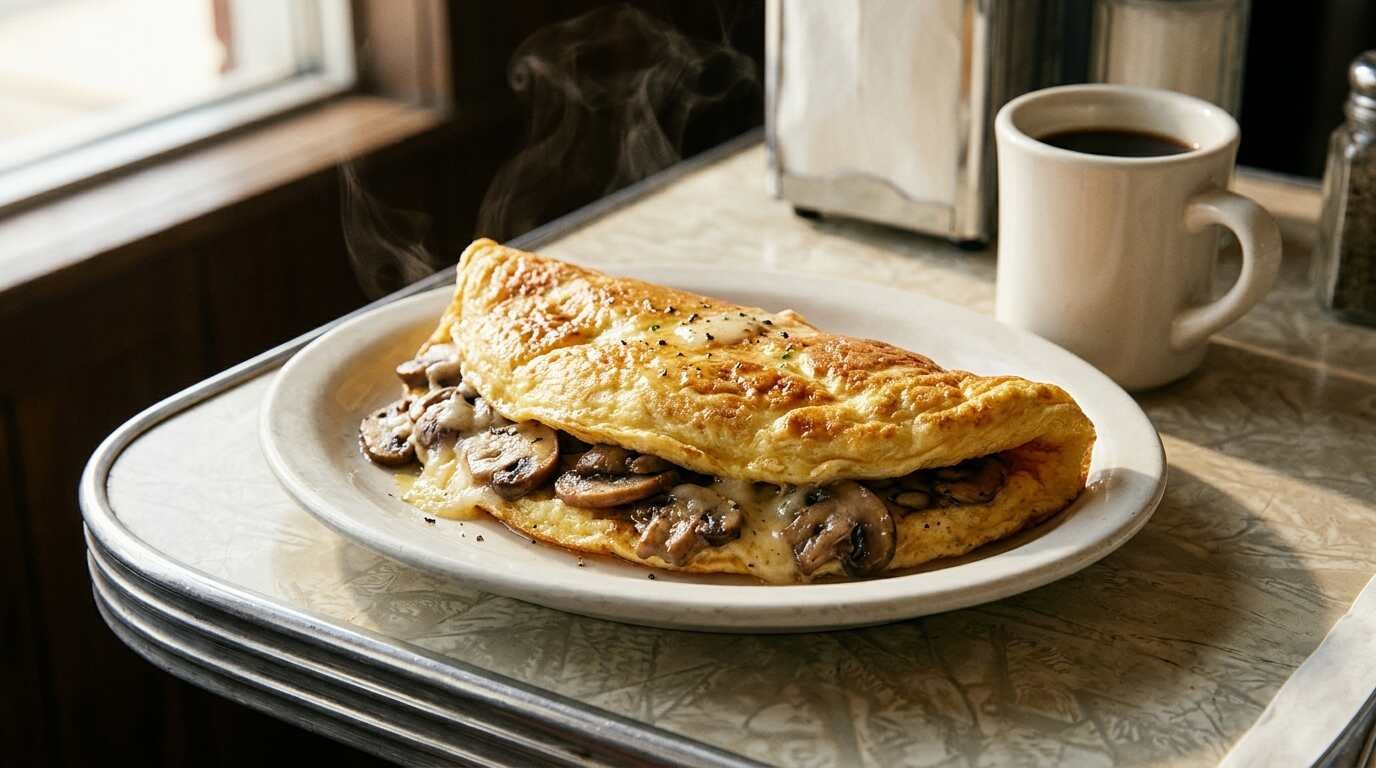
Fifteen thousand eggs in Bessières, a little over five thousand in Abbeville, and four in your kitchen on a Sunday morning. World Egg Day turned thirty on Friday, October 9, and Louisiana’s Giant Omelette Celebration arrives on November 7 and 8, so the calendar is handing out a very good reason to learn one specific skill: the tall, tender, diner-style omelet.
The method below comes from published testing by America’s Test Kitchen and a handful of other kitchens, adapted for a home stove. Where a detail is not in the sources, the post says so instead of guessing.
Three Omelets, Three Camps
Ask ten cooks for an omelet and the pans come out in three styles. The French version aims for small curds and a creamy center. The American diner version keeps the curds large, stirs as little as possible, and holds fillings without collapsing, a contrast Salon’s roundup of expert advice draws using J. Kenji López-Alt’s work. The third style is the puffed omelet, which America’s Test Kitchen describes as dwarfing the classic versions by at least a couple of inches, close in spirit to a soufflé.
Jacques Pépin treated the question as a test of skill. In an American Masters clip, he says that to judge a chef technically, he “probably would ask him to do an omelet.” In the same clip he cooks a country-style omelet, which he notes is basically how Americans make it, then a classic French one. Tasting Table’s write-up of his egg rules adds his verdict that neither is better than the other, only different in technique, texture and taste.
The puffed version is the one this guide builds, because it is the closest a home kitchen gets to the tall, golden omelets that come off a diner griddle. For the eggs that sit beside it on the plate, the diner breakfast at home guide covers scrambled eggs, home fries and pancakes, and the fried egg science guide handles the flat-top side of things.
The Gear List
Four pieces of equipment do most of the work. Everything else is already in a kitchen drawer.
- OXO Good Grips Pro 10″ Frying Pan Skillet: sold here in the 10-inch size, while the test kitchen’s puffed omelet calls for a 12-inch ovensafe nonstick skillet, so check the size selector on the product page. See it on Amazon (affiliate link)
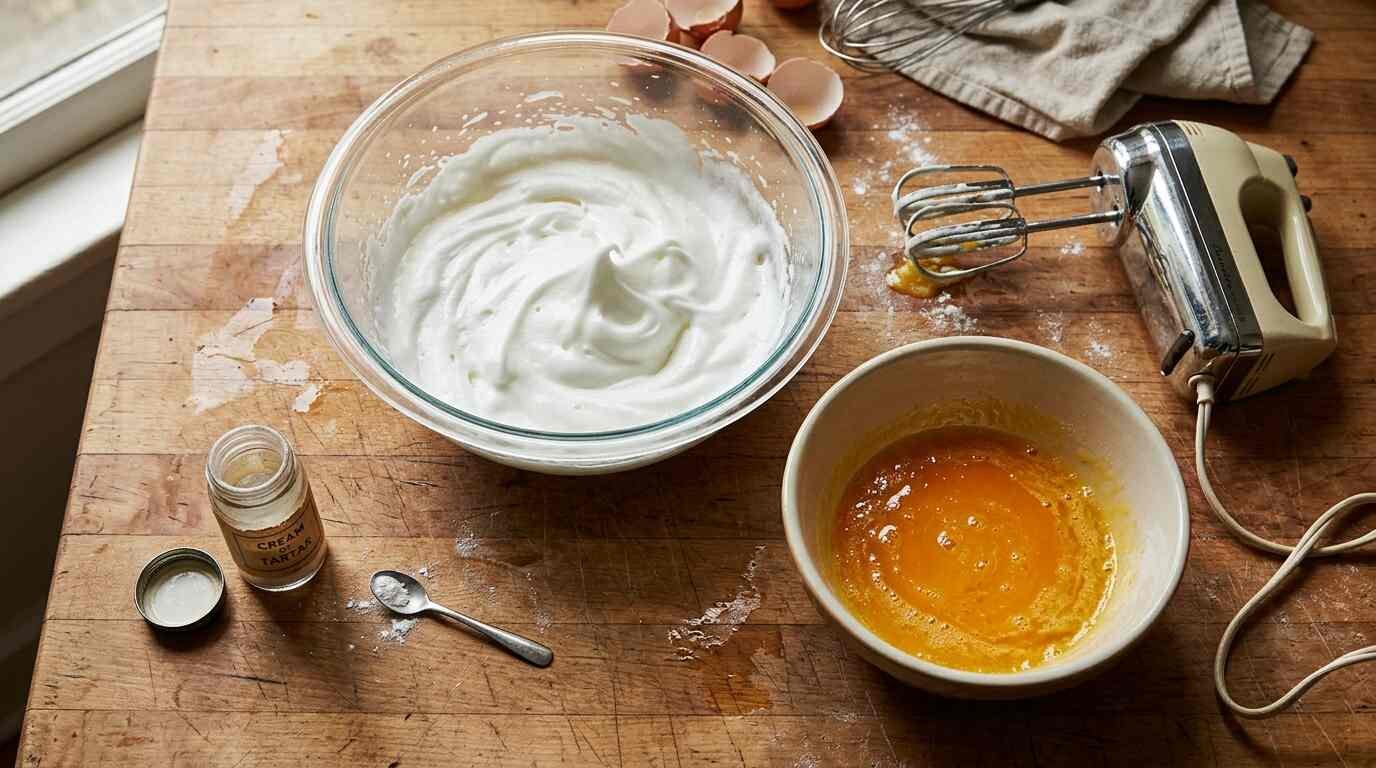
- KitchenAid 5-Speed Ultra Power Hand Mixer: stiff peaks come quickly with one, and the test kitchen accepts a hand mixer in place of a stand mixer. See it on Amazon (affiliate link)
- McCormick Cream of Tartar, 1.5 oz: a quarter teaspoon steadies the whipped whites, and a teaspoon of white vinegar or lemon juice can stand in. See it on Amazon (affiliate link)
- OXO Good Grips Large Silicone Flexible Turner: the flexible head slides under a delicate omelet without scratching a nonstick surface. See it on Amazon (affiliate link)
As an Amazon Associate I earn from qualifying purchases. A commission may be earned if you buy through this link, at no extra cost to you.
If the skillet question is still open, the carbon steel, cast iron and stainless skillet comparison weighs the other pans against nonstick.
How to Make a Fluffy Diner Omelet, Step by Step
This is the America’s Test Kitchen fluffy omelet, which serves two. Its three keys, as the test kitchen lays them out: whip the whites separately, add cream of tartar, and put melted butter in the yolks.
What you need
- 4 large eggs, separated
- 1 tablespoon unsalted butter, melted, plus 1 tablespoon for the pan
- ¼ teaspoon salt
- ¼ teaspoon cream of tartar (or 1 teaspoon white vinegar or lemon juice)
- 1 ounce Parmesan, grated (about ½ cup)
- A small amount of fully cooked filling, such as sautéed mushrooms or smoked salmon with asparagus
The method
- Set an oven rack in the middle position and heat the oven to 375°F.
- Whisk the yolks with the melted butter and salt in one bowl.
- Put the whites in a clean bowl, add the cream of tartar, and beat on medium-low until foamy. Raise the speed to medium-high and beat until stiff peaks just begin to form. The test kitchen gives no exact time, so watch the bowl.
- Fold the yolk mixture into the whites with a gentle hand until no white streaks remain.
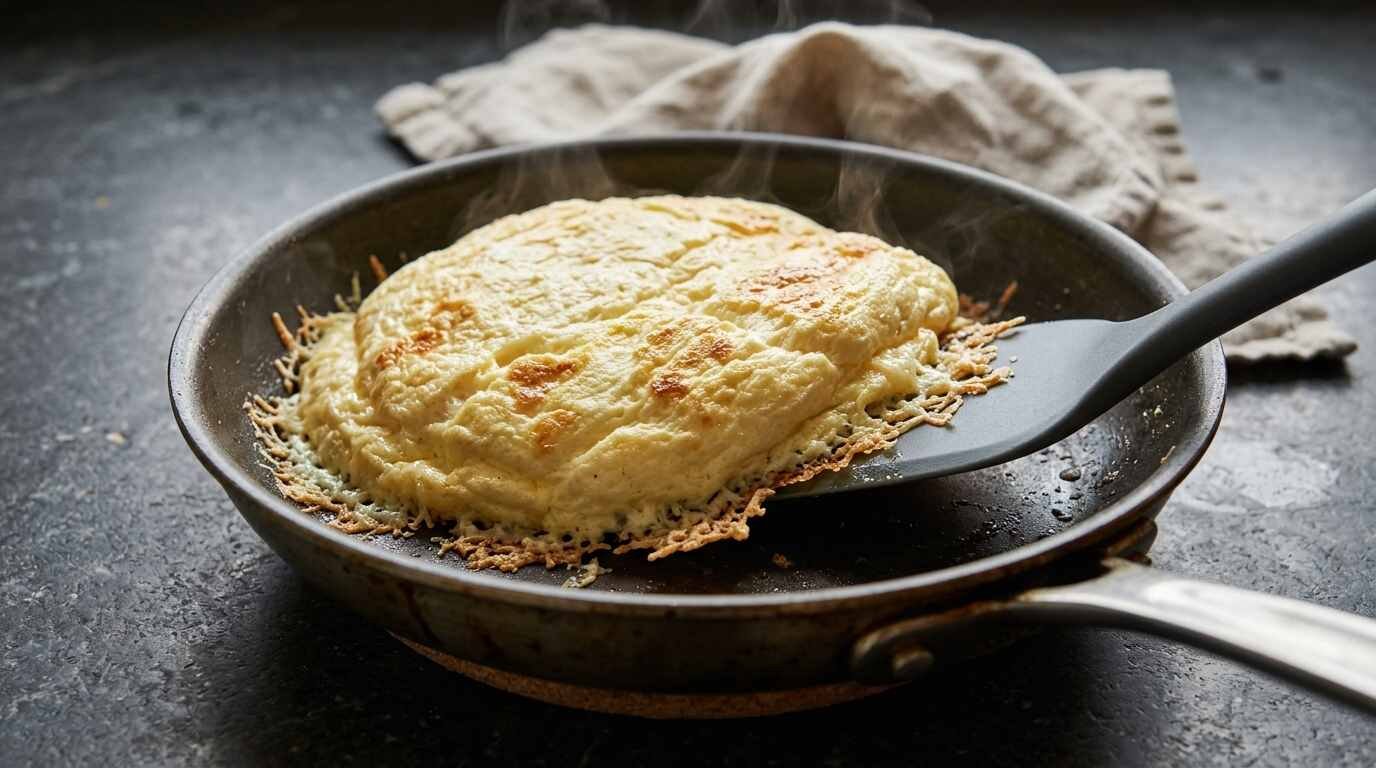
- Heat the remaining tablespoon of butter in the ovensafe nonstick skillet over medium-high heat, swirling to coat. When it foams, add the egg mixture quickly and spread it into an even layer.
- Take the pan off the heat, scatter the filling and Parmesan over the top, and slide it into the oven. Bake until the center springs back when pressed lightly, about 4½ minutes for a slightly wet center or 5 for a dry one.
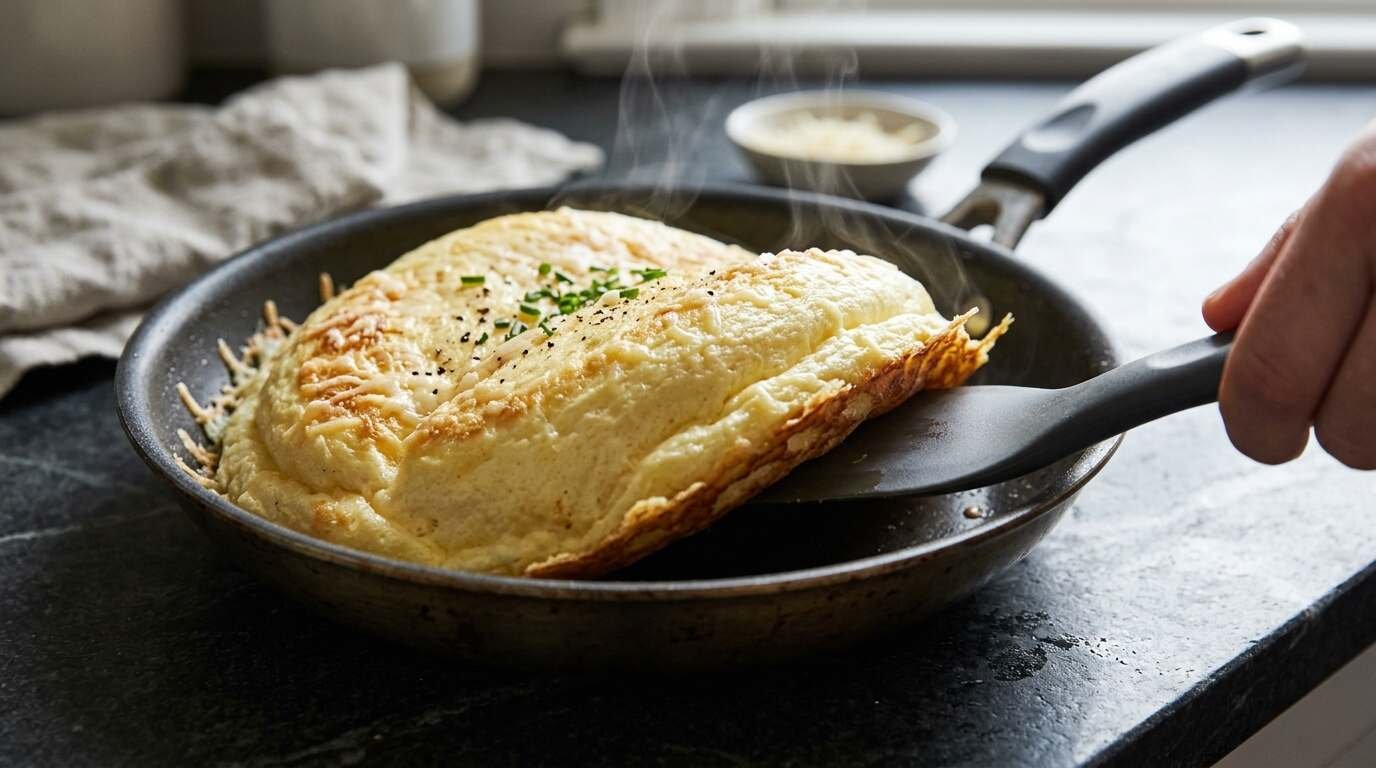
- Loosen the edges, shake the pan gently, and slide the omelet onto a cutting board. Let it rest for 30 seconds, fold it in half, cut it crosswise into two portions, and serve at once.
The filling matters more than it looks. The test kitchen kept its fillings small, cooked, and boldly flavored so the weight would not deflate the foam, which is why raw vegetables belong in the pan before the eggs, not inside the omelet.
A quicker, flatter option
When there is no mixer or oven in play, the skillet-only diner method works. A recipe from Sunset, borrowing a trick from López-Alt, salts the eggs ahead of cooking, which keeps the yolk proteins from bonding tightly and toughening the curd. Whisk 8 eggs with 2 tablespoons of water and ½ teaspoon of salt, rest the bowl 15 to 30 minutes, then cook half in 1 tablespoon of butter over medium heat. Leave it alone until the sides set, about 1 to 2 minutes, drag the edges toward the middle, and repeat until the top is set but still slightly moist. Add the filling to one half and fold the other over.
| Method | Eggs | Key move | Finish | Source |
|---|---|---|---|---|
| Puffed omelet | 4, separated | Whip whites with cream of tartar | Oven, 375°F, 4½ to 5 minutes | America’s Test Kitchen |
| Diner-style cheese omelet | 5, plus 3 tablespoons chilled heavy cream | Beat with a mixer to add air | Oven, about 6 minutes after the bottom sets | America’s Test Kitchen (2013) |
| Skillet diner omelet | 4 per omelet | Salt eggs 15 to 30 minutes ahead | Stovetop only, medium heat | Sunset |
| Country-style omelet | 4 | Let the butter brown a little | Fold, large curds | Jacques Pépin, American Masters |
What 5,000 Eggs Teach a Four-Egg Omelet
Abbeville, Louisiana cooks a 5,000-egg omelette in a 12-foot skillet every November, and its ingredient list has been published for years. According to KATC, the recipe adds one egg each year on top of the original 5,000, and calls for 50 pounds of onions, 75 bell peppers, 4 gallons of onion tops, 2 gallons of parsley, 1½ gallons of cooking oil, 6½ gallons of milk, 52 pounds of butter, 15 pounds of Louisiana crawfish tails, and Tabasco to taste.
Spread across the eggs, those numbers shrink to something a skillet can hold. This is the post’s own arithmetic, a rough scale-down and not an official recipe:
| Ingredient | Festival total | Per egg | For 4 eggs |
|---|---|---|---|
| Milk | 6½ gallons (104 cups) | about 1 teaspoon | about 4 teaspoons |
| Butter | 52 pounds | about ⅙ ounce | about ⅔ ounce, or 1⅓ tablespoons |
That works out to roughly a teaspoon of milk and a sixth of an ounce of butter per egg, which is a restrained ratio for something served to a crowd. The test kitchen’s puffed method uses no milk and a little more butter, since the air does the work the dairy would otherwise do. The festival’s version is a scrambled-style communal dish, so treat the comparison as a curiosity and not a recipe to follow.
The tradition arrived from France. The KATC report on the festival’s 35th year quotes its Grand Master saying it “all started in a little town, in Bessières, France.” The legend, repeated in several places, has Napoleon’s army demanding an omelet there. A write-up on the Bessières festival notes that Napoleon never actually made that demand, and the French festival listing dates the modern event to 1973. Its 2026 edition ran April 4 to 6, cracking 15,000 eggs into a pan about four meters wide.
Dates Worth Circling
| Date | Event | What happens |
|---|---|---|
| Oct 9, 2026 | World Egg Day, 30th anniversary | The World Egg Organisation marks the day under the theme “Protein that Powers and Protects” |
| Nov 7 and 8, 2026 | Giant Omelette Celebration, Abbeville, Louisiana | The 42nd annual festival, free to attend, with a chef procession and the 5,000+ egg omelette cooked Sunday afternoon |
| Easter Monday each year | Fête de l’Omelette Géante, Bessières, France | 15,000 eggs cooked in a giant pan; the festival’s own brotherhood runs it |
World Egg Day began in Vienna in 1996 and falls on the second Friday of October. The organisation says more than 100 countries took part last year, including a record-breaking omelette, and its celebration ideas page recalls a 10,000-egg giant omelette in Argentina. The 2025 record it reports was an egg bhurji of 5,001 eggs by Nagpur Veterinary College’s poultry science department. For Abbeville, the festival’s own site at giantomelette.org lists the schedule; check it before driving, since details can shift.
Questions People Ask
Why whip the egg whites separately? The America’s Test Kitchen explanation is that yolk fat weakens a foam, while whites alone form a stronger, more stable one, and the stable whites can then carry the butter added to the yolks.
Can I skip the cream of tartar? The test kitchen says a teaspoon of white vinegar or lemon juice can replace it.
Do I need a stand mixer? No. The same recipe notes that a hand-held mixer or a whisk can stand in for a stand mixer.
Why salt the eggs before cooking? Per the Sunset recipe, salting ahead keeps the yolk proteins from bonding tightly, which would toughen the curd.
When is World Egg Day in 2026? Friday, October 9, the second Friday of the month, which also marks the 30th anniversary of the day.
Sources
- America’s Test Kitchen: Treat Your Omelet Like Whipped Cream
- PBS SoCal: Weekend Recipe, Fluffy Omelet (America’s Test Kitchen)
- America’s Test Kitchen: Fluffy Diner-Style Cheese Omelet
- Sunset: Parsley and Potato Omelet
- Salon: How to Make an Omelet, According to Pros
- PBS American Masters: Learn Jacques Pépin’s Famous Omelet Techniques
- Tasting Table: Jacques Pépin’s Rules for Eggs
- KATC: Giant Omelette Celebration marks 35 years in Abbeville
- Giant Omelette Celebration, Abbeville
- Festival en France: Fête de l’Omelette Géante
- National Geographic: Experience the Festival of the Giant Omelette
- World Egg Organisation: World Egg Day
- Zootecnica International: World Egg Day 2026, 30th anniversary
- World Egg Organisation: 2025 Global Celebrations
- World Egg Organisation: Celebration Ideas
- YouTube: Learn Jacques Pépin’s famous omelet techniques (American Masters PBS)