Look up extra virgin olive oil on three popular cooking pages and you get 320°F, a range of 325 to 375°F, and a range of 374 to 405°F. Same oil, same question, and a gap of roughly eighty degrees between the lowest figure and the highest.
What a Smoke Point Marks
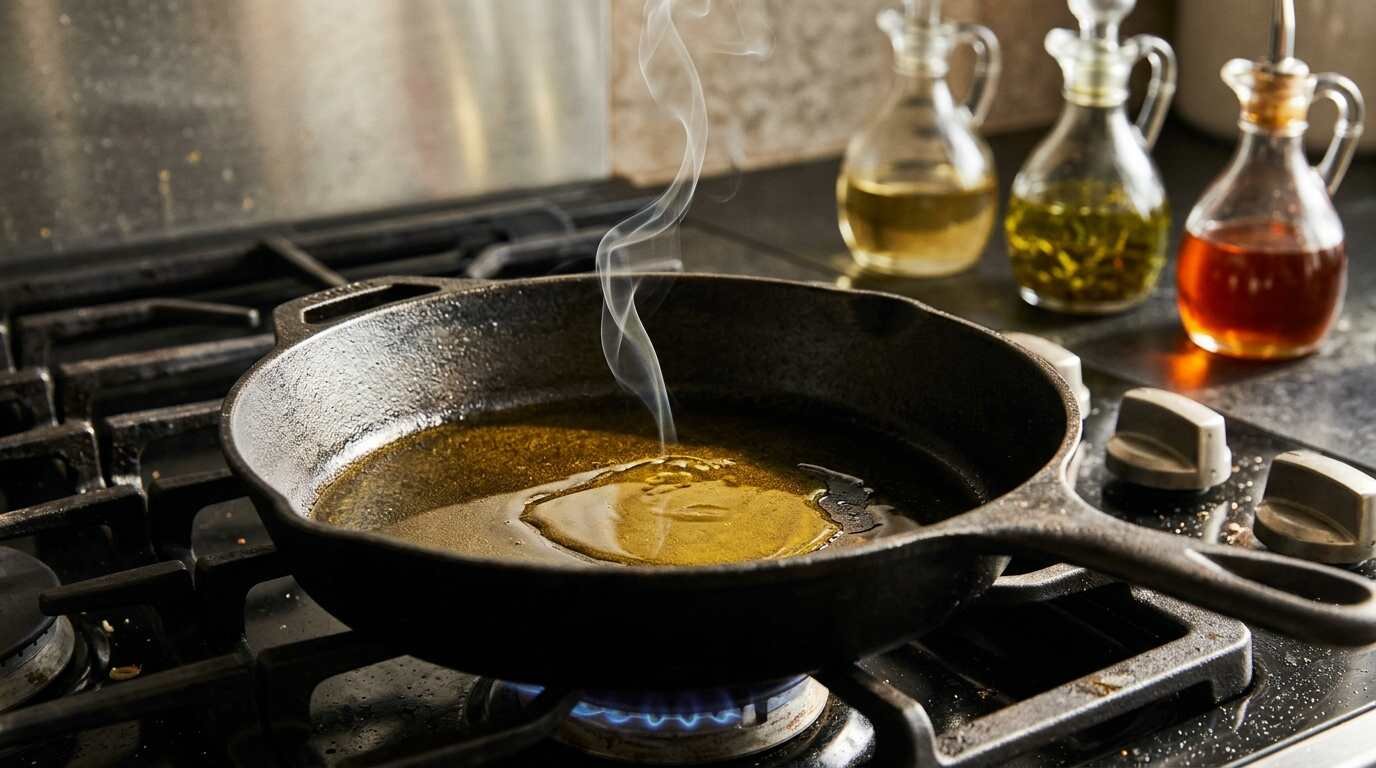
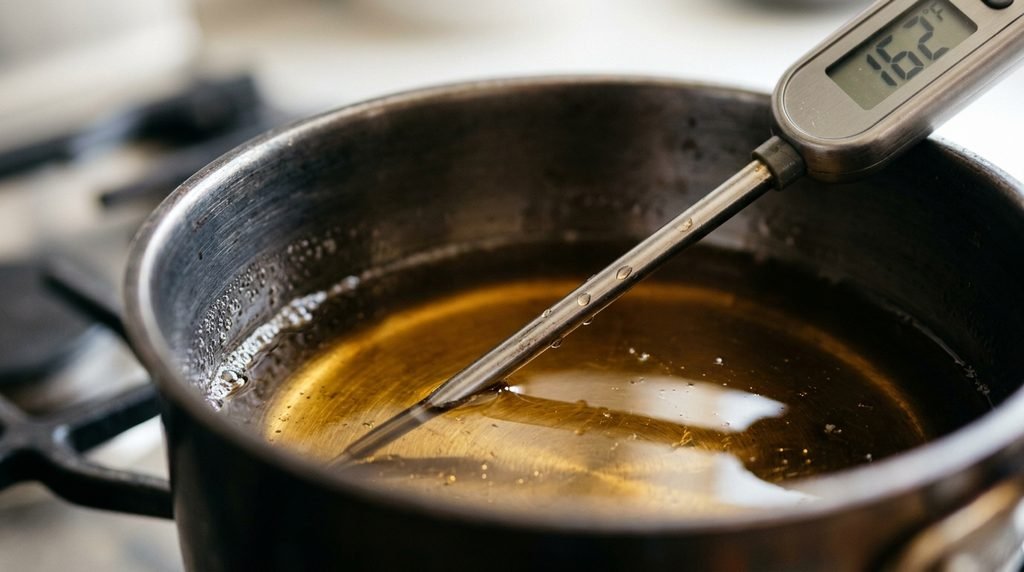
MasterClass defines it in one line: the temperature at which an oil stops shimmering and starts smoking. Below that mark the surface of the oil in a hot pan looks glassy and active. Above it, you get visible smoke and, usually, a sharp smell.
The same threshold does useful work in another corner of the kitchen. PBS’s NOVA explains that cast iron seasoning begins the moment oil reaches its smoke point, when fatty acids break into smaller monomers that then link into polymers and harden into a coating. For a skillet, smoke is the goal. For a sauté, it is a warning.
Heat is only one input. Healthline’s article on olive oil notes that an oil’s smoke point drops the longer it is heated and as free fatty acids build up. A bottle that smokes at one temperature fresh from the shelf will smoke sooner after an hour in a fryer.
The Chart, and Where It Falls Apart
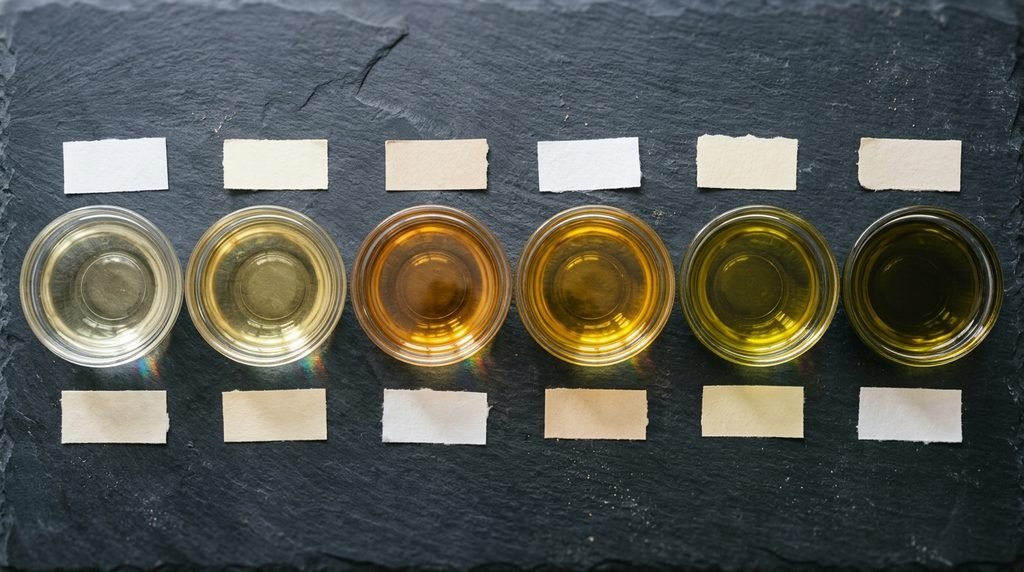
Two kitchen references, MasterClass and WebstaurantStore, list overlapping sets of oils. Lining them up shows how loosely these numbers behave.
| Oil or fat | MasterClass | WebstaurantStore |
|---|---|---|
| Refined avocado oil | 520°F | 480–520°F |
| Canola oil | 400°F | 400–475°F |
| Refined peanut oil | 450°F | 450°F |
| Extra virgin olive oil | 325–375°F | 320°F |
| Butter | 302°F | 302–350°F |
| Lard | 370°F | 370°F |
| Refined coconut oil | 450°F | 400°F |
| Unrefined coconut oil | 350°F | 350°F |
| Ghee | 450°F | Not listed |
| Flaxseed oil | Not listed | 225°F |
Some rows agree to the degree. Others split by fifty. WebstaurantStore’s own page contradicts itself on olive oil, giving 320°F in one section and 350°F in its FAQ. MasterClass tells readers the chart is only a general guide, because smoke points vary between manufacturers, and suggests checking a specific oil with an instant-read thermometer.
Refined Versus Unrefined
The biggest swing inside a single oil comes from processing. MasterClass lists refined avocado oil at 520°F and unrefined or virgin avocado at 375°F. Refined sesame sits at 410°F against 350°F for unrefined.
Refining filters, bleaches, or heats an oil to strip out compounds that break down easily. The result is a neutral taste, a longer shelf life, and a higher smoke point. Unrefined oils keep more flavor and nutrients but smoke sooner and can go rancid on the shelf, which is why MasterClass steers them toward low-heat cooking and dressings.
A Lab That Questions the Whole Idea
In 2018, researchers at Modern Olives Laboratory Services in Australia published a paper in Acta Scientific Nutritional Health titled “Evaluation of Chemical and Physical Changes in Different Commercial Oils during Heating.” They heated extra virgin olive oil and other common oils up to 240°C, held samples at 180°C for six hours, and measured smoke point, oxidative stability, free fatty acids, and polar compounds, in an ISO 17025-accredited lab.
Their finding cuts against the chart. Extra virgin olive oil produced low levels of polar compounds, while canola produced high levels, and coconut oil came closest to olive oil. Under those conditions, smoke point did not predict how an oil held up. The authors found that oxidative stability, combined with total polyunsaturated fat, was a better guide, and they described the link between smoke point and safety as resting on limited technical evidence.
Two cautions belong beside that result. The authors are affiliated with Modern Olives Laboratory Services and the findings favor olive oil, and the journal page states no funding source or competing interests, so check the full paper before leaning on it. It is also one study, from one lab.
Other voices land in similar territory. Katerina Mountanos, an olive oil sommelier and the founder of Kosterina, is quoted in a 2023 Tasting Table piece saying that smoke point is not a good measure of whether to cook with an olive oil. Healthline’s article by Kris Gunnars cites deep-frying tests in which extra virgin olive oil resisted oxidation better than other olive oils, and gives its smoke point as roughly 374 to 405°F, while noting that the harsher studies used extreme conditions.
Matching Oil to the Job
Taken together, the sources support a few plain rules of thumb.
- Searing, stir-frying, and broiling: WebstaurantStore puts these above 400°F and lists refined avocado, refined peanut, refined sunflower, safflower, and canola in that group.
- Baking, sautéing, and browning: its medium-heat group runs from 350 to 425°F and includes lard, refined coconut oil, and unrefined avocado oil.
- Gentle sautéing: butter, unrefined coconut, and extra virgin olive oil fall in its lowest cooking band, though the olive oil research above suggests that placement is debatable.
- No heat: flaxseed oil at 225°F belongs on salads, not in a pan.
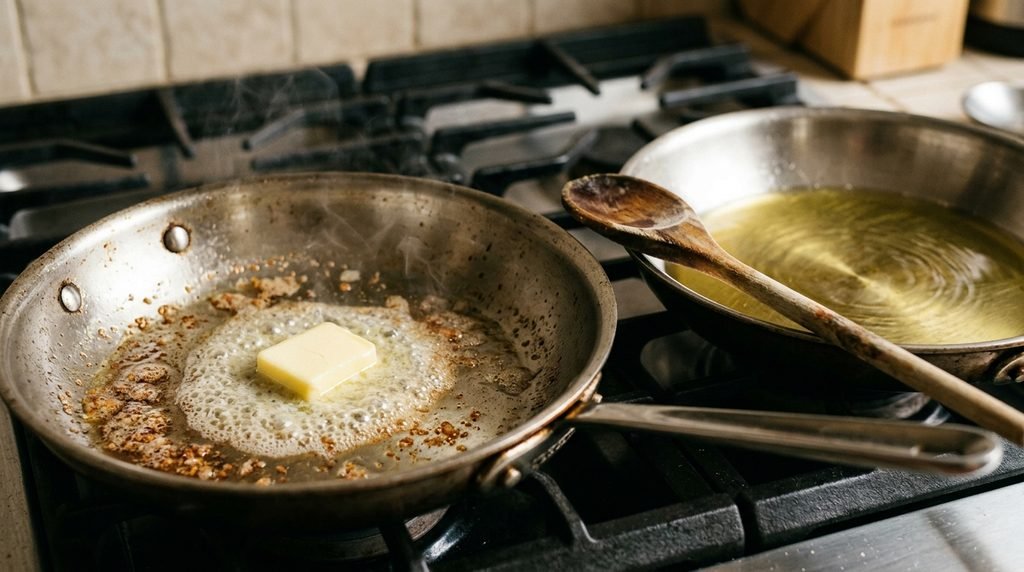
Butter is the number to memorize: at 302°F on MasterClass’s chart, it has the lowest ceiling of any fat in the table above. For a related look at what high heat does to the surface of meat, there is the chemistry of the sear.
Questions People Ask
Why do two charts list different numbers for the same oil? Smoke points depend on the brand, the refining, the age of the oil, and the free fatty acids it carries, and the sources themselves say so.
Is a higher number always better? For high-heat searing, a higher ceiling gives more room. Whether it predicts quality under sustained heat is the point the 2018 study disputes.
Does it matter for fats like lard? The charts agree on 370°F for lard. For a longer look at that fat’s place in the kitchen, there is the lard question in diner pie crust.
Which oil is best for seasoning a skillet? America’s Test Kitchen favors highly unsaturated oils such as canola, sunflower, soybean, and corn, and Lodge recommends vegetable oil, melted shortening, or canola.
Sources
- Cooking Oils and Smoke Points — MasterClass
- Cooking Oil Smoke Points — WebstaurantStore
- Evaluation of Chemical and Physical Changes in Different Commercial Oils during Heating — Acta Scientific Nutritional Health
- The Biggest Olive Oil Myth To Stop Believing — Tasting Table
- Is Olive Oil Good for Cooking? — Healthline
- What happens when you season a cast iron pan — PBS NOVA
- The Science of Seasoning — America’s Test Kitchen
- How to Season — Lodge Cast Iron