Some links in this post are Amazon affiliate links. As an Amazon Associate, Heritage Diner earns from qualifying purchases at no extra cost to you.
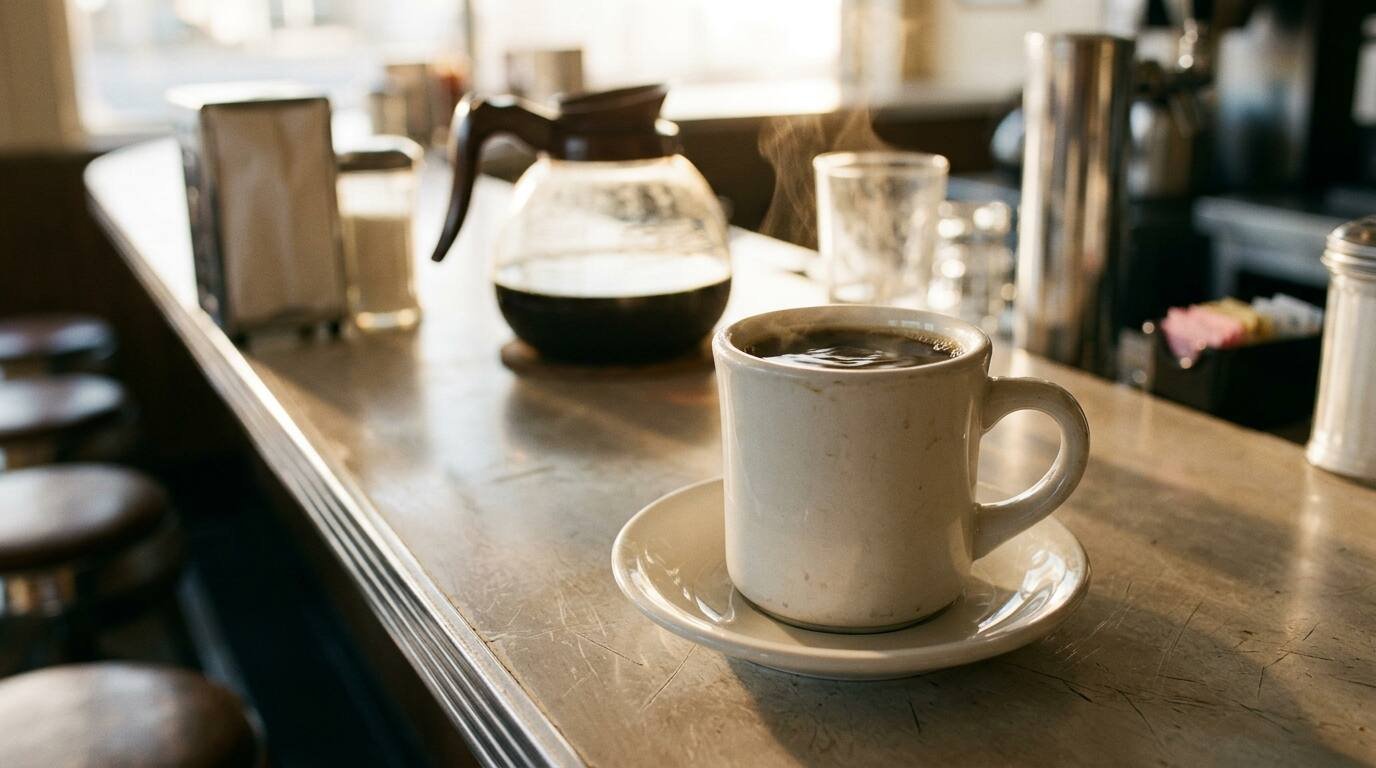
The first thing a diner puts in front of you is coffee, and it arrives before you ask. A thick white mug, a spoon on a saucer, a server with a pot. The word “diner coffee” carries a lot of freight, and some of it deserves unpacking.
Here is a short glossary, followed by how to make a pot at home.
What is in the cup
Most diner coffee is brewed by the drip method: hot water passes through a bed of ground coffee in a paper filter and drips into a pot or an insulated server. The beans are usually a medium roast blend, chosen for consistency and for taste that holds up with milk and sugar. It is made in volume and meant to be drunk by the cup, not savored in sips.
Whether it is good depends on freshness, the cleanliness of the equipment and how long it has sat. A pot brewed in the last half hour is a different drink from one that has baked on a hot plate since breakfast.
Reading the order
In New York and surrounding areas, “regular coffee” has long meant coffee with milk and sugar, not black. Order black coffee and you may need to say “black.” In other regions, “regular” means plain. When in doubt, say what you want: “black,” “light and sweet,” or “with milk, no sugar.”
“Light” means with more milk, and “dark” with less. “Decaf” is usually served from a separate pot, often with an orange handle. Ask if you are unsure.
Why the refill is free. This is reasoning, not a documented rule. Coffee is among the cheapest things on a diner’s menu to produce, so another cup costs little. A refill keeps the customer seated, makes the server a regular part of the table’s attention, and often leads to another order, such as a slice of pie or a side of toast.
It also reflects an attitude. The bottomless cup says the table is yours to sit at. Nobody will rush you. It is a small, cheap form of generosity that makes people come back.
Strong, weak and everything between
People use “strong” for two different things. One is flavor: dark roast, bitter, smoky. The other is concentration: how much coffee is dissolved in the cup. A light roast brewed with plenty of grounds can be stronger in concentration than a dark roast brewed thin. Diner coffee is usually moderate in both, built to be sipped steadily.
To change the strength at home, adjust the amount of coffee and leave the water alone. More grounds make a stronger cup. Fewer make it milder. Changing the grind or the brewing time changes the extraction, which affects flavor, but changes to the dose are easier to control.
Taste is personal. The only mistake is a cup you do not enjoy.
Make a pot at home
Start with fresh beans if you can, ground just before brewing. A medium grind suits a flat-bottomed drip machine. A common rule of thumb is two tablespoons of ground coffee for each six ounces of water, which you can adjust to taste. A scale and a ratio of about one part coffee to sixteen or seventeen parts water by weight give more consistent cups.
The National Coffee Association suggests water between 195 and 205 degrees F for brewing. A machine that reaches that range makes a better pot. Use clean, cold, good-tasting water; the cup is nearly all water, so it matters.
Gear that helps: a drip coffee maker with a thermal carafe, a burr coffee grinder and a digital scale.
Keep the pot fresh
Coffee left on a hot plate for a long time tastes cooked and bitter. A thermal carafe keeps it hot without continuing to heat it. Rinse the pot between batches and descale the machine regularly, following the maker’s instructions. Old oils and mineral buildup make coffee taste stale and flat.
Store beans in an airtight container away from light and heat. Buy them in amounts you will use within a few weeks.
The mug matters. A thick ceramic mug holds heat for a long time and feels right in the hand. Warm it with hot water before pouring. It is a small step, and it keeps the last sip warm.
Cream, sugar and the counter caddy
The sugar pourer, the cream pitcher and the packets of sweetener stay at arm’s reach for a reason: coffee is customized at the table. Half-and-half is common in diner pitchers, and milk is always available. Warm the cream briefly if you like your coffee to stay hot. A spoonful of sugar dissolves best in a hot cup, not a lukewarm one.
Flavored syrups and elaborate drinks are a coffee shop thing. The diner cup is plain, and it is built that way on purpose.
A short list of mistakes at home.
- Using stale, pre-ground coffee that has sat open for weeks.
- Using too little coffee for the water, which makes a weak, sour cup.
- Letting the pot sit on the burner for hours.
- Skipping the cleaning, so oils turn rancid.
- Brewing with water that tastes off.
Fix those five and your kitchen coffee will be better than the average cup anywhere.