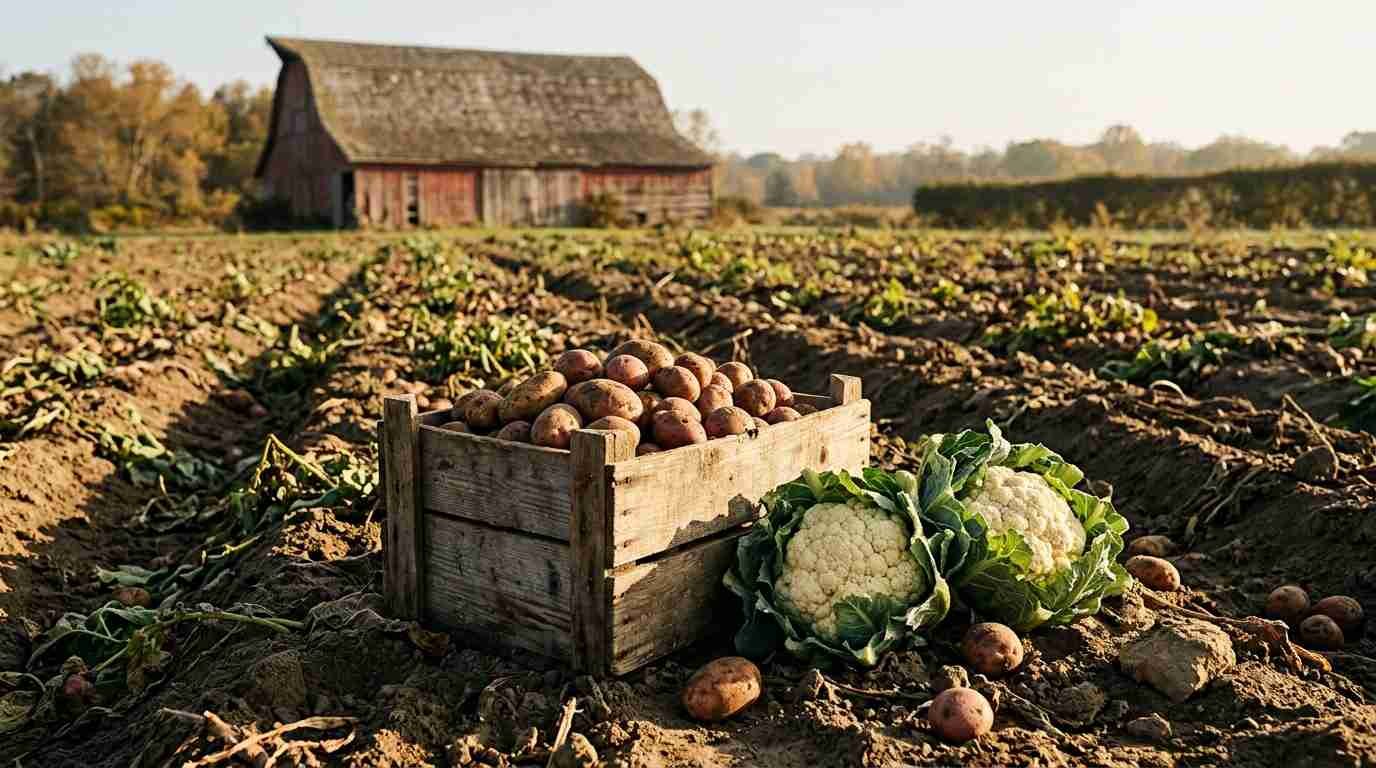
A worm too small to see without a lens turned up in a Hicksville potato field in 1941, and Long Island agriculture never worked the same way again. The USDA’s Agricultural Research magazine records it as the first known U.S. infestation of the golden nematode, a cyst-forming root pest that targets potatoes and tomatoes. New York State quarantined parts of Nassau and Suffolk counties in 1944. The federal government followed in 1969.
The Worm That Wrote the Rulebook
For roughly forty years, control meant fumigation: chemical fumigants applied at up to 90 gallons per acre, according to ARS plant pathologist Bill Brodie. The practice ended in the early 1980s, after traces of the chemicals showed up in Long Island groundwater.
Cornell breeders found the way out. Robert Plaisted, who led the university’s potato breeding program from 1956 to 2000, put it plainly when the fumigants turned up in the research farm’s irrigation well: “The well water on Long Island is sacred.” His team crossed wild South American potatoes that resist the nematode with Scottish seed suited to New York’s long summer days. Nearly every Cornell variety released since carries that resistance, and other breeders now draw on the same stock.
The quarantine itself has held. New York’s Department of Agriculture and Markets says containment has kept the pest out of every other state for nearly eight decades, with about 147,500 acres still regulated statewide. Growers who plant potatoes in a regulated field follow a four-year rotation, and equipment leaving such a field has to be cleaned before it enters a clean one.
A Cauliflower Co-op on the Railroad
Potatoes shared the North Fork with a second signature crop, and its growers organized early.
The Long Island Cauliflower Association was founded in 1901 in Riverhead by a group of farmers, first to secure cauliflower seed and to market what they grew. Early records show the association trading in Dutch guilders to buy seed from the Netherlands. In 1914, its leaders opened an auction on Hallet Street in Riverhead, giving every grower an outlet for the crop.
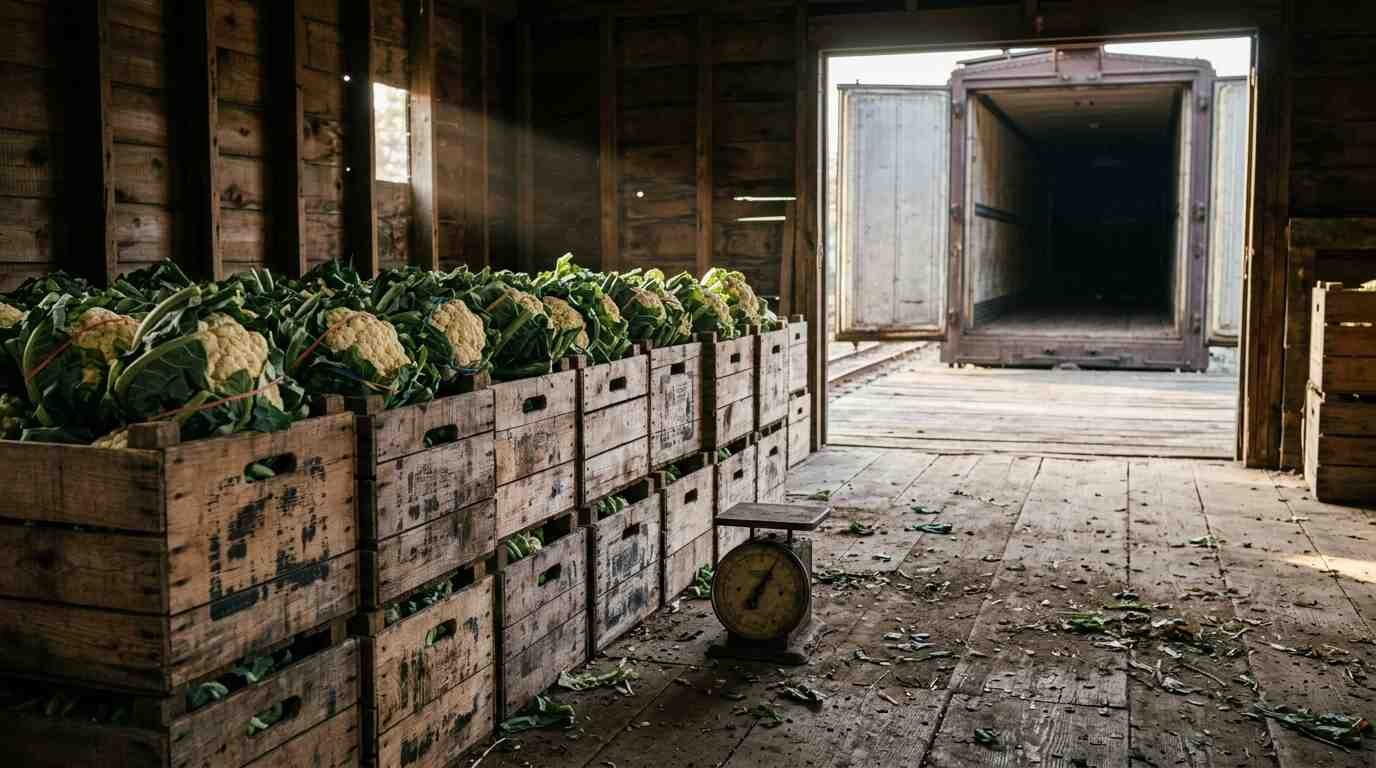
Think of it as a gearbox between the field and the city. Later the association arranged refrigerated railcar shipping over the Long Island Rail Road. By the 1940s it sponsored auctions for cauliflower and strawberries, and it supplied seed, fertilizer, and the wood and nails for shipping crates. It sold the colored rubber bands growers used to shade cauliflower heads, and it once staged Miss Cauliflower pageants.
The association still sits at 139 Marcy Avenue in Riverhead, now open to the public. “It’s the last farm supply store on Long Island,” former president Robbie Hartmann told RiverheadLOCAL in 2012. CEO John Bokina Jr. summed up the shift for 27east: “Remember, it was potatoes and cauliflower. Today it’s everything.”
Research followed the crops. Legislation for land and equipment for a Long Island research station passed on April 1, 1922, and a committee later that year selected the 30-acre farm that is still the center’s site. Experimental potato storage units went in during 1952, and potato and vegetable research ran there from the mid-1950s through the 1970s, per Cornell’s own history of the center.
From 75,000 Acres to Roughly a Thousand
The spud fields themselves went in two waves: one to bulldozers, one to economics.
The North Forker reported in 2023 that Long Island grew an estimated 75,000 acres of potatoes in the 1950s, about 15,000 of them in Nassau County, and that postwar development in Levittown and neighboring subdivisions swallowed much of that land. Hundreds of acres of potatoes remained on the North and South Forks into the mid-1980s, when low prices pushed many farmers out.
Martin Sidor, a Mattituck potato grower whose grandfather bought the family’s first acreage there in 1910, remembers how that exit looked. Families left potatoes, he said, and “it was clear what was coming.”
| Period | Estimated Long Island potato acreage | Source |
|---|---|---|
| 1950s | About 75,000 (roughly 15,000 in Nassau) | The North Forker, 2023 |
| 1973 | About 35,000 | Riverhead News-Review, on Sidor’s graduating year |
| Recent years | 1,000 to 1,500 (Long Island Farm Bureau estimate) | Riverhead News-Review |
| Recent years, North Fork only | About 800 to 1,000 (grower estimates) | The North Forker, 2023 |
Treat every row as an estimate. The North Forker notes that no group tracks the total, and the sources measure different geographies and years.
How Potatoes Earned Their Diner Names
The counter-stool vocabulary of potatoes has its own paper trail, and it runs through New York State, if not through Long Island’s farm roads.
The Saratoga chip is the best-known case. Smithsonian magazine traces the potato chip’s rise as a snack to Saratoga Springs, where chef George Crum worked at Moon’s Lake House. The tale of Cornelius Vanderbilt sending back thick fried potatoes in 1853, and Crum slicing them paper-thin as a prank, is, in the magazine’s telling, a legend. A fried-potato-shavings recipe appears in William Kitchiner’s The Cook’s Oracle in 1817, and an 1849 New York Herald report credits a Saratoga cook named Eliza with a potato-frying reputation. Crum opened his own restaurant in 1860 and served chips in baskets on every table.
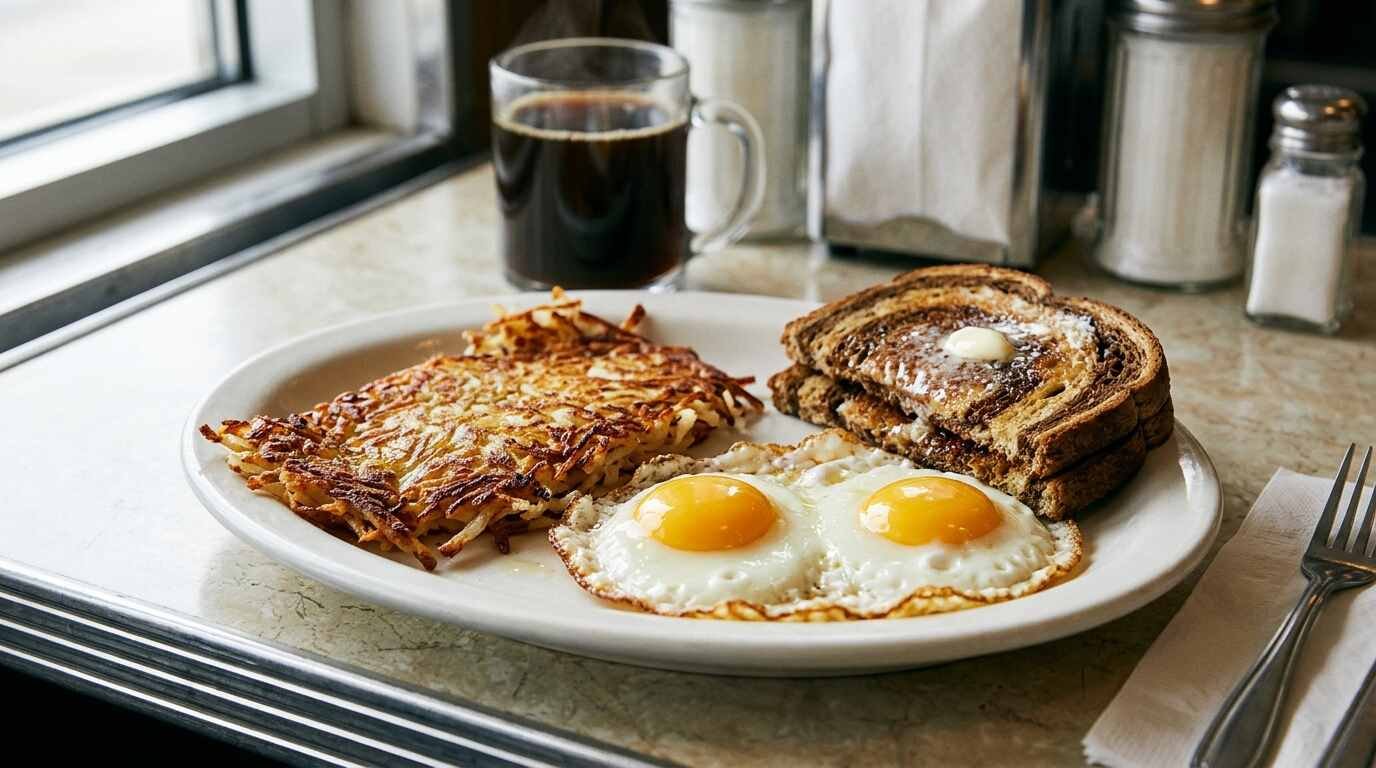
Hash browns trace a different line. Food-word researcher Barry Popik’s compilation of early citations places the phrase “hashed brown potatoes” in the Brooklyn Daily Times on February 3, 1887, in a report on Maria Parloa’s cooking class. Fannie Farmer printed a recipe under that name in her 1896 Boston Cooking-School Cook Book. The shortened “hash browns” appears in a January 1911 Indiana newspaper, and a 1929 article in The Restaurant Man had to clarify that a “hash brown” meant an order of hashed brown potatoes, not brown hash.
Neither history names a Long Island farm. What the Long Island record supplies is scale: an estimated 75,000 acres of potatoes at the mid-century peak.
Cauliflower Gets a College Education
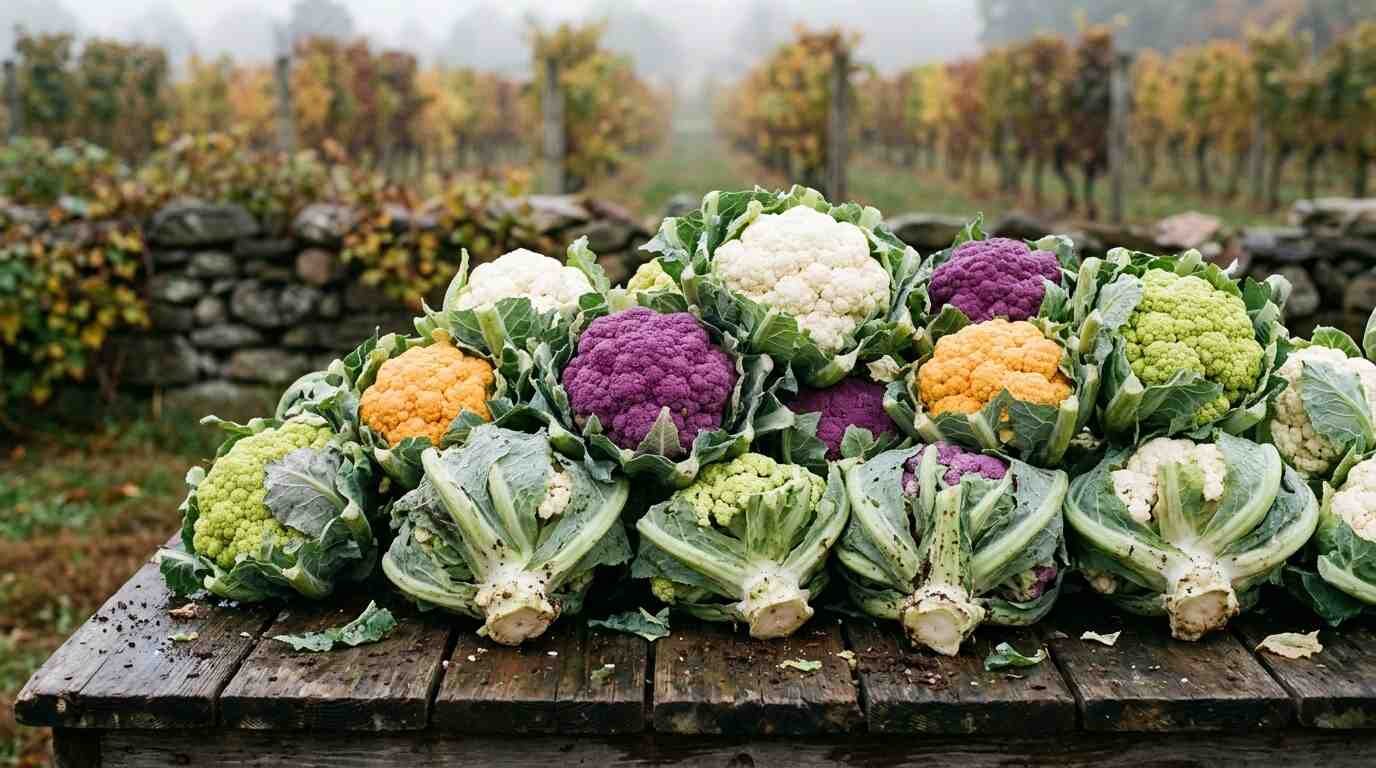
Mark Twain gave cauliflower its best line in Pudd’nhead Wilson (1894): “cauliflower is nothing but a cabbage with a college education.” Barbara Beltrami, writing in TBR News Media in 2022, noted that the East End once had many farms growing potatoes, cabbage and cauliflower, and that most have since become vineyards. The purple, green and orange heads she calls harbingers of autumn come in four colors that taste nearly alike. Her recipes put the two old crops in one pot, a cream of cauliflower soup built on leeks and potato, pureed with chicken broth.
Her other recipes are roasted purple cauliflower steaks at 400°F and a pickled giardiniera.
Related reading on the surrounding farm country: the East End potato barn conversions, the 1940s potato candy of the Long Island farm hub, Suffolk County’s potato peel pie, and the season-by-season farm stand guide.
What Is Left, and a Festival to Mark It
Sidor Farms found a way to stay in potatoes by changing what a potato becomes. A Suffolk Times video report records that by 2004 the Sidors had concluded that bagging raw potatoes alone would not pay the bills, so they turned to kettle-cooked chips fried in sunflower oil. “Well, what do we know? Potatoes,” Carol Sidor said. North Fork Potato Chips now ships nationwide, and by Martin Sidor’s 2023 account, of his 75 acres, half go to chips and half are bagged for market.
The state backed the bet. Martin Sidor Farms received $400,000 through the Regional Economic Development Council competition to expand chip production and add a potato museum at the Mattituck farm, with displays that could include farm equipment from the 1920s and ’30s and old photographs.
And this August, the crop got a party. The East Hampton Star reported that Spud Fest ran on Saturday, August 22, 2026, from 11:30 a.m. to 3 p.m. at the East Hampton Historical Farm Museum, with a baked potato lunch, a potato-growing equipment demonstration, children’s activities, and a best-dressed potato contest in which entrants brought five pounds of potato salad. The paper described it as homage to the Long Island potato and everything it can become.
What the Record Does Not Say
A history built only on checkable sources has gaps, and they are worth stating.
No source reviewed here ties a named Long Island farm to a named Long Island diner dish. The connection between these crops and the diner menu is regional and cultural rather than documented plate by plate. Acreage figures are estimates that disagree by source. Founding dates for the cauliflower association rest on the association’s own account as reported by local papers. And the origin stories for both the potato chip and hash browns remain contested, which is part of what makes them diner lore.
Sources
- USDA ARS, “Golden Nematodes Are Anything But” (Agricultural Research, April 1996)
- NYS Department of Agriculture and Markets, Golden Nematode
- Cornell CALS, “160 years of Cornell potato breeding” (August 2025)
- Cornell CALS, History of the Long Island Horticultural Research and Extension Center
- RiverheadLOCAL, “Profile: Long Island Cauliflower Association” (2014)
- RiverheadLOCAL, “Times have changed, but so have they” (2012)
- 27east, “A 116-year-old business looks to the future of growing on Long Island”
- Long Island Wine Country, Long Island Cauliflower Association
- The North Forker, “Potato farming hangs on” (October 2023)
- Riverhead News-Review, “State awards Sidor Farms $400K”
- The Suffolk Times, “Video: The story behind North Fork Potato Chips”
- Patch, “WATCH: How Are North Fork Potato Chips Made?” (2013)
- Smithsonian Magazine, “The Curious History of the Potato Chip”
- Barry Popik, “Hashbrowns (Hash Brown Potatoes; Hashed Brown Potatoes; Hash Browns)”
- TBR News Media, “Cooking Cove: Long Island cauliflower” (September 30, 2022)
- Today in Science History, Cauliflower Quotations (Twain, Pudd’nhead Wilson, 1894)
- The East Hampton Star, “Spud Fest honors all things potato” (August 20, 2026)