Some links in this post are Amazon affiliate links. As an Amazon Associate, Heritage Diner earns from qualifying purchases at no extra cost to you.
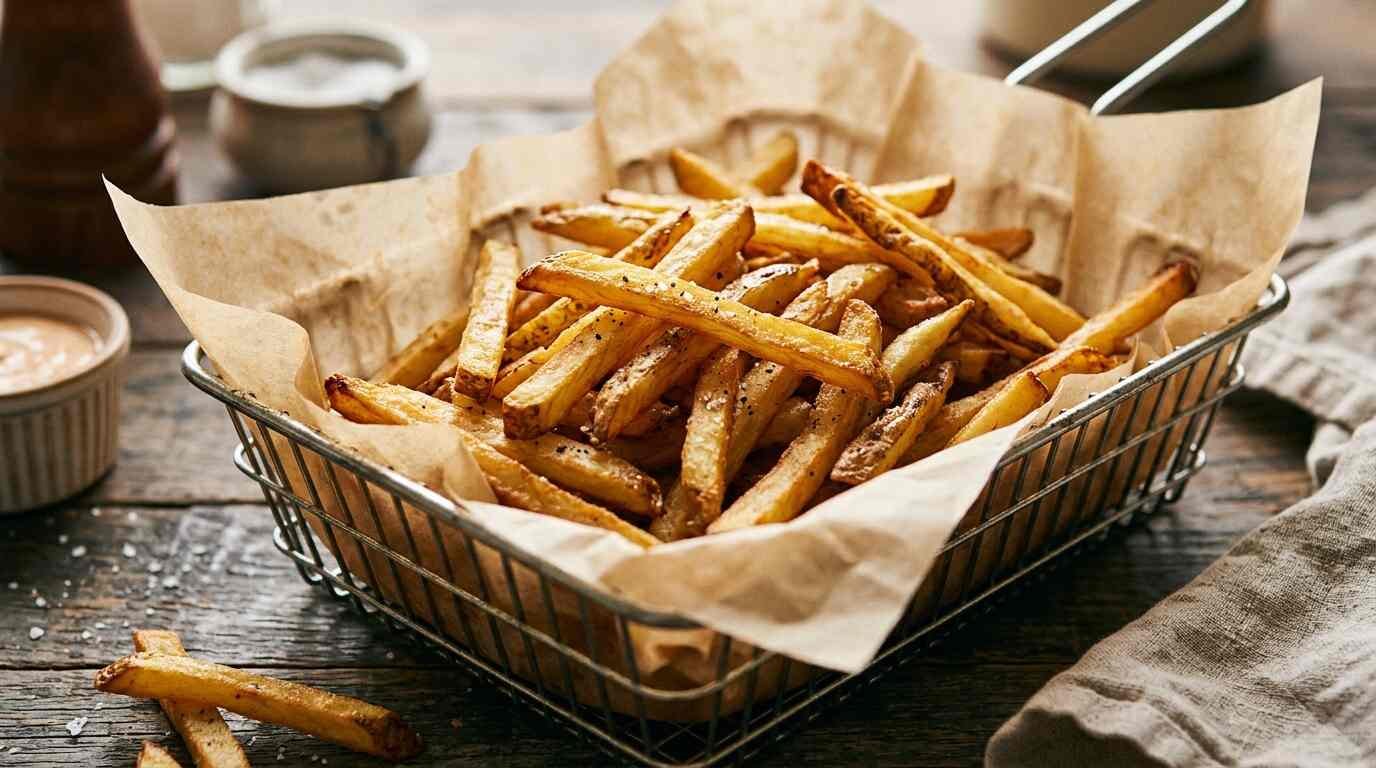
The best fries in a diner have a thin, brittle shell and a middle like mashed potato. Getting both at once is the problem, because a potato that browns on the outside is still raw in the center, and a potato that cooks through goes soft and limp. Frying twice solves it.
The method is old and it is not complicated. It is just slower than dumping a bag in a basket, and the difference shows up on the plate.
Why two fries beat one
The first fry is gentle. Lower oil temperature cooks the inside of the potato until it turns tender and the starch swells, while the surface barely colors. Then the fries rest, which lets steam escape and the outside dry a little.
The second fry is hot and fast. The dry, slightly roughened surface hits the oil and turns into a crust in a couple of minutes, before the center has time to dry out. Two temperatures, two jobs. One batch of oil can do both if you manage it.
What the diner does differently. A commercial fryer holds oil at a steady temperature and recovers heat fast, so a line cook can drop a basket and trust the result. At home, the pot is smaller and the burner is weaker, which makes your job harder. When you add cold potatoes, the oil temperature falls sharply, and a weak burner is slow to climb back up.
The workaround is simple. Fry in small batches, wait for the thermometer to return to target between rounds, and give yourself a little more oil than seems necessary. A larger volume of oil holds heat better than a thin layer. A pot that is two-thirds full of oil is right at the limit; stay below that.
You can also start the first fry a bit hotter than your target. The cold potatoes will pull it down, and by the time the batch settles in, the oil will be near 325.
Pick and cut the potato
Russet potatoes are the standard. They are high in starch and low in moisture, which means a fluffy middle and a crisp skin. Waxy potatoes, like red ones, hold their shape but fry up denser.
Peeling is optional. Leaving the skin on adds flavor and a rustic look, and a scrub is enough. For fries about three-eighths of an inch thick, trim the potato into a rectangle, slice it into planks, and then cut the planks into sticks. Uniform size is what matters, because a thin fry burns while a thick one is still raw.
A sharp knife makes this a pleasure, and a dull one makes it dangerous. A mandoline with a fry-cut blade is an alternative that saves time if you cook fries often, though a mandoline demands real care with fingers. Use the guard.
Soak and dry
Put the cut potatoes in a bowl of cold water for at least thirty minutes, and up to a few hours in the refrigerator. The water rinses off surface starch, which otherwise makes the fries stick together and brown unevenly.
Drying matters more than most people think. Drain the fries and spread them on clean kitchen towels, pressing gently. Water that touches hot oil spatters and pops, which is both messy and dangerous, and wet fries steam instead of fry. Be patient here. Bone-dry potatoes are your goal.
Set up the oil safely. Use a heavy pot at least a few inches deeper than the oil level. Fill it no more than halfway, because oil bubbles up when the potatoes go in. A neutral oil with a high smoke point, such as peanut, canola or vegetable oil, is standard. Check the label for the smoke point.
A thermometer is not optional. A clip-on deep fry thermometer tells you what the oil is doing, and a spider skimmer lifts fries out without splashing.
Keep a lid within reach. If oil ever catches fire, slide the lid on and turn off the heat. Never use water on a grease fire, and do not move the pot. Keep children and pets out of the kitchen. Never leave hot oil unattended.
First fry: 325 degrees F
Heat the oil to about 325 degrees F. Add the fries in small batches so the temperature does not crash, and so they have room to move. Fry for roughly four to six minutes. They should look pale, soft and slightly translucent, not golden. Lift one out and bend it; it should flex without breaking.
Transfer the fries to a wire rack set over a sheet pan. Do not salt them yet. Let them cool for at least twenty minutes at room temperature. Some cooks refrigerate or even freeze the blanched fries at this point, which firms them up and makes a crisper finish. Spread them in a single layer on a tray to freeze, then bag them.
Seasoning beyond salt
Salt is the headline, but a little more can help. A pinch of garlic powder, smoked paprika or fine black pepper tossed with the salt in a bowl gives you a house seasoning. Toss the hot fries in a large bowl rather than sprinkling them on a pan, so every stick gets coated.
Malt vinegar is a classic finish and a sharp one. A squeeze of lemon works for a lighter touch. For dipping, ketchup needs no help, but a quick mix of mayonnaise, a little mustard and a splash of hot sauce makes a respectable dip.
If you plan to serve a crowd, skip the dip bar and give people salt and vinegar to apply themselves. Fries sauced in the kitchen go soft.
Storing and reheating. Fries are best within minutes, and nothing really restores them. If you have leftovers, spread them on a rack and refrigerate them within two hours. The next day, reheat on a hot sheet pan in a 425 degree F oven until crisp, or use an air fryer, turning once. A microwave will turn them to rubber.
The blanched, unsalted fries are the better thing to make ahead. After the first fry and a cool-down, freeze them on a tray, then bag them. They fry straight from frozen for the second round, adding a minute or so to the time. That makes a plate of real fries a fifteen-minute job on a busy night.
Second fry: 375 degrees F
Raise the oil to about 375 degrees F and return the fries in batches. This time they take two to four minutes, and you will see them turn golden and hear the sizzle change from a bubble to a crackle. Pull them when the color is where you want it, a shade lighter than your goal, since they keep darkening for a moment.
Drain on a rack or a paper bag, then salt right away while the surface is still wet with oil. Salt sticks to hot fries and slides off cold ones. Fine salt clings best.
Serve at once. Fries begin to soften within minutes. If you must hold them, a rack in a 200 degree F oven keeps them warm but not forever.
Common mistakes.
- Limp fries: the oil was too cool, the pot was crowded, or the potatoes were wet.
- Dark but raw inside: skipped the first fry or set the temperature too high.
- Greasy fries: oil too cold, or fries sat on paper without draining properly.
- Fries sticking together: not enough soaking or rinsing.
- Spattering: wet potatoes. Dry them more.
Strain used oil through a fine strainer once it cools, store it in a sealed container, and discard it when it smells off or turns dark and thick.