Four skillets, four jobs. That is the verdict America’s Test Kitchen reached in a 2021 article by Liz Bomze on the pans a kitchen should own, and it holds up better than the usual argument over which metal wins outright.
The Division of Labor
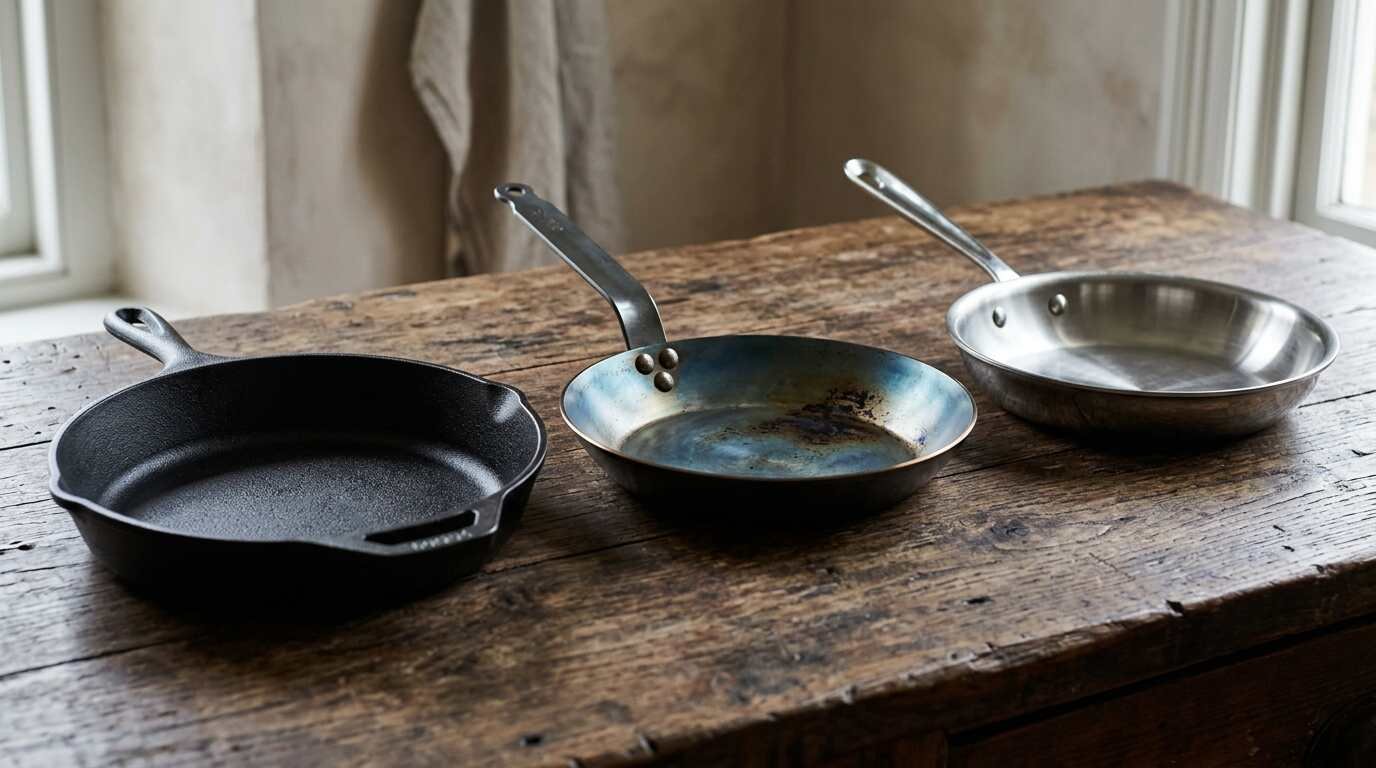
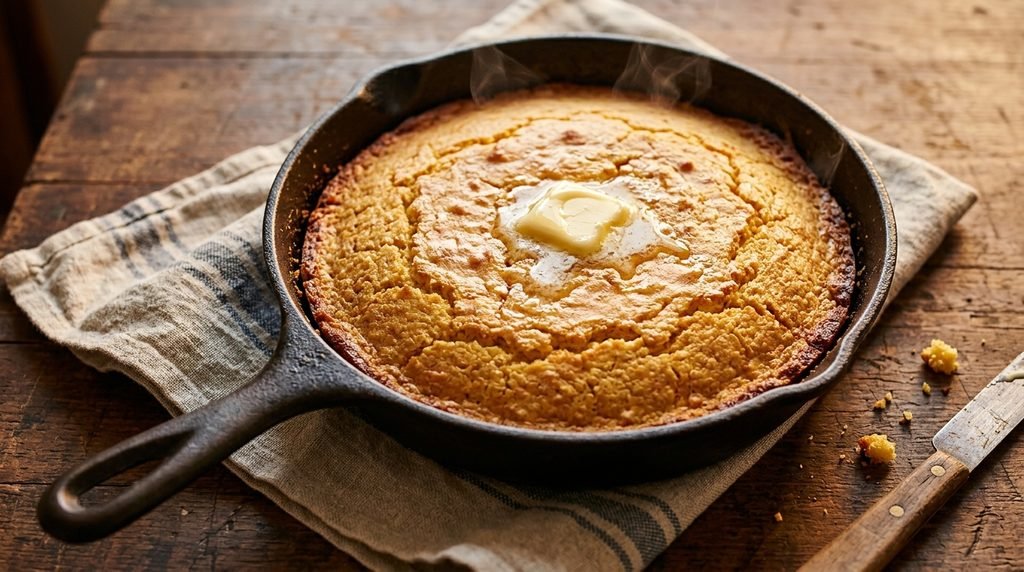
Bomze splits the lineup like this. Fully clad stainless steel is best for pan sauces and braises. Nonstick is best for eggs and fish. Carbon steel is the best all-around pan. Cast iron is best for frying, searing, roasting, and deep-dish cooking like cornbread and pan pizza.
Notice what is missing: a single winner. Each pan trades something for something else, and the trade is the whole story. A pan that sears like a blacksmith’s anvil will not slide an omelet onto a plate, and a pan that releases an egg without effort will not build a fond for gravy.

Cast Iron: Heat Bank, Heavy Lifting
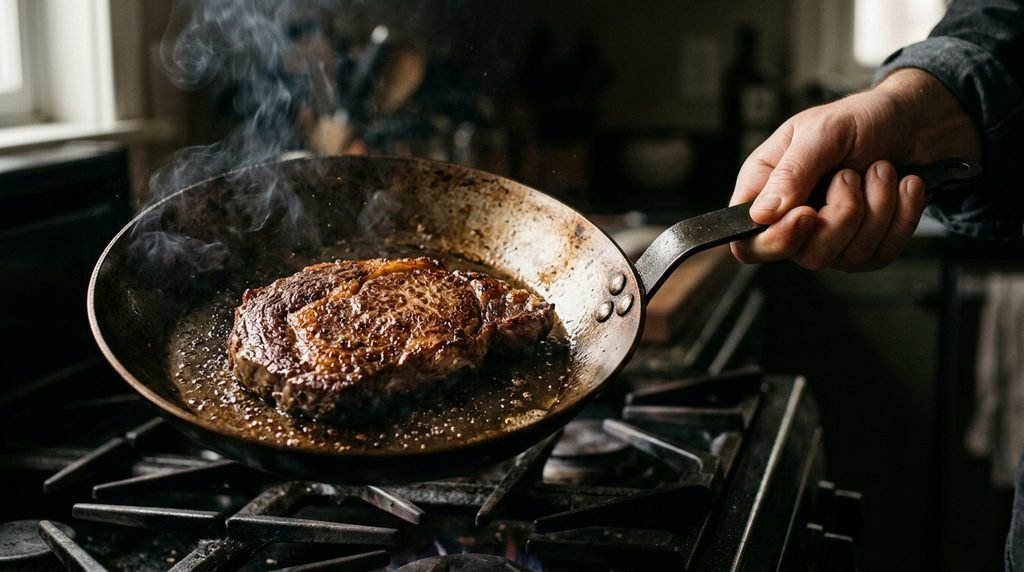
According to the same ATK article, cast iron holds heat well even when cool food is added, which is why it shines at frying and searing. It is also heavy, heats unevenly, is brittle, and reacts with acidic foods. The article suggests preheating cast iron in a 500°F oven, because convective heat reduces the hot spots a burner leaves behind.
Tom’s Guide, in a March 2026 comparison by Madeleine Streets, adds a few more traits. Cast iron is slow to heat, awkward to move when full, and generally cheaper and very durable. Lodge, the company that makes the pans, takes a gentler line on acid: small amounts of acidic food are fine, and only large amounts cooked for a long time can break down the seasoning, which re-seasoning restores.
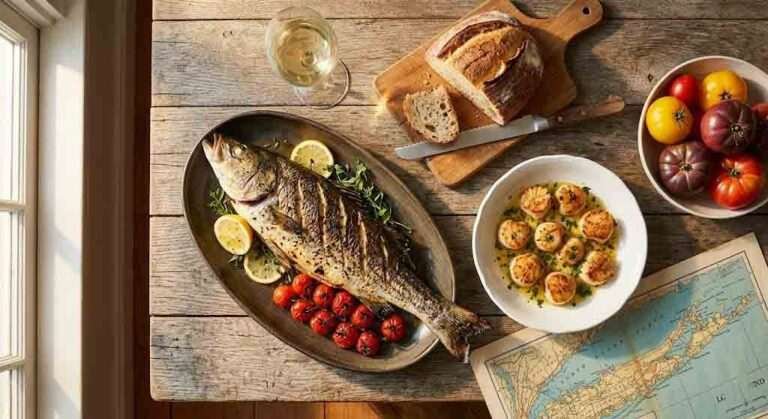
For a pan with a long reputation to live up to, there is the Lodge versus Le Creuset debate, and for a recipe that rewards a good hot surface, crispy griddled corned beef hash with fried eggs.
Carbon Steel: The Lighter Cousin
Carbon steel is hammered into a sheet and shaped, so it is lighter and thinner than cast iron. ATK reports that it contains about 1 percent carbon, compared with 2 to 3 percent for cast iron, which makes it less brittle and lets makers thin it out. Its 2025 equipment review describes it as heavy enough to retain heat well and thin enough to heat quickly.
Carbon steel arrives bare, and that comes with homework. The review’s top pick, the Mauviel M’STEEL at $120 when tested, ships coated in beeswax that has to be scrubbed off before seasoning. Testers said building the first layer is not hard, but a full black patina can take a year or two of cooking.
Acid tests the finish. In a tomato-based skillet lasagna, acid stripped most of the dark patina, though testers noted no off-flavors, and about ten minutes of stovetop heating and oiling restored the surface. Tom’s Guide adds that carbon steel usually costs more than cast iron and, given its thinner build, may not last quite as long.
Stainless Steel: Where Sticking Is a Feature
ATK’s argument for stainless runs against intuition. Food sticks to it, and that sticking builds fond, the browned film that becomes a pan sauce once you add liquid. Stainless does not react with acidic ingredients such as tomatoes, vinegar, or wine, and it is durable enough to go under the broiler.
The drawback is the flip side of the benefit: delicate foods like eggs and fish tend to stick. Which is exactly why the same article keeps a nonstick pan in the lineup for those two jobs, and advises buying inexpensive nonstick pans since the coating wears out, especially above 500°F.
Side by Side
| Pan | Best at | Watch out for |
|---|---|---|
| Cast iron | Frying, searing, roasting, deep-dish baking | Heavy, heats unevenly, brittle, reacts with acid |
| Carbon steel | All-around cooking, nimble handling | Sold unseasoned, acid can strip patina, costs more |
| Stainless steel | Pan sauces, braises, acidic dishes, broiler use | Delicate foods stick |
| Nonstick | Eggs, fish, splatter-free searing | Coating wears out, especially above 500°F |
Questions People Ask
Which skillet should I buy first? ATK calls carbon steel the best all-around pan, since it sears nearly as well as cast iron and handles more nimbly. If budget decides, Tom’s Guide notes cast iron is generally cheaper.
Do carbon steel and cast iron both need seasoning? Yes. Tom’s Guide says both need seasoning to resist rust and build a nonstick surface, and both should be hand-washed, with cast iron needing the more substantial layer.
Can I cook eggs in these pans? ATK steers eggs and fish toward nonstick. For the egg side of the story, there is the science of the perfect diner fried egg and a classic Western omelet with ham, peppers, and onions.
Prices are a snapshot from the time of each review and change often.