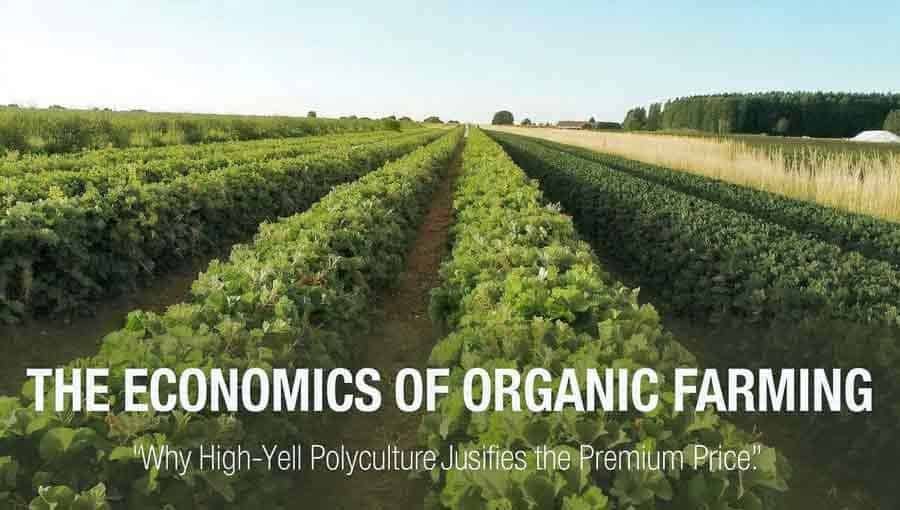
What you pay at a farmers market is not markup. It is math — a different kind of math than the one the industrial food system runs on. It is the math of living soil, diversified risk, reduced chemical dependency, and time horizons measured in decades rather than quarters. Before the register rings, long before the produce was ever harvested, a farmer made a decision about what kind of land they wanted to steward and what kind of food they wanted to grow. That decision has a price, and it is worth understanding.
The conversation around organic food has long been dominated by a single complaint: it costs too much. That framing, though, skips the more interesting question — what exactly is being paid for, and whether that premium is economically rational for the farmer, the soil, and ultimately the person eating. The answer, when examined with any seriousness, points toward a farming philosophy that is both ancient and urgently modern.
The Numbers Behind the Premium
The global organic food market reached $65.4 billion in U.S. sales in 2024, according to the Organic Trade Association — growing more than twice as fast as the total food market. Projections place the global market above $650 billion by 2034, expanding at a compound annual growth rate north of 11%. These are not niche numbers. This is a structural shift in how a meaningful and growing percentage of consumers relate to food.
The price gap between organic and conventional produce has long been cited as the primary barrier to adoption. But that gap is narrowing. In 2024, the OTA noted that shoppers found the spread between conventional and organic prices across grocery and dairy categories had shrunk considerably, drawing in more price-sensitive mainstream buyers for the first time. The economics, in other words, are moving in favor of organic — both at the register and on the farm.
What most consumers do not realize is how the financial case for organic farming functions on the production side. The Rodale Institute’s Farming Systems Trial — now running for over 40 years — found that after the initial conversion period, organic corn and soybean yields match conventional yields while generating higher profits, largely through reduced input costs and premium pricing. A 2015 USDA Economic Research Service study reached a similar conclusion: significant economic returns are possible from organic production of corn, wheat, and soybeans. More striking still, data from 22 years of Rodale experiments determined that a price premium of only 10% above conventional pricing is sufficient to achieve full economic parity. On a global scale, some research places that break-even figure even lower — between 5 and 7%.
What this means, practically, is that the premium is not extractive. It reflects the true cost of food grown in a way that does not borrow against the future of the land.
The Conversion Problem — and Why It Produces Better Farmers
The hardest part of organic farming is the middle. The transition from conventional to certified organic requires a three-year waiting period during which a farm must operate under organic practices but cannot yet command organic prices. Input costs rise. Yields often dip by 20 to 30% as the soil ecosystem readjusts — beneficial organisms re-establish themselves, natural pest suppression takes hold, and the farm’s learning curve steepens.
It is a demanding crucible. Farmers who emerge from it tend to understand their land in a way that chemical-dependency farming never requires. They have to. When you cannot reach for synthetic inputs as a corrective, you develop a more intimate relationship with soil biology, crop sequencing, and the logic of natural systems.
After five to seven years of organic management, yields on established farms typically recover to parity with conventional systems — and in some cases exceed them, particularly as soil health improvements compound over time. Better water retention, more active microbial communities, improved natural pest suppression, and reduced erosion all translate directly into economic stability. Climate resilience becomes a genuine financial asset rather than an abstract virtue.
Polyculture: The Agricultural Principle the Industrial Era Abandoned
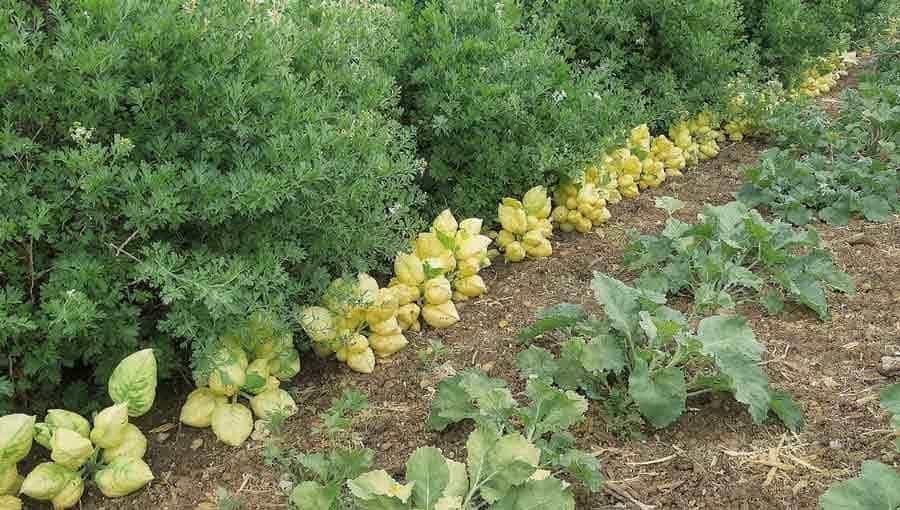
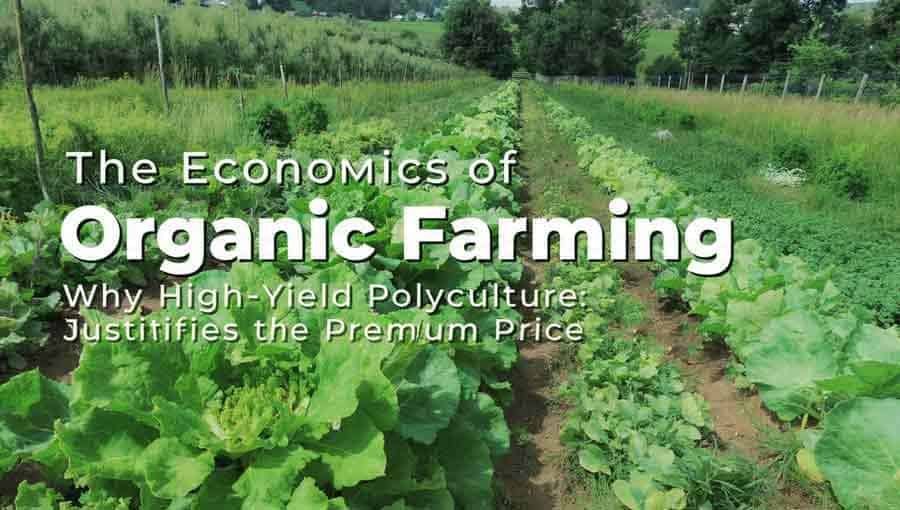
At the heart of high-performance organic farming lies a practice that predates synthetic chemistry by several thousand years: polyculture — the simultaneous cultivation of multiple crop species within the same space. For most of human agricultural history, polyculture was simply how farming was done. The Three Sisters of indigenous North American agriculture — maize, beans, and squash — represent one of the most famous examples: the corn provides structure for the climbing beans, the beans fix atmospheric nitrogen back into the soil, and the broad squash leaves suppress weeds and retain moisture. The system is elegant in the way that genuinely good design always is: nothing wasted, everything contributing.
Industrial agriculture largely abandoned polyculture in the mid-20th century because mechanization favors uniformity. A combine harvester cannot navigate a field growing six different crops with different stem heights and maturation windows. The economics of scale demanded monoculture, and monoculture delivered — for a generation.
The costs are now well understood. Single-crop systems deplete specific soil nutrients faster, require continuous pesticide and herbicide inputs to compensate for the natural pest control that biodiversity provides, and are catastrophically vulnerable to a single disease or pest event. When the biological redundancy is stripped out, the financial risk concentrates. The yield per acre looks clean on a spreadsheet. The soil health trajectory over 30 years does not.
Why High-Yield Polyculture Changes the Economic Equation
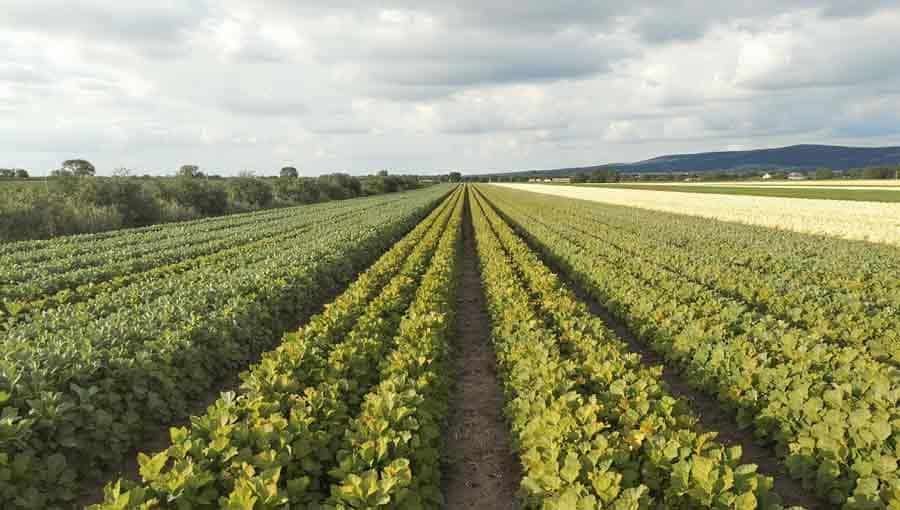
The premise that organic farming produces lower yields is accurate in a narrow and often misleading sense. Individual crop yields within a polyculture system are typically lower per unit area than that same crop grown in a dedicated monoculture. But overall productivity — the total biomass, caloric output, and value of all crops harvested from the same land — is consistently higher in well-managed polyculture systems. This distinction matters enormously, and it is frequently obscured in the way yield comparisons are reported.
Research published through the Wiley Open Library found that polyculture systems promote yield stability and income stability in the face of both environmental and market fluctuations. A diverse planting scheme does not hand all its risk to a single variable. If one crop underperforms due to a late frost or a regional pest event, others compensate. This is not just agronomic hedging — it is financial portfolio theory applied to a field.
The ecological mechanisms that drive this productivity advantage are well documented. Crops with complementary root architectures draw from different soil horizons, reducing competition for water and nutrients while collectively improving soil structure. Deep-rooted plants create channels that shallow-rooted plants benefit from. Leguminous crops fix atmospheric nitrogen and make it available to their neighbors, reducing or eliminating the need for synthetic nitrogen fertilizers — one of the largest cost line items in conventional farming. Diverse canopies interrupt pest and disease transmission, as many pests and pathogens prefer specific host plants and struggle to spread rapidly through a varied landscape. The whole system is more productive and less fragile precisely because it is more complex.
Polycropping also extends the productive growing season. With crops maturing at different intervals, harvesting is continuous rather than concentrated in a single window. Revenue is distributed across more of the calendar year, and post-harvest soil cover is maintained, reducing erosion and moisture loss between cycles.
What the Soil Is Actually Worth
One of the core economic distortions of industrial farming is the way it treats topsoil as a free input. Conventional monoculture degrades soil organic matter over time, compacting structure and reducing microbial diversity — costs that are externalized onto future generations and future farmers. Organic polyculture inverts this equation. Soil health improves over time, which means that the land becomes more productive and more valuable as years accumulate rather than less. The premium price for organically grown food, from this perspective, includes a payment toward the long-term capital value of the land.
Carbon sequestration efficiency in organic systems is estimated at nearly double that of conventional treatment of soils in temperate climates — a fact that becomes more economically legible as carbon markets develop and sustainable farming practices increasingly attract both regulatory support and institutional investment.
Local, Seasonal, and Small-Scale: Where the Economics Become Human
The abstraction of global market data gives way to something more tangible when the conversation turns local. Long Island’s North Shore has been quietly building out a food culture centered on proximity and seasonal eating. Farm stands that were once functional conveniences have become something closer to culinary institutions. Restaurants that source from local organic farms are not simply making a marketing decision — they are making a supply chain decision that affects food quality in ways that are detectable at the table.
The premium price for locally grown organic produce is partly a function of shorter distribution chains. Less refrigeration, less handling, less time between harvest and consumption — these reduce nutrient degradation and improve flavor in ways that are measurable, not merely perceived. The variety selection changes too: small organic polyculture farms frequently grow heirloom cultivars chosen for taste and soil compatibility rather than durability during long-haul transport.
For a restaurant, the economics of sourcing locally from organic farms require calculation rather than sentiment. The per-unit cost is higher. But spoilage is lower. Customer perception is higher. And the connection to the community that makes a place a genuine institution rather than just a business is deepened with every direct relationship built with a local grower.
The Long View
Economic arguments made on quarterly cycles and those made on generational cycles look very different. Industrial agriculture optimized for the former and is now confronting the costs of that choice: degraded soil, consolidating farm operations, chemical input dependency, and a food system acutely vulnerable to supply chain disruption. High-yield organic polyculture is built on the latter logic — slower to establish, more demanding of skill and attention, and substantially more durable over time.
The premium price at the register is not a premium on marketing or aesthetics. It funds a system of farming that builds rather than depletes, that hedges rather than concentrates risk, and that treats the land as capital to be stewarded rather than inventory to be liquidated. Forty years of data from the Rodale Institute and a growing body of agroecological research converge on the same conclusion: the economics of organic polyculture work. They just work on a time horizon that requires the willingness to think beyond the next harvest.
That is, ultimately, what every premium worth paying is actually purchasing — not the product alone, but the commitment behind it.
Sources
- Organic Trade Association — 2025 Organic Market Report
- Rodale Institute — Farming Systems Trial (40+ years)
- USDA Economic Research Service — McBride et al., 2015
- Wikipedia — Organic Farming
- Wiley Open Library — Impacts of Polycultural Cropping on Crop Yields and Biodiversity, 2024
- ScienceDirect — Polyculture Overview
- Agriculture.Institute — Economics of Organic Farming: Viability and Conversion Challenges
- Nature’s Path — The Economics of Organic Farming
- Precedence Research — Organic Food Market 2025–2034