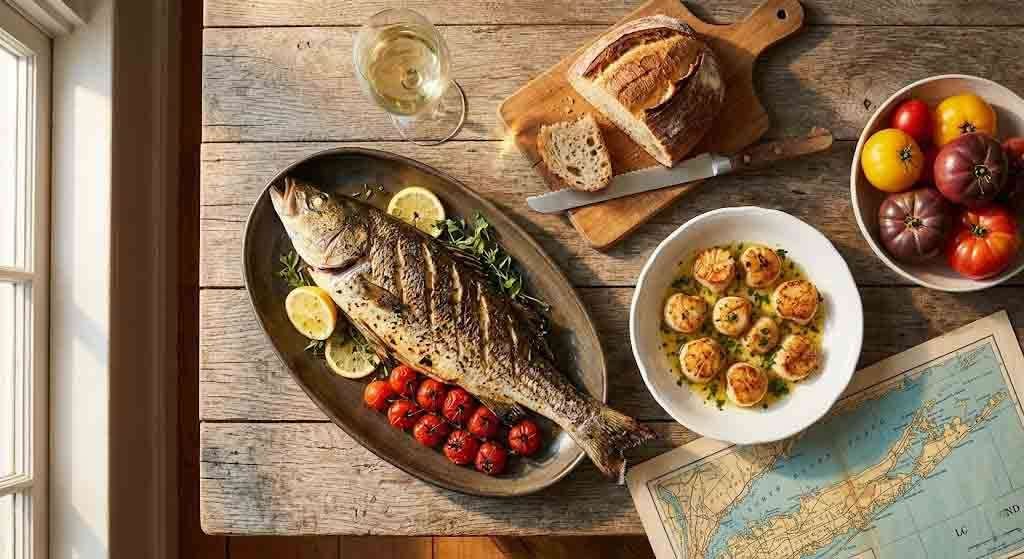
Long Island is 118 miles long and feeds more people than most states could dream about. That fact gets lost in the headlines about beach traffic and real estate prices. But the dining on this island — the full range of it, from a Greek diner counter at six in the morning to a waterfront omakase at nine at night — tells you more about who lives here, and how they live, than anything a real estate listing ever could.
This is a guide to that full range. Not a top-ten list. Not a Yelp roundup. A real map of the dining geography of Long Island’s North Shore, East End, South Shore, and Nassau County — what each zone does well, what defines it, and where to go when you want to eat seriously.
The North Shore: Route 25A and the Towns That Grew Up Along It
The North Shore is where Long Island stops apologizing for itself. The towns here — Cold Spring Harbor, Huntington, Smithtown, St. James, Stony Brook, Port Jefferson, Mount Sinai, Miller Place — have a layered identity. Old money and working families on the same road. Greek diners next to French bistros. Steakhouses that have been packed since 1987.
Route 25A is the spine. And the dining along it reflects that tension between the familiar and the ambitious.
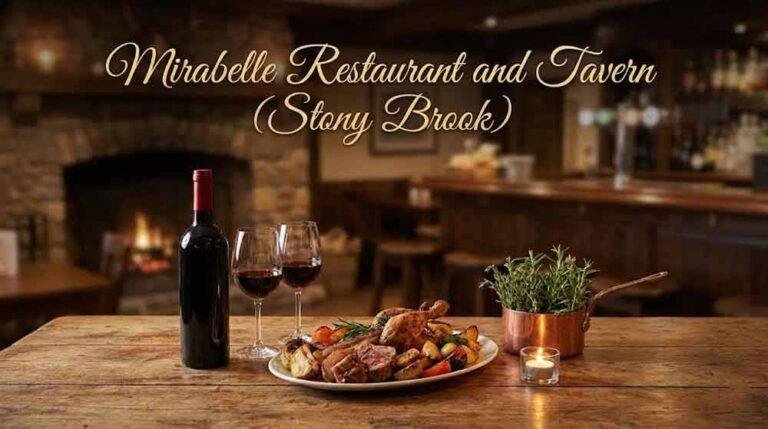
Start at Mirabelle Restaurant and Tavern in Stony Brook — one of the most quietly distinguished dining rooms on the entire island. It doesn’t shout. It doesn’t need to. The food is precise French-American, the service is from another era, and the room carries the kind of earned authority that only comes from decades of doing it right. For fine dining on the North Shore, this is the benchmark.
Port Jefferson offers something different. The village has built a real dining corridor in its compact downtown, and the range is legitimate. Black Pearl Seafood Chophouse handles both land and sea without compromising either. Fifth Season brings farm-to-table intentions to a menu that actually executes them. Old Fields of Port Jefferson and Pasta Pasta serve the kind of food that keeps locals coming back on weeknights — not because it’s fashionable but because it’s consistent. ZPita is worth noting for anyone who thinks the North Shore can’t do Middle Eastern properly.
Huntington is its own story. The village has gone through a genuine food evolution in the last decade, and Prime: An American Kitchen & Bar represents what that evolution looks like at its best — serious meat, serious cocktail program, serious room. For the broader picture of what Huntington is becoming as a destination, the piece on Huntington Village covers the cultural shift in detail.
Down in St. James, The Trattoria has been feeding the North Shore the way Italian food is supposed to be fed — without fuss, without performance, with the kind of red sauce that makes you understand why the dish became iconic in the first place. And NoCo in St. James represents the newer wave: a thoughtfully sourced kitchen operating in the same neighborhood.
Smithtown has Maureen’s Kitchen — a breakfast and brunch institution that earns its lines every weekend — and Insignia Prime Steak & Sushi, which manages the steak-and-sushi hybrid with more conviction than most.
Closer to the water, Mount Sinai has Alexandros Restaurant — Greek food done with family-owned integrity on Route 25A, a reminder that the best ethnic cooking on Long Island has always come from the families who brought the recipes with them.
For anyone building a North Shore dining itinerary from Cold Spring Harbor east to Port Jefferson, The North Shore Food Trail is the guide worth bookmarking — every significant stop, curated by zone.
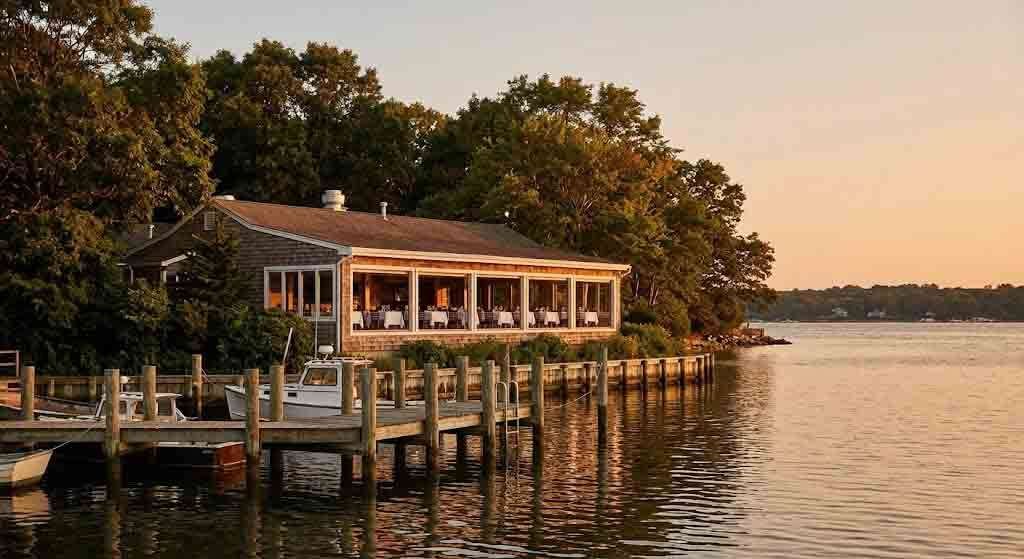
The Diner Question: What Old-School Actually Means Here
Long Island has more diners per square mile than anywhere else in America. That is not an exaggeration. It is a geographic and cultural fact. The diner is not a genre here — it is an institution. It is where the night shift and the morning shift overlap, where high school kids and retired electricians eat at adjacent booths, where the menu runs sixteen pages and somehow everything on it is made to order.
The full case for why these places matter — and why the newer food culture hasn’t replaced them, it’s just grown alongside them — is laid out in Long Island’s Best Old-School Diners and Why They Still Matter. The short version: the diner is where Long Island’s working-class identity is preserved in physical form. When a diner closes, something irreplaceable goes with it.
The Nautilus Diner in Massapequa is one of the ones that survived and found a way to evolve without abandoning what it was. That story is told in The Nautilus Diner in Massapequa: A Long Island Landmark Reimagined.
The tension between that old-school tradition and the newer food culture — farm-sourced, chef-driven, Instagram-ready — is not a conflict so much as a conversation. Old School vs. New Wave: How Long Island’s Restaurant Scene Is Changing gets into what that transition actually looks like on the ground.
Nassau County: The Western Edge Does Fine Dining Right
Nassau County tends to get overshadowed in conversations about Long Island dining. It shouldn’t. The Gold Coast towns along the North Shore of Nassau — Roslyn, Manhasset, Great Neck, Port Washington, Oyster Bay — have some of the most accomplished kitchens on the island.
Limani in Roslyn is one of the island’s premier seafood dining rooms: Mediterranean in orientation, serious in execution, the kind of place where the whole branzino arrives at the table and you understand why simplicity costs money. Bryant & Cooper Steakhouse in Roslyn is the steakhouse benchmark for Nassau — old-school in the best sense, aged beef, serious portions, no apologies. Hendrick’s Tavern keeps the same Northern Boulevard address relevant with a room that handles everything from a business lunch to a Saturday night reservation.
In Manhasset, Toku Modern Asian does what the category promises but rarely delivers: genuine Asian-influenced cuisine in a setting serious enough to match the ambition. Cipollini Trattoria & Bar next door provides the Italian counterweight. Il Mulino New York in Roslyn is the brand’s Long Island outpost — as polished a formal Italian experience as you’ll find outside of Manhattan.
Louie’s Prime Steak & Seafood in Port Washington answers the question of whether a restaurant can do both genres with equal conviction. It can. Garden City contributes The Capital Grille — the national chain that somehow earns its price point — and Waterzooi Belgian Bistro & Oyster Bar for something genuinely distinct in a landscape that can feel homogeneous.
For the broadest picture of what Long Island’s steakhouse culture looks like across both counties, the Best Steakhouses on Long Island, Ranked by Cut and Experience covers the full field.
The Hamptons and the South Fork: Glamour with a Serious Kitchen Behind It
The Hamptons dining scene has a reputation problem. Not because the food is bad — a lot of it is exceptional — but because the noise around it (the scene, the reservations, the summer prices) tends to drown out honest conversation about what’s actually being cooked.
The honest answer: the South Fork has some of the best restaurant cooking in New York State. The ingredients are extraordinary — duck from Croteaux, corn from Green Thumb, scallops from Peconic Bay. The chefs who came out here, especially after the pandemic, are serious. And the older institutions have been earning their reputation for decades.
Nick & Toni’s in East Hampton is the starting point for any Hamptons dining conversation. Wood-fired, Italian-influenced, farm-connected — it has been setting the standard for South Fork cooking since 1988. The 1770 House in East Hampton offers something more intimate: a historic inn with a kitchen that treats the address seriously.
Sag Harbor carries its own weight. Le Bilboquet brought the Manhattan brasserie sensibility to the wharf and made it work. Lulu Kitchen & Bar has become a destination in its own right — American comfort food elevated enough to justify the Main Street prices. The American Hotel is the institution of the block: wine list, dining room, the whole formal experience in a building that has been feeding people since 1846.
Further east, Harvest on Fort Pond in Montauk earns its reputation year after year. Inlet Seafood is where the fishermen eat, which is the only endorsement that matters for seafood. Duryea’s Lobster Deck is the iconic outdoor experience — the one you go to when the day is right and the lobsters are fresh and you want to eat outside with your feet near the water.
Southampton has Sant Ambroeus — Milanese in lineage, polished in execution, exactly what Main Street Southampton asks for in a corner café. Water Mill’s Calissa and Duck Walk Vineyards sit within miles of each other — Greek-inspired Mediterranean cuisine and Long Island wine on the same afternoon drive.
Bridgehampton’s Channing Daughters Winery and nearby Wölffer Estate Vineyard in Sagaponack represent the South Fork wine country at its most serious — natural wine, biodynamic farming, the kind of winemaking that makes sommeliers pay attention.
For those who want the full Sunday morning experience on the South Fork, Long Island’s Best Sunday Brunch Spots covers the field across both forks.
The North Fork: Wine, Farms, and the Other Long Island
The North Fork runs parallel to the South Fork but operates on a completely different frequency. It is quieter, less trafficked, more agricultural. The wineries came first and the restaurants followed, and the best food here tends to be deeply connected to the land in a way that the Hamptons, for all its farm-to-table claims, has to work harder to achieve.
North Fork Table & Inn in Southold has been the culinary anchor of the North Fork for years. The kitchen sources hyperlocally and executes with genuine technique — the kind of place that proves the North Fork doesn’t need the South Fork’s celebrity to do serious cooking. RGNY in Riverhead pairs wine country dining with a room that handles the winery experience at the highest level.
Macari Vineyards and Rose Hill Vineyards in Mattituck, Lenz Winery in Peconic — these are not novelty stops. They produce wines that compete seriously in the northeastern United States category and pair naturally with a dining culture that grew up around them.
The broader agricultural ecosystem that feeds both the North Fork restaurants and New York City’s finest kitchens is documented in How Long Island Farms Are Supplying Some of New York City’s Best Restaurants and in the comprehensive North Fork Food Trail guide — farms, roadside stands, and the wineries that tie it all together.
The farm-to-table infrastructure that makes this possible is explored in depth in Long Island’s Farm-to-Table Restaurants: Where Your Food Actually Comes From.
The South Shore: Bay Food, Backyard BBQ, and What Gets Overlooked
The South Shore doesn’t get the same dining coverage as the North Shore or the Hamptons. That’s the coverage’s problem, not the South Shore’s. Bay Shore, Islip, Patchogue, Massapequa — these are communities with real food cultures shaped by proximity to the Great South Bay, by Italian and Irish immigration patterns, by a working-class pride that expresses itself differently at the table than it does in the Hamptons.
Bay Shore has two dining anchors worth knowing: The Linwood Restaurant and Cocktails does elevated American food in a room that has invested in the Main Street revival happening on the South Shore. Salt & Barrel hits the bourbon-and-craft-food corner with conviction.
In Islip, Teller’s: An American Chophouse operates out of a converted bank building and produces a steakhouse experience that the South Shore has every right to be proud of.
Westbury contributes Kingfish Oyster Bar & Restaurant and The Shed Restaurant — two very different rooms pointing in the same direction: genuine quality in a zone that has historically been overlooked by the dining press.
The North Shore vs. South Shore lifestyle comparison addresses the cultural differences that shape how and where each side of the island eats.
Omakase, Fine Dining, and the Room That Changed the Conversation
Something shifted on Long Island in the last five years. The best restaurants stopped feeling like they were apologizing for not being in Manhattan. They stopped hedging. The kitchens got more ambitious and the rooms got more confident.
Sora Omakase in Stony Brook is the clearest expression of that shift. An omakase experience on Route 25A that competes honestly with what’s happening in the city — the neta is fresh, the rice is correctly seasoned, and the chef doesn’t cut corners because the address is suburban. That kind of restaurant doesn’t exist here ten years ago.
The broader picture of Long Island’s fine dining evolution — what drives it, who’s doing it, and where the ceiling is — runs through the Old School vs. New Wave post. The short version: the wave is real, and the best of it is happening not in spite of Long Island’s identity but because of it.
For anyone who wants to cross the water — Peter Luger in Williamsburg remains the standard against which every dry-aged porterhouse in the five boroughs and on Long Island gets measured. And Per Se at Columbus Circle remains the room that defines what fine dining at its apex looks and tastes like in New York.
The Hidden Layer: Butchers, Markets, and What Happens Before the Table
The dining ecosystem on Long Island doesn’t start at the restaurant table. It starts at the farm stand, the fishmonger, the butcher counter. The hidden gem butcher shops on Long Island that serious cooks rely on are part of the same food culture as the restaurants — often more so. These are the operations that supply the best kitchens and the best home cooks at the same time.
Long Island’s Farm-to-Table Restaurants and Round Swamp Farm in East Hampton represent the farm side of this equation — the places where the ingredient quality is high enough that a restaurant’s job becomes easier. The Long Island foodie’s weekend — farmers market in the morning, steakhouse at night — is a real itinerary, not a fantasy.
You Might Also Like
- The North Shore Food Trail: A Curated Restaurant Guide from Cold Spring Harbor to Port Jefferson
- Old School vs. New Wave: How Long Island’s Restaurant Scene Is Changing
- Long Island’s Best Sunday Brunch Spots for the Meat Lover at the Table