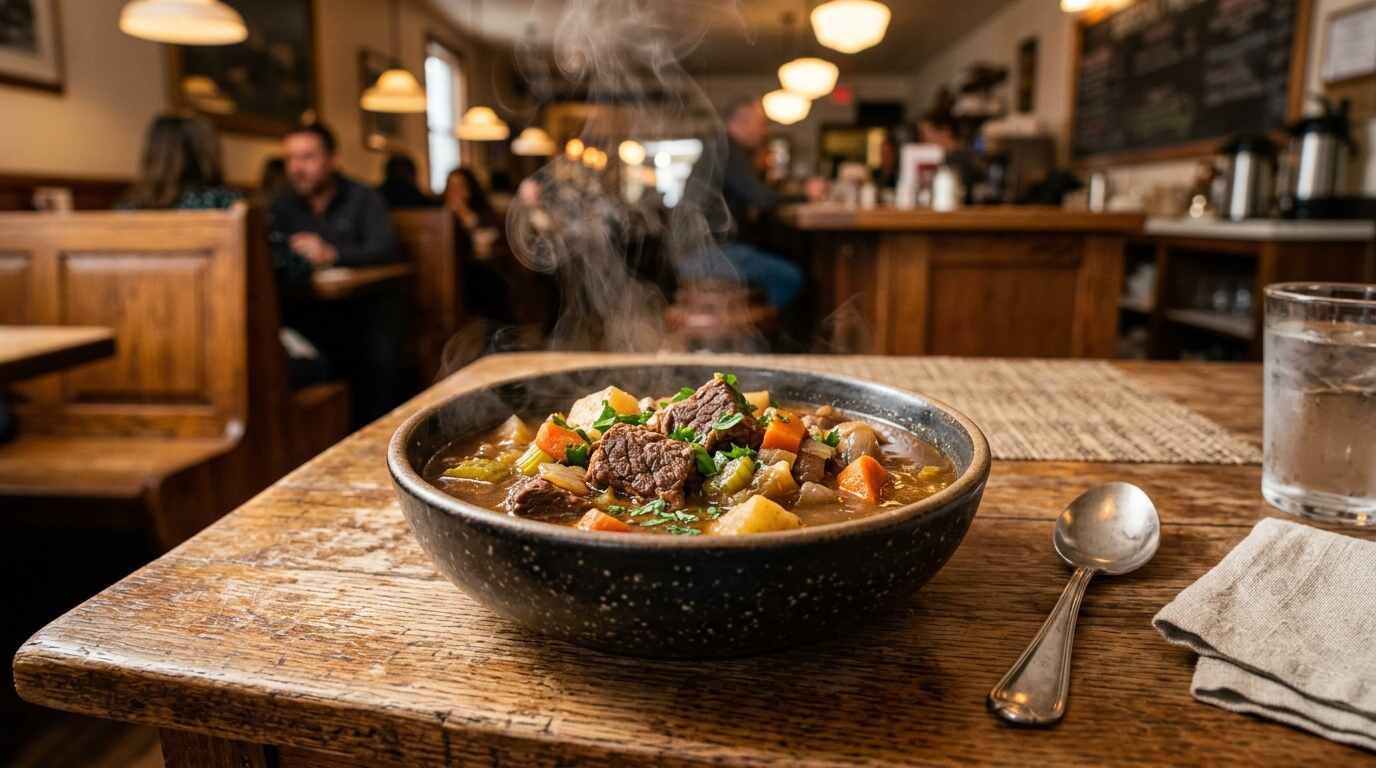
Nobody has to talk themselves into wanting a bowl of stew in October. The craving arrives on its own, usually the first genuinely cold evening of the season, long before conscious decision-making gets involved — and that immediacy is itself a clue that something physiological is driving the want, not just habit or nostalgia for a particular kitchen growing up. The body is responding to falling temperature with a set of measurable biological changes, and the craving for dense, warm, carbohydrate-and-fat-heavy food is a fairly direct readout of what those changes actually require.
Generating Heat Costs Calories, and the Body Knows It
Maintaining core body temperature around 98.6 degrees Fahrenheit takes real metabolic energy, and that energy cost rises measurably when ambient temperature drops, because the body has to work harder to prevent heat loss and, below a certain threshold, has to actively generate additional heat through a process called thermogenesis. Shivering is the most visible version of this — rapid muscle contraction that burns energy specifically to produce warmth rather than movement — but a less visible, equally real process involves brown adipose tissue, a specialized type of fat that exists largely to burn calories and release heat rather than store energy the way ordinary white fat does.
Several outlets covering the physiology here, including reporting pulled from endocrinology and metabolic research, describe this as a genuine increase in resting energy expenditure during cold exposure — the body isn’t imagining it needs more fuel, it’s actually burning through more fuel just idling in cold conditions than it would at a comfortable room temperature. Appetite responding to that increased energy demand isn’t a psychological failure of willpower; it’s the same hunger-regulation system doing exactly the job it evolved to do, registering a genuine increase in caloric need and generating a signal to eat more to cover it.
Daylight Loss Changes Brain Chemistry Directly
Falling temperature is only half the seasonal story — shrinking daylight hours in October and beyond trigger a separate, well-documented mechanism involving serotonin, the neurotransmitter closely tied to mood regulation and appetite control. Reduced sunlight exposure is associated with lower serotonin activity, and carbohydrate consumption is one of the more reliable ways the body has to boost serotonin levels, because carbohydrate intake increases the availability of tryptophan, serotonin’s precursor molecule, to cross into the brain. Doctors and researchers writing about seasonal eating patterns have pointed to this mechanism specifically to explain why carbohydrate cravings intensify in fall and winter independent of temperature alone — a person could theoretically crave the same dense, starchy comfort food on a cold but very sunny day and a comparatively mild but heavily overcast one, because two different biological triggers are stacking on top of each other during the exact same season.
This is also the mechanism most frequently cited in discussions of seasonal mood changes more broadly, where reduced light exposure correlates with lower energy and motivation for a meaningful share of the population — carbohydrate-seeking behavior in that context functions as a kind of self-administered mood regulation, reaching for the specific nutrient most likely to offset a neurochemical dip the body is already experiencing.
Stew Specifically Solves a Problem Ice Cream Doesn’t
Not every comfort food satisfies cold-weather cravings equally well, and the reason has to do with more than taste preference. A bowl of hot stew delivers warmth through direct thermal transfer — the food itself raises the temperature of whatever it touches on its way down — in addition to the caloric density needed to fuel increased thermogenesis. Cold comfort foods, however calorie-dense, can’t offer that direct warming effect, which is part of why cold-weather food cravings skew so heavily and so specifically toward hot, slow-cooked, high-fat dishes rather than toward comfort food broadly defined. The body isn’t just asking for calories. It’s asking for a specific delivery mechanism that happens to double as a heat source.
Fat plays a particular role here beyond calorie density: fat takes longer to digest than carbohydrate alone, which means a fat-heavy stew or braise provides a longer, slower release of usable energy over the following hours — exactly the kind of sustained fuel supply that matters most during an extended cold exposure, like a long October evening, rather than the rapid, short-lived energy spike a sugary snack provides.
The Evolutionary Logic Nobody Had to Learn Consciously
None of this machinery had to be taught, because it long predates any individual person’s food preferences — it’s inherited behavior tuned by a genuinely brutal selection pressure across human evolutionary history. Populations living through actual seasonal cold, without reliable heating, needed a biological mechanism that reliably drove them toward calorie-dense, warming food during exactly the season when staying adequately fed mattered most for simple survival, and the appetite and neurochemical systems described above are the surviving version of whatever mix of mechanisms did that job most effectively. Modern life has mostly eliminated the survival stakes — a furnace handles the thermoregulation problem a stew used to help solve — but the underlying biology didn’t get the memo, and it still fires the same signals every October regardless of whether the person receiving them actually needs the extra calories to survive the season.
What This Actually Means for How a Person Eats Through Fall
Understanding the mechanism doesn’t mean fighting it is necessary or even advisable — the craving is a legitimate physiological signal, not a lapse in discipline, and dismissing it outright tends to produce worse outcomes than working with it deliberately. Nutrition researchers writing about seasonal eating patterns generally suggest meeting the craving with foods that actually deliver what the body is asking for — protein and healthy fat alongside the carbohydrate, rather than carbohydrate alone — since a stew built on real protein and vegetables provides the sustained thermogenic fuel and the serotonin-supporting carbohydrate simultaneously, in a form that tends to leave a person more satisfied for longer than a straight sugar hit would. The craving itself is correct. The only real variable is what gets used to answer it.