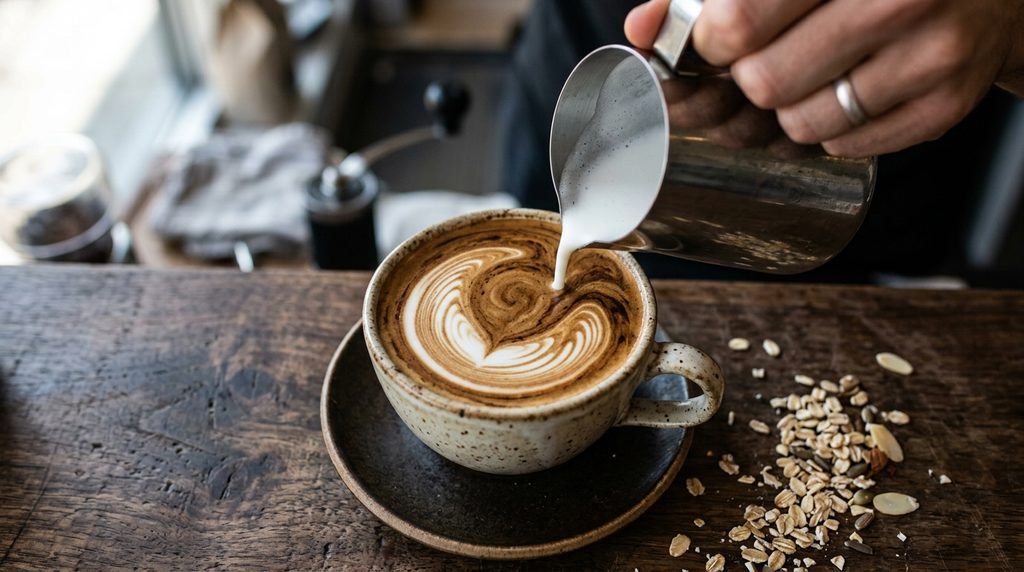
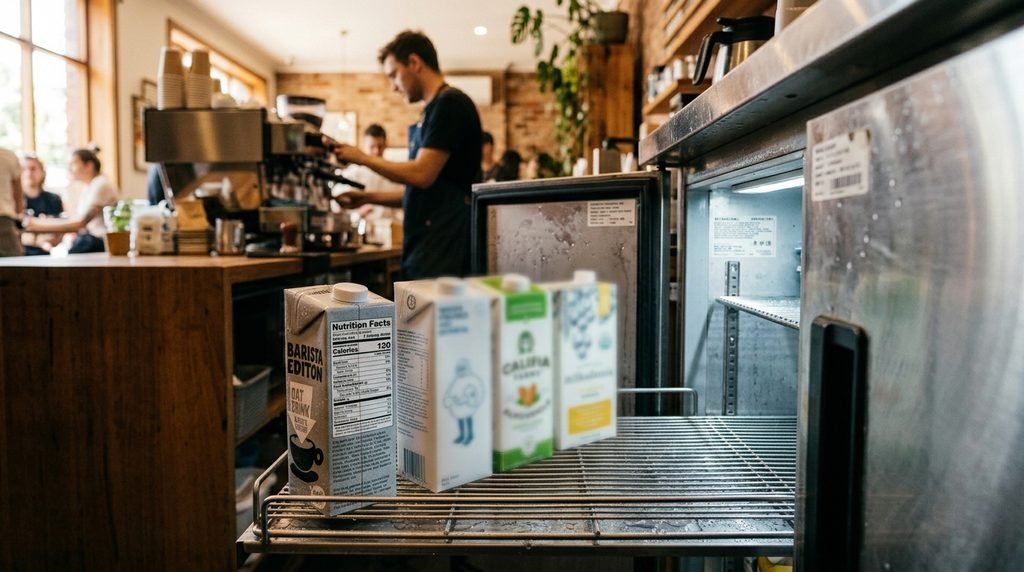
Oatly’s American beachhead was never a supermarket. It was the refrigerator behind a coffee bar, and the company picked that door deliberately, years before most drinkers had heard the word oatgurt. Sprudge documented the takeover as it was happening in October 2017, and the numbers in that piece still read like a demolition report: in January of that year, Oatly Barista was pouring in roughly a dozen New York cafés. By autumn it was in more than two hundred, having moved through Intelligentsia, Café Grumpy, Joe Coffee, Ninth Street Espresso, Sey, Everyman. Mike Messersmith, then running the brand in the United States, described the sequencing without dressing it up. “It was a choice for us to try to pursue on-premise specialty coffee first,” he said. Grocery came later. The professionals came first.
That order matters, because it explains why the fatigue is also showing up in the professional tier first. Whatever comes after oat will be visible behind a counter for a year or two before it reaches a carton in anyone’s door shelf.
The Plateau Is in the Incumbent’s Own Numbers
Category-wide, plant milk has been contracting by volume. Beverage Marketing Corporation’s read on the segment, reported in Beverage Industry, described three consecutive years of volume shrinkage through 2024, with refrigerated oat milk dollar sales at $585 million — down 1.7% — and refrigerated almond at $1.3 billion, down 5.1%. Those are not collapse numbers. They are ceiling numbers.
Oatly’s own filings tell a sharper version of the same story, and the sharpness is in which channel is bleeding. North America revenue fell 9.1% across 2025, and the company attributed a good part of that softness to reduced revenue from one large foodservice customer. Retail, meanwhile, kept growing. By the first quarter of 2026, North America was back in modest growth — up 3.8% to $62.2 million — driven mainly by the retail channel. The second quarter repeated the pattern, up 5.9%, with retail’s share of North American revenue climbing from 59% to 63%.
Read that inversion carefully. The grocery aisle is holding. The café is where the ground is soft. That is exactly the reverse of the 2017 sequence, and it is the clearest available signal that the professional tier has already begun moving on while household buyers are still stocking up.
The strongest confirmation comes from inside the company. Oatly’s barista development director told Perfect Daily Grind that across the big four UK coffee chains, the share of customers choosing oat drink went from 14% to 15% between 2024 and 2025 — one percentage point in a year, in the brand’s strongest market. He also noted that at key specialty partners, oat now accounts for 40% to 60% of coffees poured. That second figure is not a growth statistic. It is a saturation statistic. There is nowhere left for it to go.
Texture Fatigue Has a Real Mechanism Behind It
The complaint circulating in barista communities is partly about mouthfeel and partly about label-reading. Perfect Daily Grind put the shift plainly: a backlash over oat milk’s nutritional profile has pushed some consumers toward products promising both quality and health credentials, and the broader movement against ultra-processed foods has opened room for dairy to reclaim ground in coffee shops.
The irony is that the very thing that won oat its position is the thing now working against it. Barista formulations get their microfoam from added oils, gums, and stabilizers — Oatly Barista’s canola content was already a talking point in that 2017 Sprudge piece, disclosed at roughly 2% by volume. What read as clever food science in 2017 reads as an ingredient list in 2026. Nothing about the product changed. The frame around it did.
For anyone interested in why coffee’s chemistry punishes certain choices and rewards others, I wrote about the compounds that make a third cup of diner coffee taste like regret, which covers some of the same territory from the other end of the counter.
Macadamia Has a Ceiling Built Into the Crop
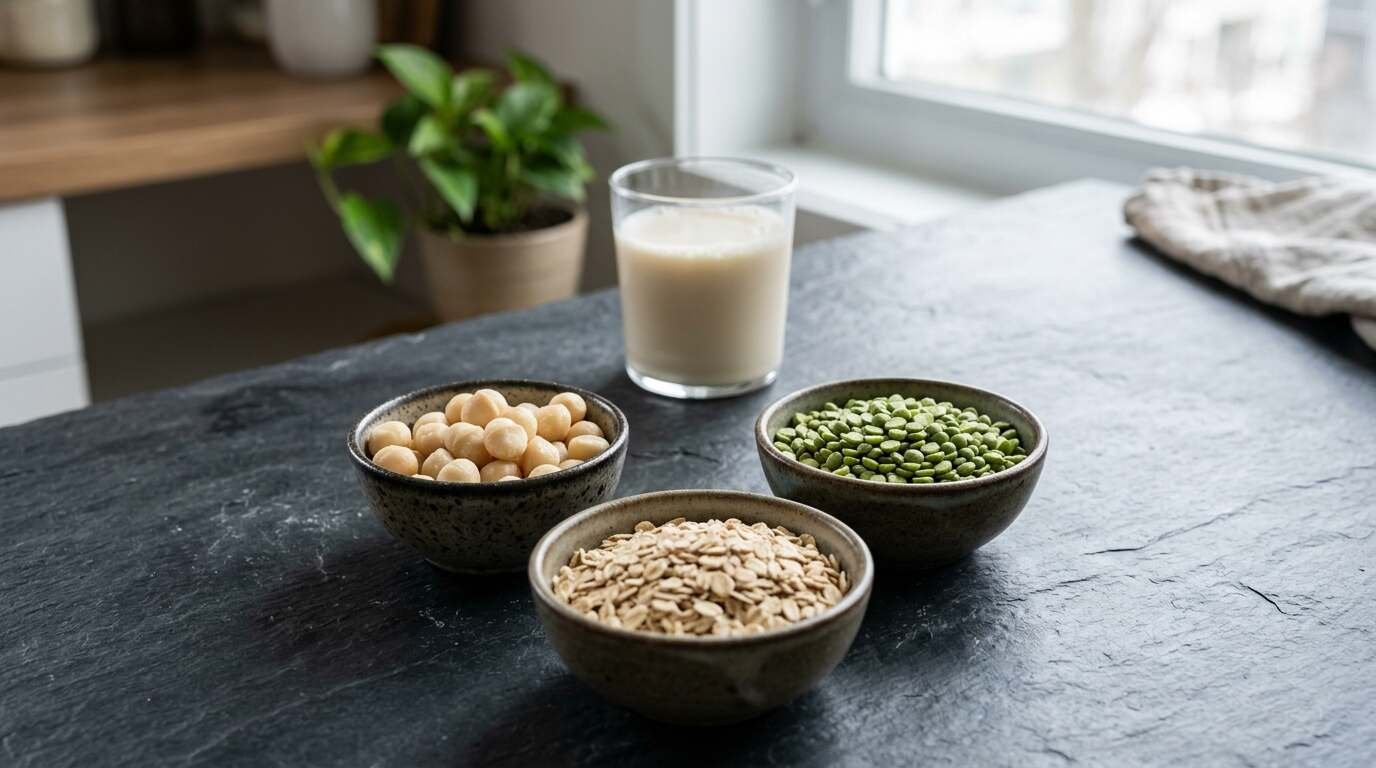
Milkadamia’s barista blend is genuinely good in a cup, foams cleanly, and has real distribution — Mordor Intelligence puts it in more than 13,000 US retail locations including Whole Foods, Sprouts, Kroger, Albertsons and Target. None of that makes it the next oat.
The arithmetic forbids it. The global macadamia milk market is worth roughly $56.9 million in 2026. Oat, over the same year, sits somewhere around $4.59 billion. Two orders of magnitude separate them, and the gap is structural rather than promotional, because macadamias are among the costliest tree nuts on earth, a premium cost structure that limits volume growth and squeezes the margin brands would need to fund expansion — with pressure expected to intensify in 2026 after a projected shortfall in the 2025 Australian crop.
Oat won on economics as much as on foam. Oats are cheap, they rotate well, and the American supply grows across the western United States and Canada. A macadamia costs more the more people want it. A crop that punishes its own popularity cannot become a default — it can only become a premium tier, which is a different and much smaller business.
The Pea Milk Is Already Inside the Macadamia
Here is the detail that reframes the whole question. Read the ingredient panel on Milkadamia’s unsweetened barista product and the second item, right after macadamia milk itself, is pea protein.
Pea is not competing with macadamia. Pea is doing the work inside it. Protein content is what stabilizes microfoam, and pea protein delivers that at a fraction of tree-nut cost. Sproud, the Swedish pea milk company, has been arguing this openly, and its COO framed the current bar for entry to Perfect Daily Grind as a matter of clearing five hurdles at once rather than simply being non-dairy — taste, nutrition, functionality, sustainability, and branding. The company’s Barista Zero line drops added sugar and sweeteners entirely, aimed squarely at the ultra-processed objection.
So the honest answer to “what’s the next oat milk” may be that the question is misspecified. The next thing is not a botanical source with a marketing story. It is a protein-and-fat specification that several sources can hit, sold under whichever plant noun tests best that season.
Whole Milk’s Return Is About Defaults, Not Nutrition
Cow’s milk has been quietly regaining ground. USDA figures showed Americans consuming a record volume of dairy products in 2023, up 3% over five years, and US dairy milk sales rose 2% to more than $17 billion in 2024. The usual explanation is health perception, and that is part of it — the science on dairy fat composition is genuinely more interesting than the low-fat era allowed, which I looked at in the omega-3 to omega-6 ratio in grass-fed and organic dairy.
But there is a plainer force at work. Oat stopped being a choice. Peet’s dropped its 80-cent US plant milk upcharge in mid-2025, and Blue Bottle and Stumptown have made oat the default in some American stores. When a drink is free and automatic, ordering it signals nothing. The people who adopted oat partly because it marked them as the kind of person who noticed things now need a different marker, and for a subset of them, asking for whole milk in a shop that defaults to oat is the only remaining way to be contrarian at a register.
The Successor Isn’t a Milk at All
The most likely answer to what fills the cup next is that nothing does, because the cup stopped being the interesting part.
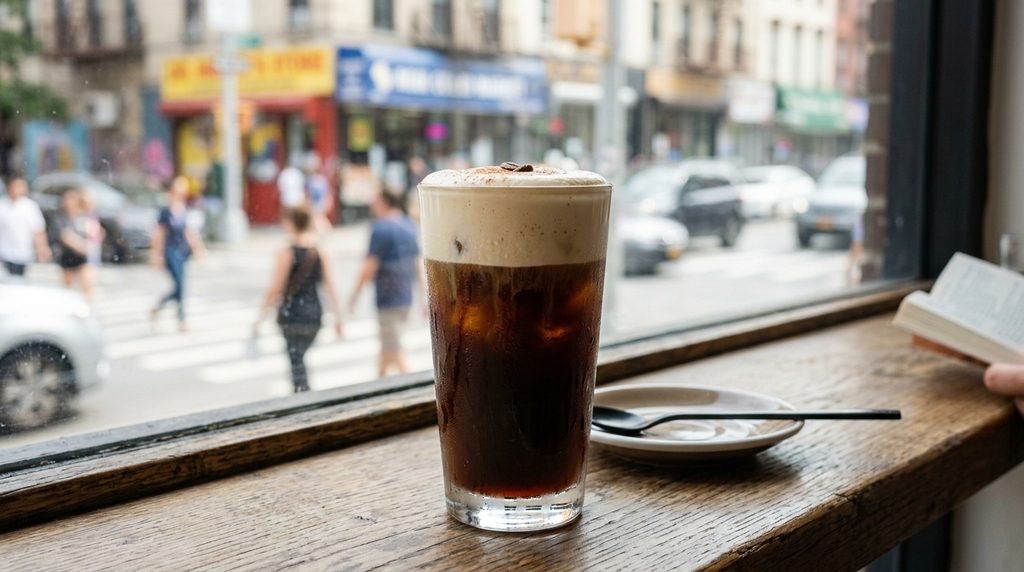
Cold foam ate the category’s attention. VinePair’s read on 2025 noted that coffee shops piled clouds of cold foam, some of it protein-infused, onto just about every beverage. Market research platform Spate measured year-on-year TikTok interest in cold foam surging 105% in 2025, driving overall online appeal up 73%, with another 26% rise expected in 2026. Oatly read the same room and built for it, developing a non-dairy cold foam from the end of 2024 through repeated trial versions with a small group of strategic partners, with a wider European rollout beginning in May.
That is the shift. Milk has become a substrate — a base layer beneath the thing the customer actually photographs. The competitive question moved from which milk to what sits on top of it, and once that happened, the milk underneath became a commodity input judged on cost and stability rather than identity.
Trend arcs in food almost always run this way: a novelty becomes a signal, the signal becomes a default, and the default becomes infrastructure nobody discusses. Grandma slices went through the identical cycle in pizza, which I traced in how a Long Island format won the pizza internet. Oat milk has reached the infrastructure stage. It is not going anywhere. It has simply stopped being a topic.
And the reason baristas knew first is not intuition. It is that they were the ones being sampled.
This is for informational purposes only — consult a licensed attorney or financial advisor for your specific situation.
You Might Also Like
- The Cucumber Water Glow-Up: How a Diner Staple Became TikTok’s Drink of the Month
- The Diner Booth Is Having a Moment. The Internet Just Figured Out It’s the Best Seat in the House.
- James Beard Nominations Are Out. Here’s What They Tell Us About Where New York Dining Is Headed
Sources
- Oatly Madness: The Alternative Oat Milk Spreading Around NYC Cafes — Sprudge
- Is dairy making a comeback in specialty coffee? — Perfect Daily Grind
- How plant milks are pushing for further innovation in specialty coffee — Perfect Daily Grind
- More chains are dropping plant milk surcharges — Perfect Daily Grind
- 2026 State of the Beverage Industry: Dairy alternative market shifts gears — Beverage Industry
- Oatly Reports First Quarter 2026 Financial Results — Oatly Group AB
- Oatly Reports Second Quarter 2026 Financial Results — Oatly Group AB
- Macadamia Milk Market Size, Share & 2031 Growth Trends Report — Mordor Intelligence
- Unsweetened Barista Macadamia Milk ingredient panel — Milkadamia
- How Oatly Developed a Barista Milk for Non-Dairy Cold Foam — Green Queen
- 8 Drinks Trends to Look Out For in 2026 — VinePair